A Liturgical Post

τοῖς δὲ προφήταις ἐπιτρέπετε εὐχαριστεῖν ὅσα θέλουσιν. Let the prophets make the Thanksgiving as they wish.

This, from some of the earliest instructions on how Christians might perform their services, is from a section perhaps best known for its prayers about gathered wheat and knowledge, but contains this line: those with the gift should not feel the need to keep to formulae but can ad lib. the prayers at the heart of the liturgy. It’s a far cry from the tomes we lug around in Catholic services.

However, those tomes are up for further rewriting.

What follows is a weaving together of various statements without (I hope) my intruding too much: The news last week was that the Vatican (more precisely the Dicastery for Divine Worship and the Discipline of the Sacraments) has confirmed the approval by the Bishops’ Conference of England and Wales for the new Lectionary. Based on the lectionary already in use in India and using a “revised” (see below) psalter from Conception Abbey in the US it aims to “ensure that the Word of the Lord reaches God’s holy people without alloy” – meaning… “avoiding paraphrase whilst maintaining the poetry and rhythm of the psalter.” https://www.cbcew.org.uk/new-lectionary-to-be-launched-in-england-and-wales-for-advent-2024/

In 2008 a revision of the text was undertaken by the monks of Conception Abbey, Missouri. It sought to bring the latest scholarly understanding of the text and to review the text where the English was essentially a paraphrase of the Hebrew. This text was approved by the United States Conference of Catholic Bishops and further revision has been prepared and approved has received the confirmatio of the Holy See. This text is now owned by USCCB who have renamed it Abbey Psalms and Canticles both in recognition of the work of Conception Abbey and also so that there was clarity about the edition being used. This text will be used in the Lectionary and in subsequent liturgical books, such as the Liturgy of the Hours. 

In response to the question Will the text be mandatory?

It is normal practice in the Roman Rite that there is only a single edition of a liturgical text in use in a particular territory. So in the same way as only the third edition of the Roman Missal (2010) may be used in the celebration of Mass (in the Ordinary Form); the same will be true for the Lectionary.

https://www.cbcew.org.uk/new-lectionary-for-england-and-wales/

So a while back this move was approved, the texts set up and a number of music writers (in the US only?) involved in creating settings for the psalms. A number of sources have said these are a revision of the Grail translation where the texts in use were “paraphrases.” It’s hard to give sufficient weight to this argument without specific examples, but certainly there are points at which the current translations of the psalms do not always keep as closely as one might expect to earlier texts and translations, but equally the task of a translator of poetry cannot easily be dismissed as “paraphrasing.” I know that any reform might want to start by overegging the case for the need to reform, but I think we also have to admit that this is not really a simple revision of the Grail translation per se, but uses the Grail psalms as a basis on which to build a different (and maybe simply more flowery) version of the psalm texts. Today, for example, the Feast of the Transfiguration, has the new translation of the Response in the Psalm at Mass as

The Lord reigns, the most high over all the earth

while the current response is:

The Lord is King, Most High above all the earth

and the two versions of “verse 1” are

The Lord reigns; let the earth rejoice:

Let the many islands be glad.

Cloud and thick darkness are round about him;

Righteousness and justice are the foundation of his throne.

compared with

The Lord is King, let earth rejoice,

Let all the coastlands be glad.

Cloud and darkness are his raiment,

His throne, justice and right. 

They are alike enough to see they are clearly the same text – but not unlike enough to seem (to me) to need tinkering with.

Tinkering. Ah, a cat is out of a liturgical bag here, I think. This seems to me not so much about accuracy – about treaures without alloy, text without paraphrase – as an intention to bring the often rather stiff language of the new translation of the Missal (and the Breviary, see below) further into the usage of the liturgy.

It has received its confirmatio from those with authority; like the translation of the Mass we are – depending on where you sit with this – overjoyed at the change of tone, or stuck with it.

It will, however, require more than just a change to the Lectionary.

People who bought the (rather unwieldy) CTS Missal might feel they were sold something with a sell-by date on. The same might be true for those communities, choirs, &c who bought hymnals with new Mass settings (and annoyingly, new numberings and occasional content changes). If “there is only a single edition of a liturgical text,”(see above) then the music for responses and alleluia verses will also need revision; the music being produced in US certainly suggests this has been an opportunity for new music to be written, just as it was with the new translation of the Missal itself – and after this will come the Breviary. No wonder this vast project has not as yet an estimated date for publication (bcew.org.uk/new-lectionary-for-england-and-wales/). In the run up to the beginning of the new translation of the Lectionary – the next step in the longer project – perhaps we need to be thinking about some actions:

  • Given that the new text is not optional, music that is simple and enjoyable to sing by congregations and communities needs to be trialled – not just put into new editions of hymn books;
  • Some new editions of hymn books need complete revision; Laudate, for example, with its liturgical and thematic ordering, was always rather a trial to navigate, but became much more so with the rather random replacement of some bits and pieces; the two editions are uncomfortable to use together;
  • A provisional lectionary therefore needs to be released soon;
  • This is an opportunity for liturgists (at parish, diocesan, even in media levels: a broad hint to self here) to work with choirs, bands, organists so that the responsorial psalm becomes or is reinforced in its position as what it was intended to be: part of the proclaimation of the Word of God. The time for study groups to look at, to learn to be familiar with the psalms is now, or at least from this Advent, so that next Advent (2024) feels less of the kind of shock that went through congregations when the new Missal was imposed. And I have a cunning plan for singing the psalms…
The responses to the psalms that have been used since the introduction of the Responsorial Psalm have been many and of varying complexity. I do worry sometimes that musicians choosing the melodies sometimes do not have a range of settings that are congregation-friendly. This has to be – as with Mass settings – something publishers take into account as much as singers. The new translations seem to me to have deliberately taken out the distinctive sprung rhythm that Joseph Gelineau developed. One way to develop our psalm singing is for psalm tones – the ones based in the traditonal Latin tones, or the ones from the style of Laurence Bevenot – also to be used in the response. It might make for a plainer “performance” (not sure I like this word in this context but never mind) but it would retain an element of singability. With the modulations coming at the end of the line, syllabic changes on the main, reciting note (“Cloud and thick darkness are round about him” instead of “Cloud and darkness are his raiment”) would not affect the singability.

So this is maybe just a long post simply to say “There is some work ahead of us.” Some of that work will be better enjoyed the more thoughtful it is; the better the preparation (and the more help we have to develop our own music or our own choices within new music produced) the easier it will be to be thoughtful.

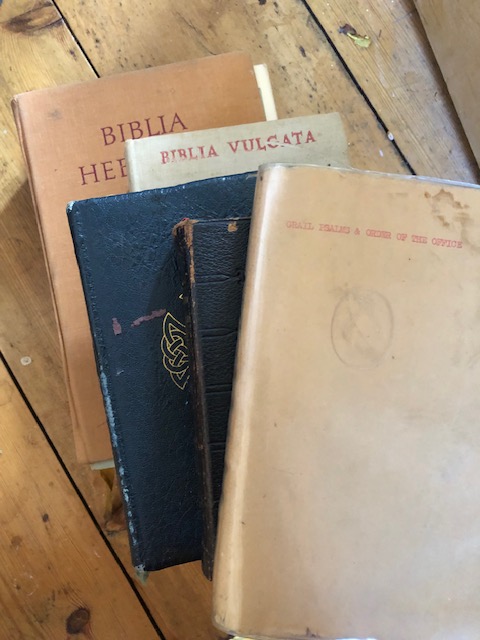
And the image above? Well the two bottom books are obvious, although I really struggle – I mean really really struggle – with the Hebrew – and the next one up is Vol 1 of my Breviary, which I bought in the 70s. There’s also a volume of the pre-reform Monastic Breviary. And the top one? The predecessor to the Breviary was called Prayer of the Church (which some unkindly called “Plastic Prayer” because of its squeaky cover and plastic pockets for supplementary material) and before that, this now incredibly battered, unedited copy of the the Grail Psalter, which I made myself while I saved up. Will the new Breviary be something I buy and learn to love? Will I just go online for it all?
Little Trees

…and the people who live with them.

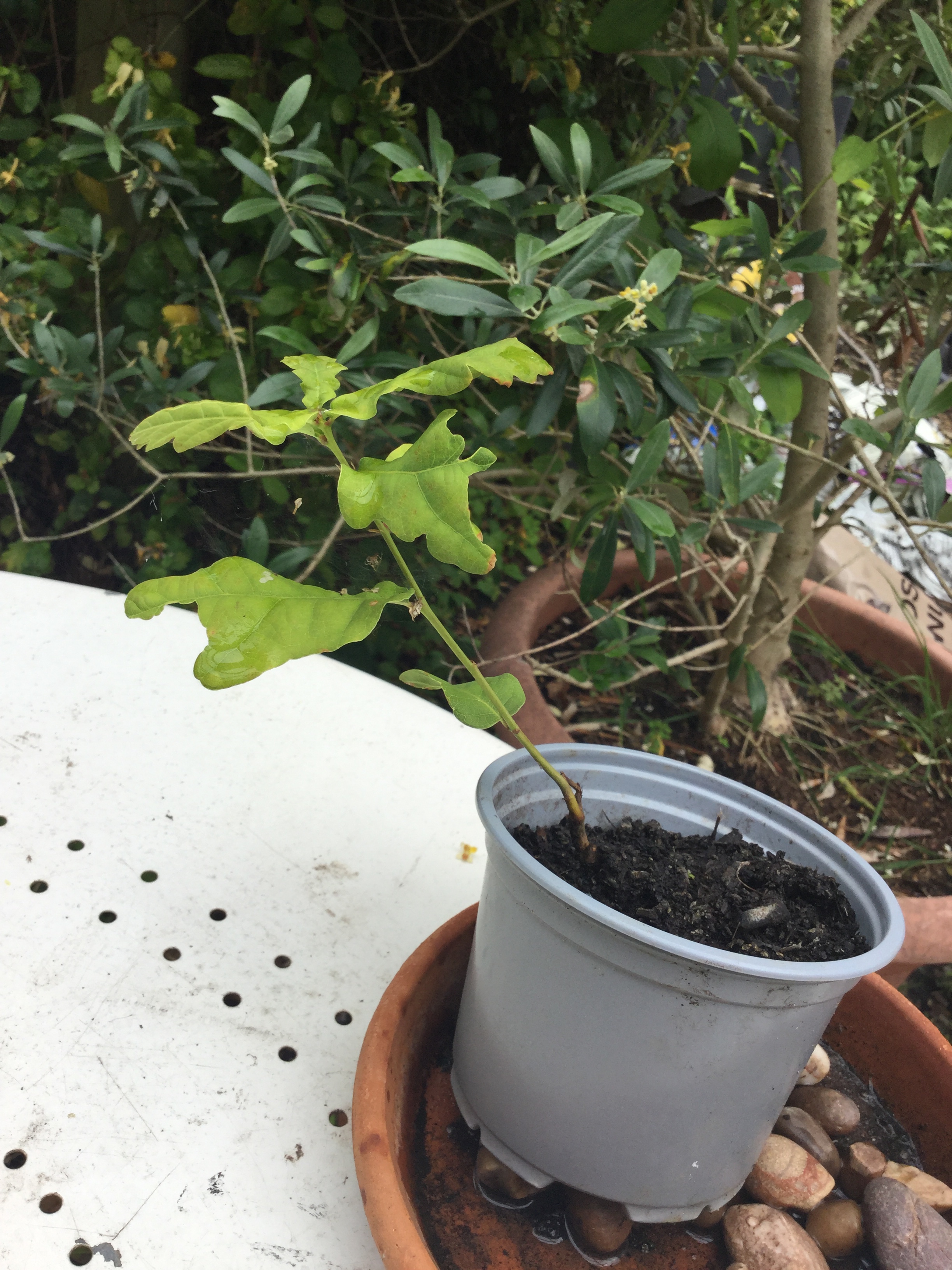
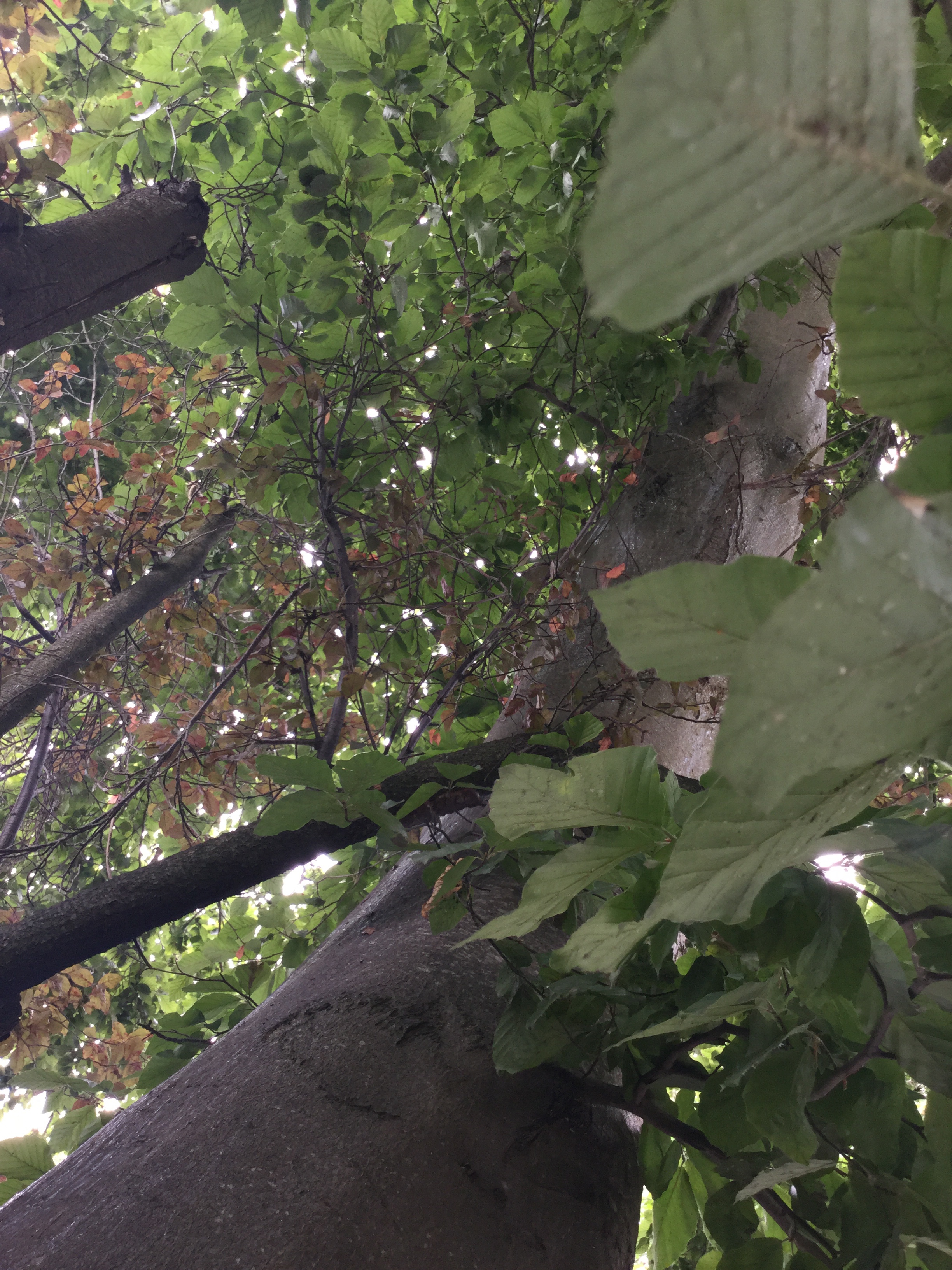
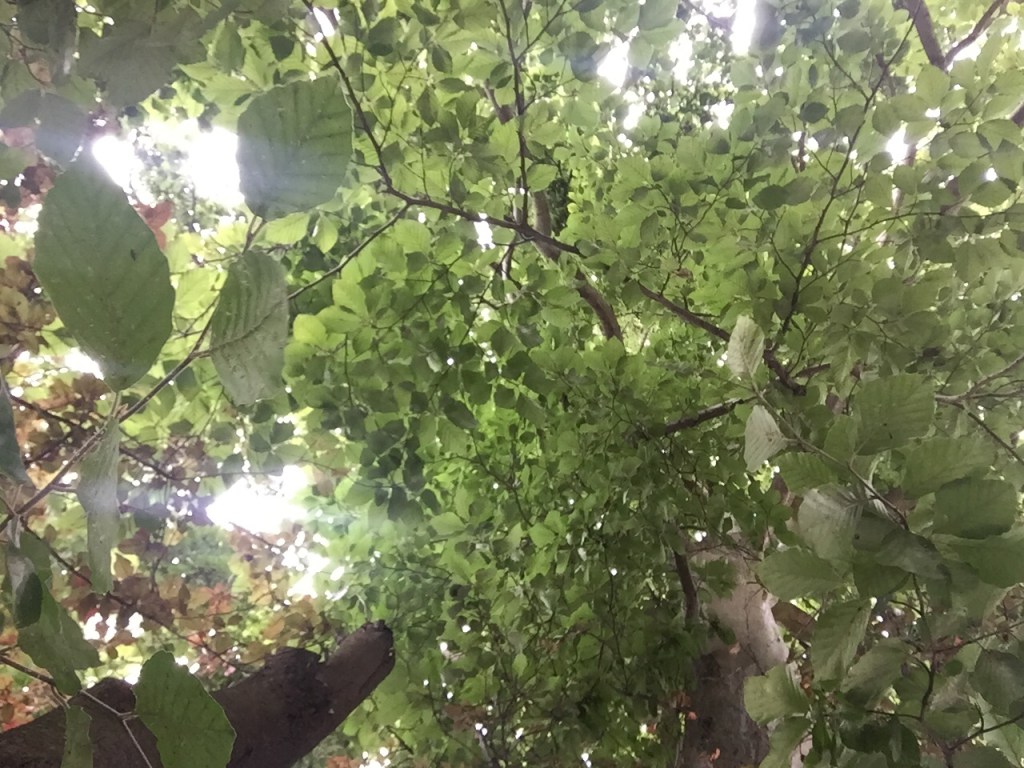
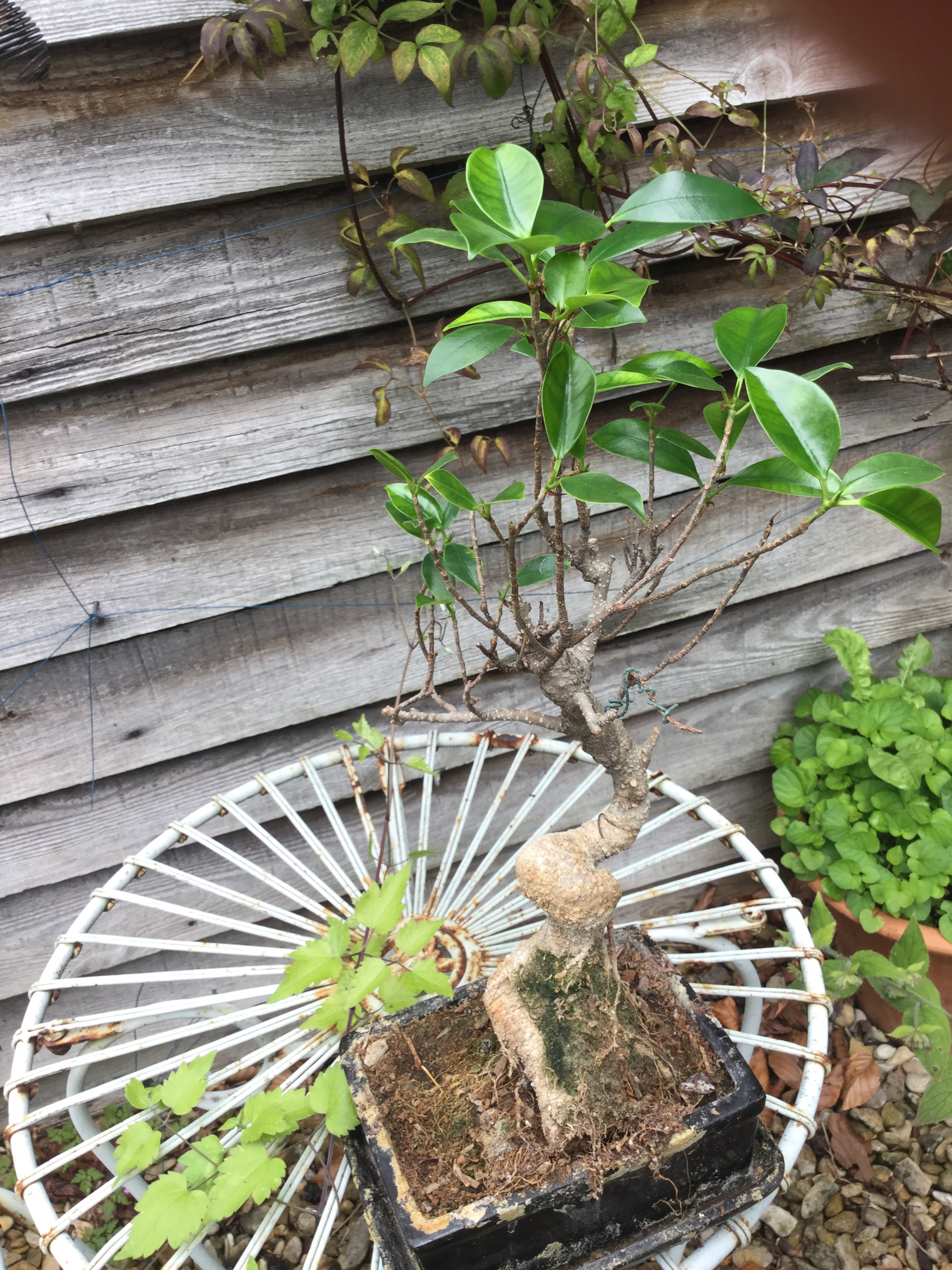
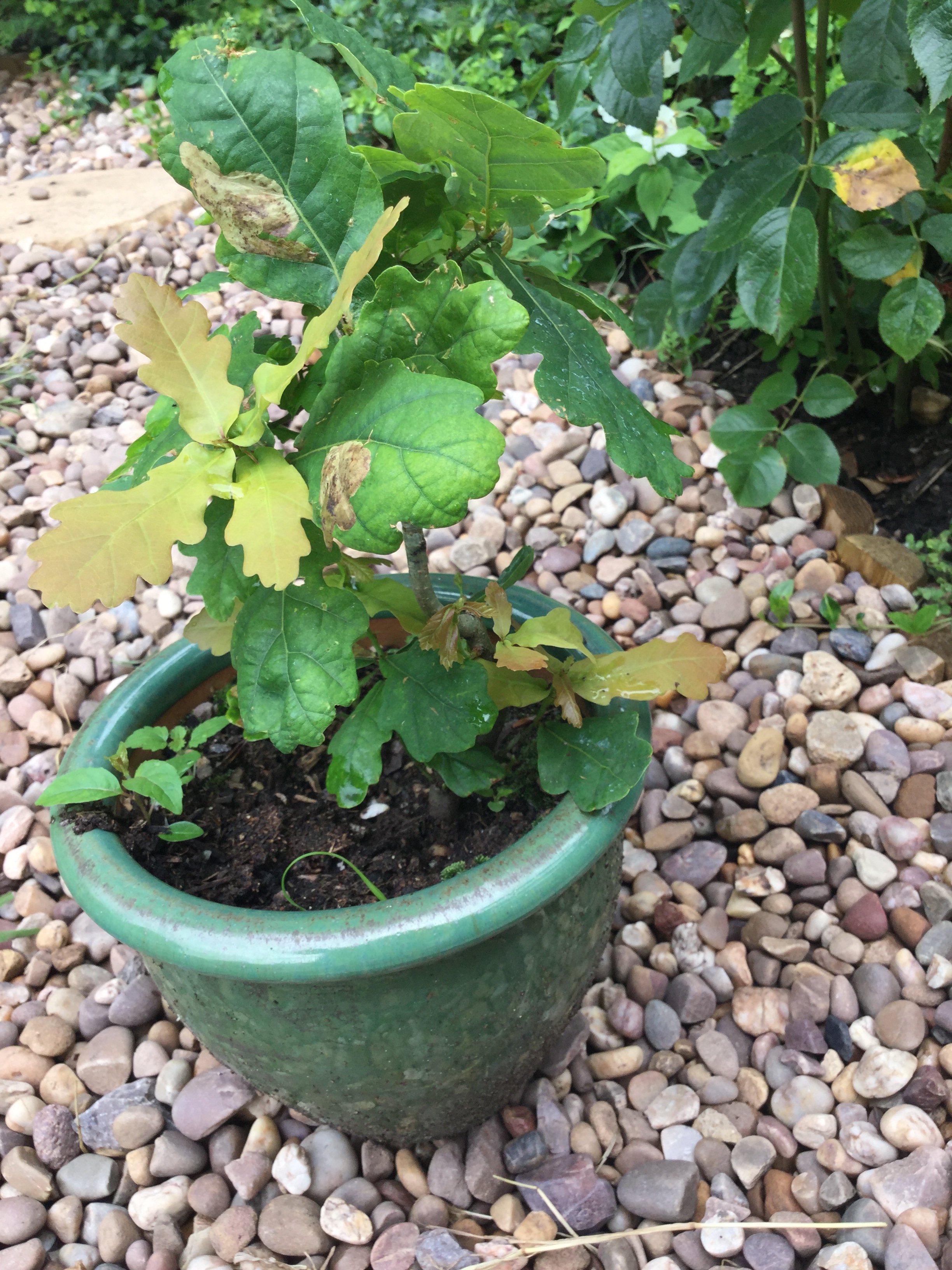
I often think about the big beech tree (bottom right and below) by our front gate: its looming presence in wet weather; the leaves in the autumn; the squirrels, pigeons, whitefly… I worry about it in the high winds, and glory in it in the spring. I am also aware of the smaller trees that have come to be part of my life, and am always grateful for the life chances that allow me to go to the allotment and pick apples and damsons (fewer this year, after a surprise, cruel, late frost). And then there are my smallest trees: a bonsai ficus (top left) I bought at a student market and am nursing back to health, the little oak (centre) I have trimmed and wired for a few years, the seedling red oak (bottom left) I found on the allotment this year and didn’t have the heart to hoe up but replanted and brought home.

It’s as if my desire to feel trees as a healing presence is played out in large scale and small.

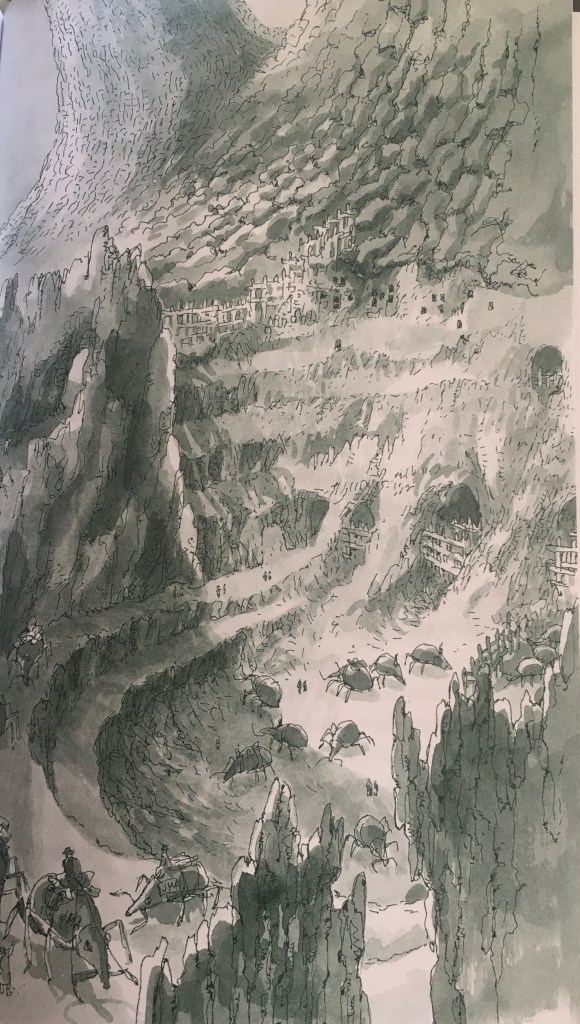
And then a pair of books come up for me to read, the first simply a chance find in a charity shop from a To Be Read list. Timothée de Fombelle’s Toby Alone and its “sequel” (really part 2), Toby and the Secrets of the Tree. Toby is one and half millimetres tall and his world, at least at the start, is a tree from topmost leaves to where it sinks into the soil. Small people – from Lilliput to Borrowers, from Hobberdy Dick to Hobbits – are nothing new, but de Fombelle is daring in making his characters so small. Daring, too, in then taking the ecosystem of the tree they live in and describing it in terms of landscape.

At the bottom of the Tree, before it comes into contact with the earth, the wood from the Trunk rises up to form high mountain ridges.

Needle rocks, bottomless precipices…the surface of the bark is crumbled, like rippling curtain folds. Moss forests cling to the peaks, trapping snowflakes in winter. the valley passes are blocked by ivy creepers. It makes for a dangerous, impassable terrain.

Timothée de Fombelle: Toby and the Secrets of the Tree Ch 3: Someone Returns
The Crater from Toby Alone, illus François Place

It is the scale that boggles the mind. The Tree is at once a massive entity and a vulnerable one, a stage on which the cleverly Dickensian drama of lost children and choices based on mistakes, and a body around which a drama unfolds like a hospital soap opera. The smallness of Toby and the rest of the Tree and Grass people allows this to be played out wonderfully clearly. The technology of living a (sort of) human life at the scale de Fombelle describes is passed over in many places, made much of elsewhere: the terrifying soldier ants and destructive weevils underline the issue of scale; cigarettes, prison door keys, carts, boots are accepted parts of this society. The author works hard to make these transitions unobtrusive. Essentially this is a meditation on power and corruption and ecocide and resistance: a competent political thriller and romance but very much in miniscule. So is the setting on a tree merely a backdrop?

Toby’s tree is a presence as much as a setting, and its fate is the matter of both books. Ruthless, populist entrepreneur Mitch digs sordid housing projects at the cost of the Tree’s health – and therefore at the cost of the society he is claiming to protect. Toby’s father is a marginalised and then persecuted scientist intent on protecting his world by exposing what’s going on (I am reminded of the HS2 project as I read Toby’s adventures, but then think that Toby’s Tree is just one; we have seen woodland after woodland, thousands of trees cut down – the emotive word is wilfully, and tonight it seems right). Friendship, loyalty, rivalry and love – these may be the strands which move the story along, but the politics of violence are violence not only to the people who live on and at the foot of the Tree but also to the Tree itself: ecocide as a sort of suicide.

I am therefore reminded of the protestors’ occupation of the massive tree in Powers’ The Overstory:

He has seen monster trees for weeks, but never one like this. Mimas: wider across than his great-great-great-grandfather’s old farmhouse. Here, as sundown blankets them, the feel is primeval, darshan, a face-to-face intro to divinity. The tree runs straight up like a chimney butte and neglects to stop. From underneath, it could be Yggdrasil, the World Tree, with its roots in the underworld and crown in the world above.

Richard Powers: The Overstory: Trunk

And there is the connection: The World Tree. The Tree that Toby inhabits in the de Fombelle books is a world, to start with, just the one tree. Ravaged Mimas, the doomed chestnuts, the rewilded back yard with its pine tree,the Brazilian forest where all is fringe and braid and pleat, scales and spines are diverse but more interconnected in The Overstory, although it takes tree-years for the humans to grasp this, and then only some of them, and even then only imperfectly.

With that connection comes an answer to the riddle of scale: De Fombelle’s millimetre-high hero is related to his environment in much the same scale as the humans in The Overstory are related to the forests, the priestly tulip trees, the baobabs and quiver trees they inhabit or protest over or study. Toby is tiny to us, even tinier to the Tree, in the same way as we are tiny to the ancient forests of the human world – and what De Fombelle allows us to see is one tree in its fragility and complexity and then look up and ask: if that is one tree, what then is a forest? What mission might we be on, if Toby’s adventure is to save his Tree? Looking into Toby’s world is like contemplating the sudden shift in focus with a camera: new ideas come into view, new oportunities to see our place in the world. As Toby’s father Sim claims, Nature is a magician; as my perspective shifts from Toby to the trees in The Overstory and back again, I wonder how often I overlook the magic, that face-to-face intro to divinity.

Have you ever tried to enter the long black branches of other lives…

Do you think this world is only an entertainment for you?

Mary Oliver, Have you ever tried to enter the long black branches of other lives

The beech (I don’t feel I can call it “my” beech), like Mary Oliver’s Black Walnut

swings through another year

of sun and leaping winds,

of leaves and bounding fruit

and I am all of a sudden, looking at it entirely differently.

Re-reading Narnia

Almost a microblog, this – a notification that my friend Chris Lovegrove (with whom I collaborated on a read-though of the Snow Spider stories: see this example from Chris, and this from me) is giving notice of a read-through, in publication order, of the Chronicles of Narnia, starting in November, under the title Narniathon21. He is incredibly well read and thoughtful: it will be a wonder.

I come back to C S Lewis on my blog fairly often, but not always to Narnia, although the present scambling and unquiet time sends me back to Puddleglum more often than not if I catch the news. Perhaps I need to ponder why I have not come back to Narnia more often or in more depth.

Whatever the answer, I am looking forward to Chris’ look, book by book, at everyone from Lucy to Tirian, from Jadis to Shift, from Calormen to Stable Hill. And maybe confronting my discomfort.

People of the Sea

GOE, and catche a falling starre…Teach me to heare Mermen singing

I think that the first mer-character I really remember was a mer-boy who either rescues Rupert the Bear or who is rescued by the smartly-dressed ursine adventurer. Looking at various stories in which the merboy figures, I can’t say for certain which it was – I remember the putto-like character, the rocky shore, a sea-serpent…. All rather untamed, compared with the donkeys-and-pier seaside I knew in Cleethorpes, but somewhat like bits of Dorset. For me at the time, seaside was not a place of uncanny encounters, but I did recognise that such meetings, on a chilly shore, make for a great read. Katharine Briggs has some good stories of Merrows and seal-people scattered through her books but she does warn that

The mermaids are perhaps of the most ambivalent character. The very sight of them at sea is death to sailors, and it is their habit to decoy people under water, but at times they are benevolent …

K M Briggs: “Forgotten gods and Nature Spirits” in The Fairies in Tradition and Literature.

Human fear of drowning and perhaps a fear of the disruption to a society of a sort of seductive sexuality make the mermaid seem a dangerous creature. Note, however, that Briggs refers here to maids, to dangerous aquatic females – but she is aware, too, of male people of the sea.

While thinking of Mermen, it is worth turning to Walter Map, whose work De Nugis Curialium contains the story of Nicholas Pipe, described as

A true man with no hint of the inhuman in any of his limbs and with no defect in any of his five senses, he had been given, beyond his humanity, the aptitudes of a fish.

Illusions and Resurrections
selected from Walter Map’s De nugis curialium
translated and adapted by M. T. Anderson

but tellingly also less than a human and united with the fishes. (see this edition for all sorts of name-dropping, snarky comments and so on from Walter Map – and occasional folktales and horror stories). It strikes me that what Pipe is, is a creature, like many supernatural creatures, able to move between the accepted world and the unknown. In the book People of the Sea a seal inland worries islanders that it might be something more than a seal. That ambiguity is the stuff of the uncanny.

People of the Sea requires a bit of explanation. I’d seen merpeople in Narnia, read the Little Mermaid with its chilling message about hopeless love, and then was bought David Thomson’s rich and bleak The People of the Sea one Christmas in the early 80s. Here Thomson recounts the classic Selchie Tale of the seal-woman who raises a land family (in this case under duress) before returning to the sea. It’s a haunting tale that gets a beautiful modern retelling in the film Song of the Sea (Trailer here), and a different exploration around sibling bereavement in Brahmachari and Ray’s Corey’s Rock. (NB, I have explored Corey’s Rock before: link here). There are versions of Selchie tales of all sorts, told in almost orientalised contexts in David Thomson’s book, attesting to the power of these ambiguous creatures, and relationships between land people and magic sea people – and earthly seals too, hunted with respect but not sentimentality.

And the latest voices and images to attest to that power belong to Ian Eagleton and James Mayhew. Again drowning is a key dramatic element, and the story draws on Hans Christian Andersen’s Little Mermaid – or perhaps the Disney version*. No Prince to be rescued here, but a scruffy-but-nice Fisherman called Ernest; no manipulative Sea-Witch, but a jealous ruler, Pelagios, Nen’s father, a gloriously imperious, almost gilded merman straight from an eighteenth-century fireplace.

The characters are “between worlds” (a phrase I picked up from the BBC series on the influence of Irish music and this piece by Michael O’Suilleabhain), like the unicorn Findhorn in Alan Garner’s magnificent and threatening fantasy Elidor (a great blog report here). Findhorn walks in high places and yet meets his end in the lap of a virgin not in a glorious, flowery tapestry but on a demolition site in 60s Manchester. Nen, in sharp contrast, lives in deep places, but finds fulfilment in the gaze of a lonely fisherman on a coast of rocks and cottages, and his father begins to wonder whether the two worlds are as different as he had thought.

Just as I like the way James Mayhew depicts the anguished hauteur of Pelagios – and while I promised not to think of Disney, it does match, if not exceed, the wrath of Triton in The Little Mermaid – the eye contact between the merman Nen and his lonely fisherman Ernest is also charmingly warm. The images stand in opposition to each other. The sighing ocean and the violent waves, are calmed by the merman’s song tender and brimming with courage – and Pelagios’ doubts over the human world abate like the storm, so that Nen and his (a little word but worth noting) fisherman are on a rock laughing and dreaming about the future.

It is here that the despair of Andersen is passed over, and the subtexts of abuse and grief from the Selchie stories of the Gaelic islands are rewritten. More tales could be told – maybe should be told – about Nen and Ernest as they grow and share their lives. We are not in the world of the uncanny – or with John Donne in the world of fantastic improbability as in the headquote – but in a world of acceptance.

*[And as an aside, I have to say that, tempting though it might be to read this (and write about Ian and James’ book) as a queering of Disney, I’m largely going to leave Uncle Walt to others.]

Waking Early

There is, of course, the wonderful poem by Mary Oliver, praising the chance warming of the earth by the sun that I cited in the post Texts for Difficult Times: to ease us with warm touching,/ to hold us in the great hands of light… and when I woke at 04:40, (far too) early today I could have wished I’d had learned the poem.

And in the opening scene of Anouilh’s Antigone, the eponymous protagonist almost deceives us into thinking she has just been out exploring the glories of the early dawn:

Dans les champs, c’était tout mouillée, et cela attendait. Tout attendait. Je faisais un bruit énorme toute seule sur la route et j’étais gênée parce que je savais bien que ce n’était pas moi qu’on attendait…

It was cold – sandals, t-shirt, trousers weren’t quite enough. And damp, with mud from the May rains, with dew in the long grass. And oddly noisy. Antigone might have been aware of the noise she made, but I was aware of passing traffic, the waste disposal truck in the Old Road Campus and all the other hums and buzzes the buildings make. And then, in the shadow of the dip towards the brook, the sound of birds and water.

There really are few things as precious as the quiet morning where the running water and the songbirds are an obbligato to the experience. Is this because they signify food and water somewhere deep in my brain? I am struck by the question that looks bigger and bigger the more I look at it: why do we find these things beautiful?

Antigone is right: this wasn’t a show waiting for me to take my seat, and while we might take delight that the happy birds are singing their Te Deums (the reference is first to Mrs Oldknow, but I think Lucy Boston is referring to this Maytime hymn), their cries are for territory, for food, for sex.

Oh, but hang on a minute: does that mean that birds being birds isn’t exactly what they should be doing? And if you see any sort of purpose or numinous element to a dawn chorus, does it need to be imposed on the birds actually supplying the music? Mary Oliver, Gerard Manley Hopkins (maybe) have it right: to glory in these things, simply to see

…all around us

this country

of original fire

Mary Oliver: Humpbacks

On meadow and river and wind-wandering weed-winding bank

Gerard Manley Hopkins: Binsey Poplars

might involve us using these as image, symbol, metaphor – but the thisness of the birds and the brook really doesn’t need me to be there. Mary Oliver is almost brutal in her version of this message:

…there is still

somewhere deep within you

a beast shouting that the earth

is exactly what it wanted –

each pond with its blazing lilies

is a prayer heard and answered

lavishly,

every morning,

whether or not

you have ever dared to be happy,

whether or not

you have ever dared to pray.

Mary Oliver: Morning Poem

And from a theological standpoint, I can’t impose on the crows, the woodpecker, the thrushes my human-shaped pieties. The Te Deum of a bird is to be a bird. So to end here is Roger Deakin’s account of his own waking early, and hearing the birds around his Suffolk house:

It is actually quite noisy with birdsong here, all concentrated into a mile of hedgerows – full, wide, dense hedges like the ramparts of a castle. A kind of maze of them surrounds the little friend, and the birds love them for making nests. So there is great competition amongst all the birds for space, for a few square yards of territory, and do they sing longer and louder and more lustily… And for a bird the most important aspect of household management is singing. Perching as high up as you can and singing for as long and as hard as you can.

Roger Deakin’s “Notes from Walnut Tree Farm:” May

Do I Deserve Sicily?

Quoniam placuerunt servis tuis lapides ejus

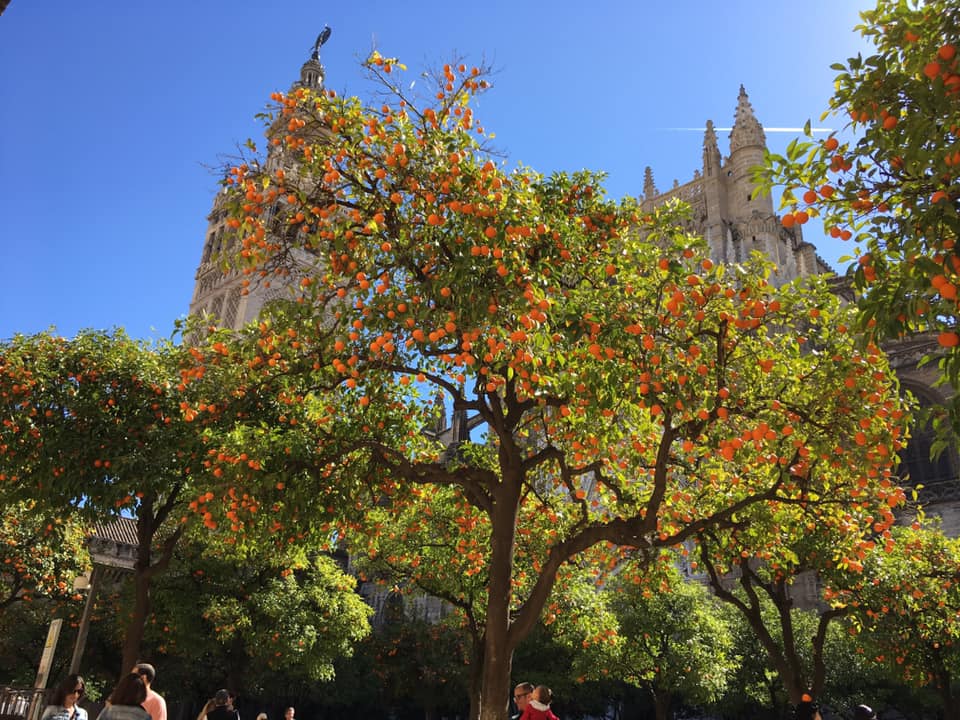
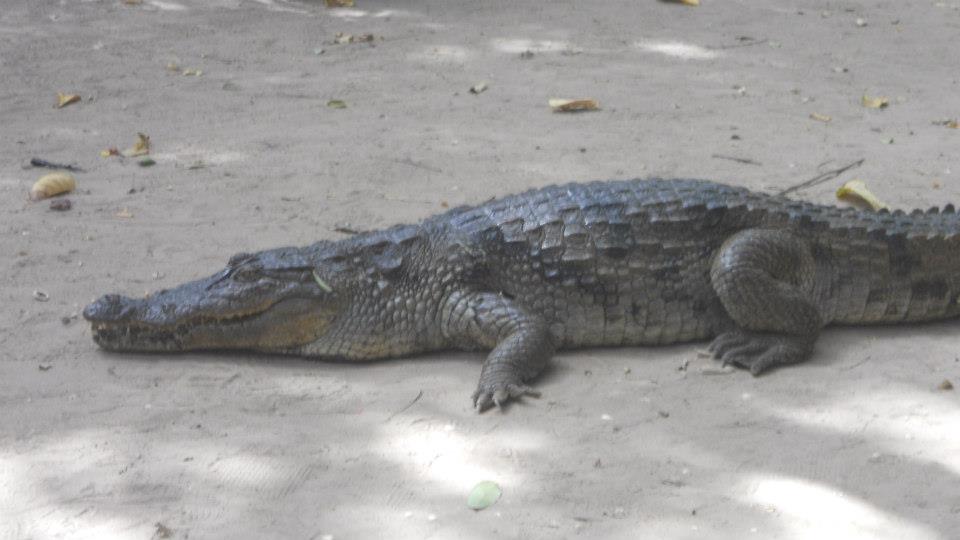
It is hugely tempting to fill a blog that I’ve given headings like this with photos of holidays and trips I have had. Ruins I have visited, cities I have met and loved. Let me get some out of the way.

It may give the impression I have seen all sorts of wonders all round the world but I am not really very well travelled: unlike my dad whose Moominpappa-like Misspent Youth included trips in the Merchant Navy to Japan, South Africa and all sorts of places, my furthest trips have been to the Gambia for work, and holidays in Europe. And yet for some people this is a lot of travelling: my Mum saw France, but no further, and for some, finance or responsibilities or fear of flying put journeys out of reach. For nearly twenty years – as a young dad – I didn’t have a current passport.

So when I see the suggestion that people need or deserve a holiday abroad I can’t help but baulk at the idea. It’s not the air miles and pollution, although that does worry me increasingly (and I do like trains anyway: waking up on the train to Provence to see a field of sunflowers was as amazing, in its way, as the romance of Paris in the early morning after the Nuit Blanche trip on ferry and train from Victoria in the 70s). No, it’s not even the “Bali or Brighton” divide: I think its the notion of deserving something or needing it being confused with wanting something very badly or having your expectations denied. “You can’t have that wish” is something we find alien to our mindset – although in a not-so-distant-past it is a recurring response to Little Bear‘s wishes.

So I’ve wandered (rather aimlessly) through some of the literature on desert – starting from the ideas of “deserving degrees” – and came across this, very much off my usual track:

It may simply be the folly of the gods, to make us act out for one another, for their amusement, when ultimately little is accomplished…Whether in our conjugal relations, our political systems, our commercial interactions, even in our cultivation of art and science, there is illusion and deception

Kevin Hoover in Copp, D., & Sobel, D. (2000). What We Owe to Each Other

And perhaps that “acting out” is really the key to the problem. As George MacDonald puts it – or rather how C S Lewis in the mouth of MacDonald puts it:

There is always something they prefer to joy—that is, to reality. Ye see it easily enough in a spoiled child that would sooner miss its play and its supper than say it was sorry and be friends. Ye call it the Sulks. But in adult life it has a hundred fine names—Achilles’ wrath and Coriolanus’ grandeur, Revenge and Injured Merit and Self- Respect and Tragic Greatness and Proper Pride.’

C S Lewis, The Great Divorce

In other words, we are keen to say we need and deserve in order to grandstand our desires; we would choose unhappiness as a lever to get what we want. It is caricatured in the anonymous ditty

Madam Dill

Is very ill

And nothing will improve her.

Until she sees

The Tuileries

And waddles through the Louvre.

But often it is an illusion. This isn’t about help when someone is physically or mentally ill, but I think we have to see that Madam Dill does not need her trip to Paris any more than this pundit or that feels anything more serious than serious disappointment when they cannot get to their favourite quaiside taverna. I may (to come to my subtitle) love the very stones of Villeneuve lez Avignon and be sad not to see them, but we deceive ourselves by thinking that this disappointment is something the cosmos has engineered to rob us of our rights. We might find some balm by visiting our places of significance, from the pub for a pint onwards, but I suspect that in many cases this is not the same as desiring them fervently. Lockdown in COVID times has heightened some of my needs and wishes to almost silly levels, and I do really miss my friends, my family, some amazing places I had planned to see this year – but I have to recognise that somewhere in my “I want it very badly” is just “I’ll scream and scream and scream until I’m sick” – and while the lack makes me sad, I am not likely in all honesty to be able to say “I deserve…”

Firth of Forth

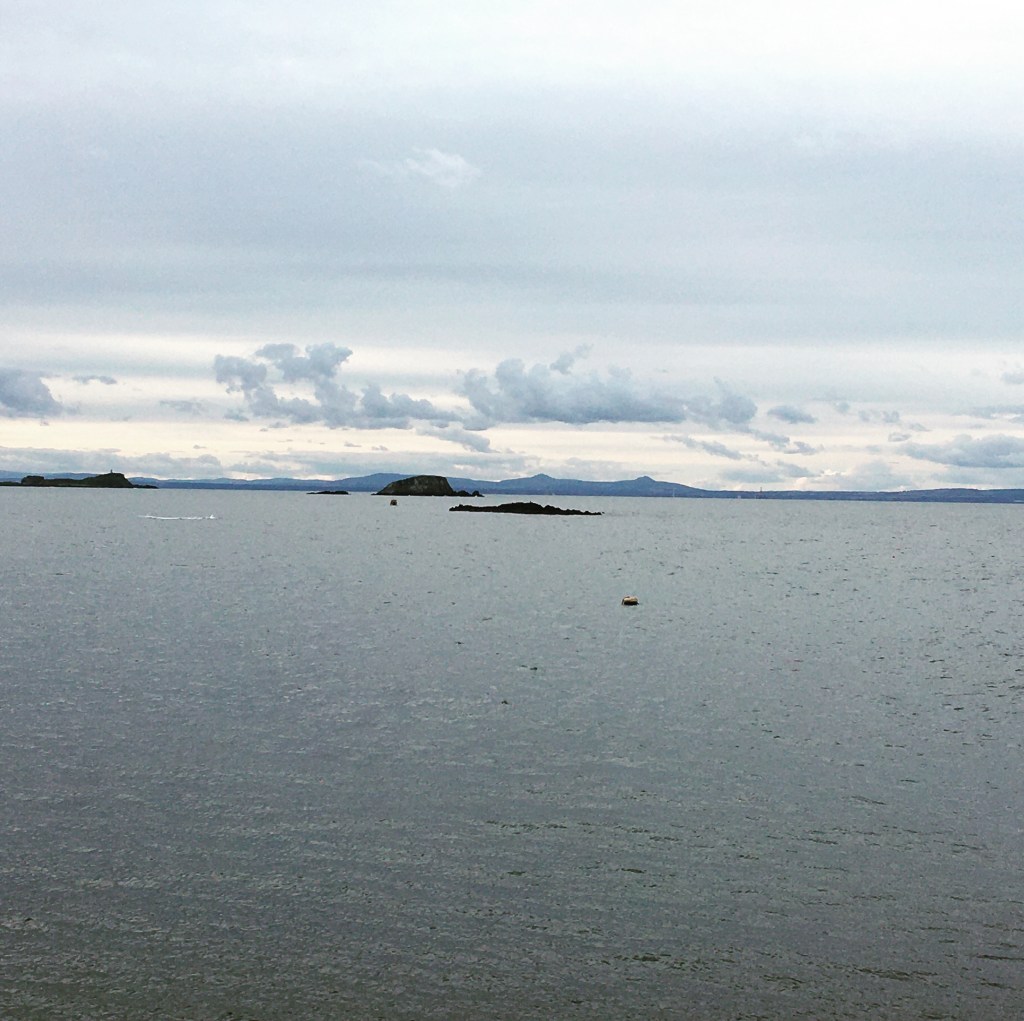
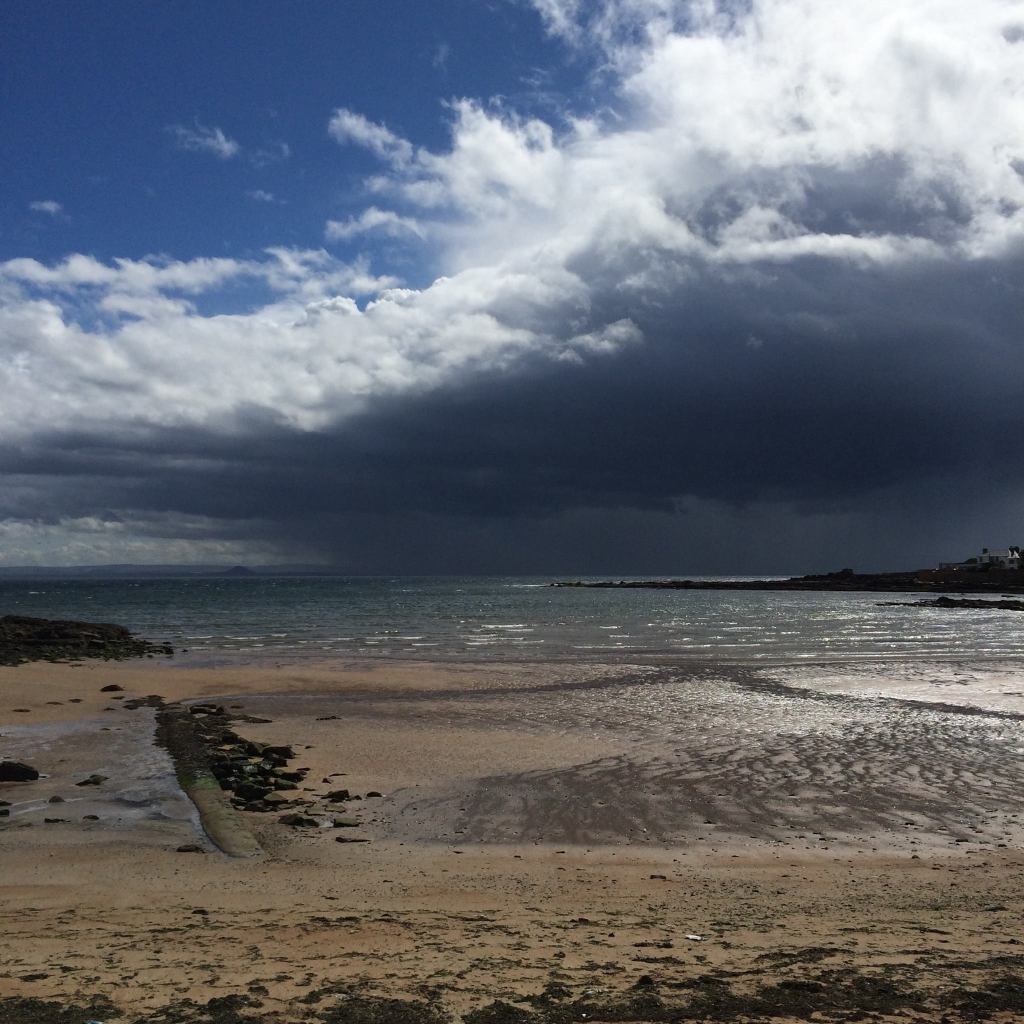
So to conclude, and maybe to cheer me up, are some places of significance – I won’t embarrass anyone by putting people – that I do want to see really badly at the moment. Here is the Firth of Forth, all flat sands and rock pools and Eiders, a place (and people) I associate with freedom and quiet and love.

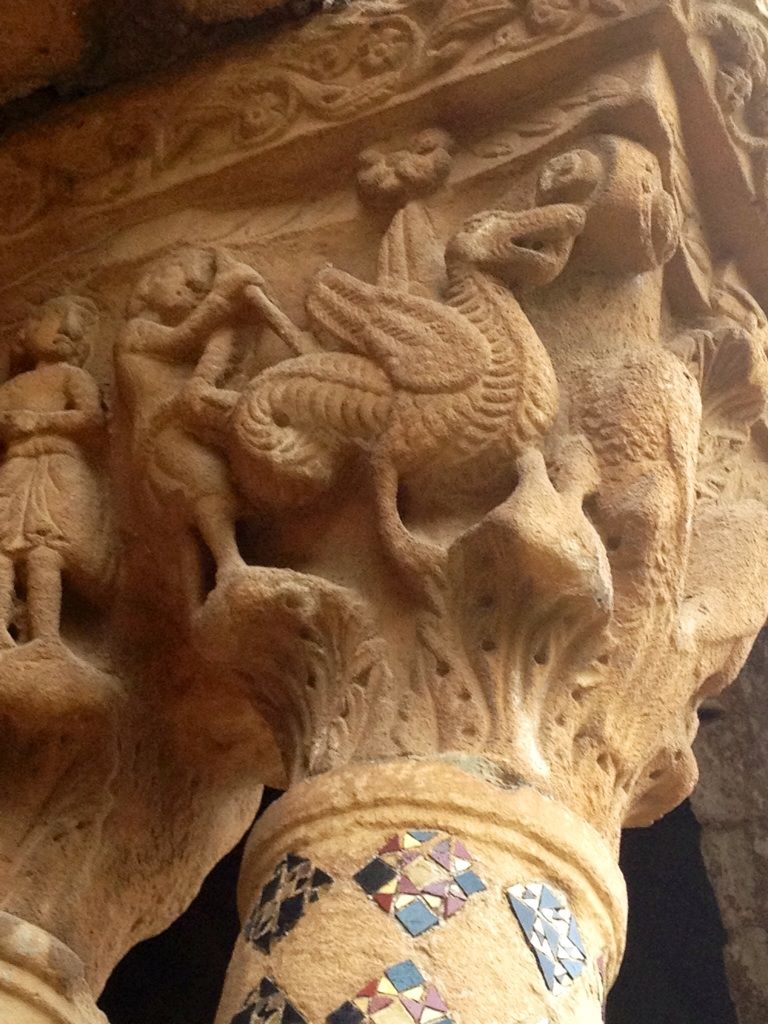
Or – and these last two are no surprise if you have followed my journeys at all – that I have to include as places that mean a lot to me, the Tors in the Cheshire borderlands, and that Monreale-like face in the rocks at Ludchurch.

Excelsior

Exaltabunt omnia ligna silvarum

Then shall all the trees of the wood rejoice

When the Catholic liturgy describes one particular tree – perhaps it needs an upper-case T – it is notable that it is described in very positive terms: fidelis, nobilis, dulce lignum. Faithful, noble, a sweet wood. In the great C6th hymn of Venantius Fortunatus, the cross, Roman instrument of shameful execution, is turned into something of beauty. The shame of imperial Rome, the curse of Deuteronomy, the paradox of Pauline theology are seen in the context of the good thing these pieces of wood have done. The poem Pange lingua gloriosi proelium certaminis Sing, tongue about the the battle, of the glorious struggle places this tree sola digna, the only worthy one, uncomfortably side by side the images of torture. Far enough in time from the grim reality of the cross, Venantius brilliantly uses the repeated dulcis – sweet – to apply to what later writers call the Instruments of the Passion and to the body of Jesus: sweet iron, sweet wood, a sweet burden. The poet is writing in praise of this particular wood as part of the cult of the Holy Cross: crudely put, we might see this as an advert for the cross whose veneration he is proposing.

When Psalm 95 (or 96 in some versions) suggests a primacy for the God presented in the books of the Faiths of the Book, it bursts its banks towards the end, and the poet pictures a world where the heavens and the earth, the field and the woods, are alive with joy. It is part of that same thread of nature poetry that runs through these songs, perhaps too often missed because of the overlying themes of later exegesis. I have discussed this with another psalm here. I sometimes wonder whether we miss a big idea when ignore these great Biblical bursts of exuberant delight in the natural world, although other poets do well with the vision of the warmer days (often a little later than early April) and the trees in blossom, from Sumer is i-cumen in through to the pastoral lute songs and madrigals of the C16th. Time spent cooped up when blood is nipp’d is more or less over: a time to be liberated from close supervision, from chores and obligations is here. I look up from my typing just now at the (of course, wisely still bare) ash tree in the garden and am reminded of Peter Fiennes’s comment:

The ash is one of nature’s friendliest trees – its Latin name Fraxinus excelsior is a shout of joy and wonder.

P Fiennes “A river runs through it” in Oak and Ash and Thorn

A chill, bright day in Shotover on Easter Monday echoed that and shout – and if the ash is not yet up to budburst, many of the other trees of the wood are awake and rejoicing. Where I had been sitting on my birthday in February is beginning to dapple with light coming through honeysuckle and hazel; cherry and blackthorn are shining with new blossom. The sky is a clear blue. April, chill but bright, is here.

Water

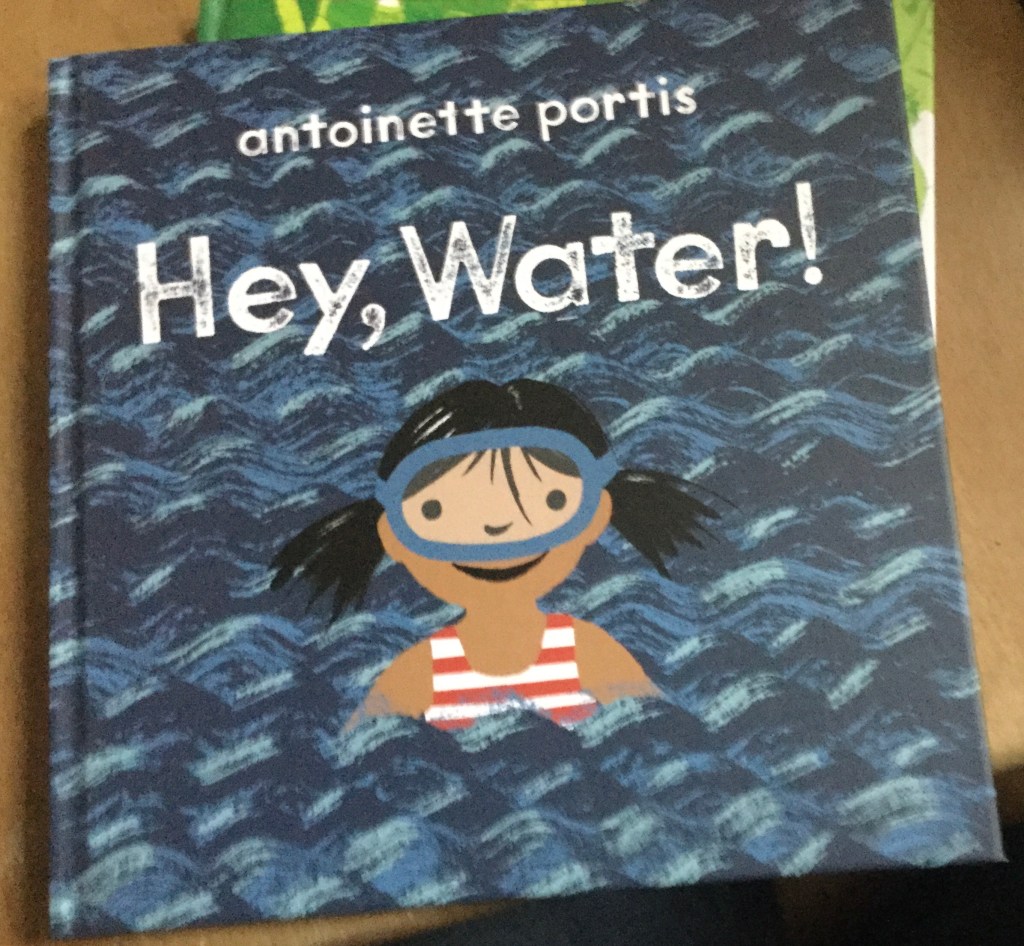
Scallywag Press have sent me some intriguing titles to look through and maybe write about, and I will, in various fora. But this is is spring, varying in its weather; and Lent (as I write this), full of its water imagery: Antionette Portis’ Hey Water seems a good place to start. After all, here in Oxford we have had water-butt-filling rainstorms, dry days so warm as to encourage t-shirts to be discarded… and the end of March, that month that for me is encapsulated in Jobim’s watery theme song: the Waters of March is a wonderful, chaotic evocation of bringing spring rain and floods which “carry sticks, stones, bits of glass, and almost everything and anything” (Wikipedia actually being lyrical for once). And this brings me to the various images and descriptions of water in Portis.

With a picturebook like this it is sometimes easy to fall into the line of describing it as “deceptively simple.” After all, this isn’t the disturbing, rich imagery of Maurice Sendak in Dear Milli or Outside Over There or the detail of a busy page of detail in any one of a hundred beatiful books – say, Castagnoli and Cneut’s The Golden Cage .

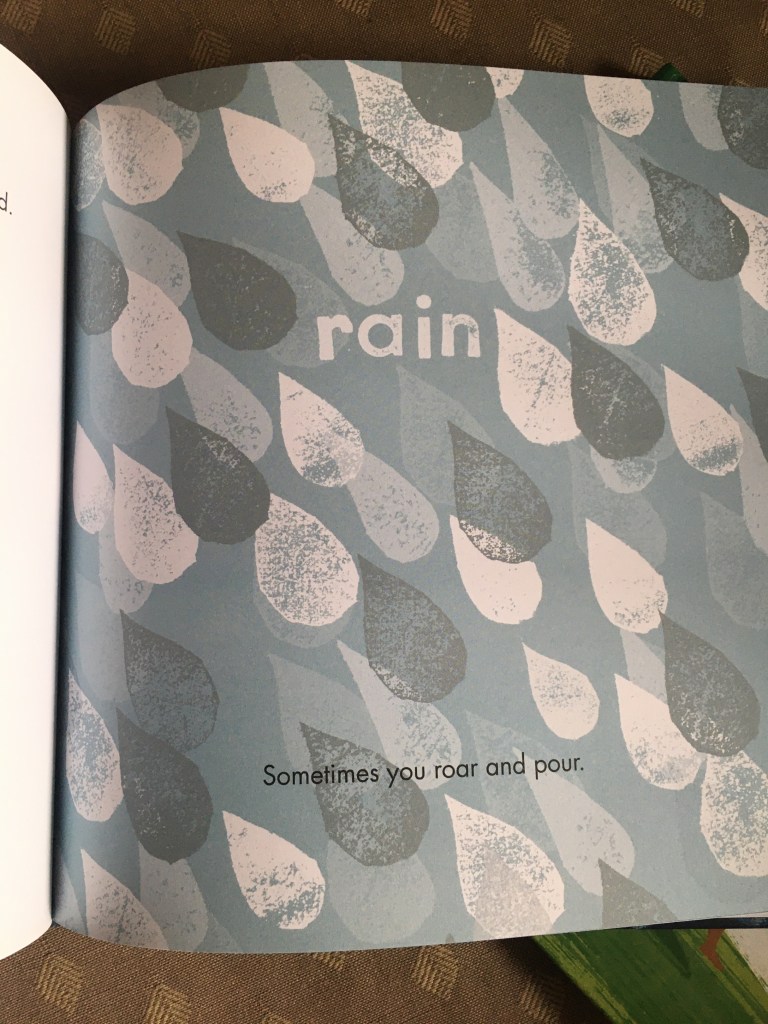
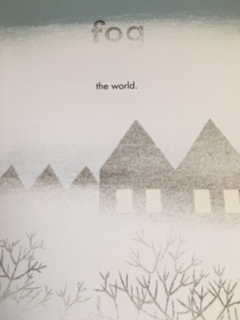
Simplicity is not always easily achieved; it requires as much dedication as complexity if it is to succeed. Design is crucial (see Mat Tobin here on another watery glory, The Tale of the Whale ). Portis really has one thing absolutely, beauitfully in her control, and that is balance. What might have been a duller “Look at this – now look at that” has a richness about it that comes from the varying colours and from the ways in which water floods some pages and is minimal in others. “Tear” exemplifies this perfectly: a line of text, a closed eye and a grey, translucent tear has a huge impact where one might have been tempted by all sorts o of distracting commentary. It is followed in the same opening by rain (see above), maybe the wettest page in the book – and my photo here hints, I hope, at this strophe/antistrophe that Portis handles so well.

We see water as snowflakes, fancier than lace, fog hiding the world, steam, clouds… the ubiquity of water is shown through all sorts of forms in which a reader might encounter it or might have seen it in other books. Each opening invites a very basic appreciation of the visual power, and the text skips alomg with it. The illustrations and text are – until the coda of more instructive material at then end – in a dance of images, spare and generous, and text, beautifully plain. All sorts of ways of looking at water are presented – again, like The Waters of March, there is a flow of all sorts of ideas here, all presented with a refreshing simplicity.

But this is not “deceptively simple” in some tricky way that invites us to look here and there for clues, but just that one thing: simple. In reading it now I am reminded of St Francis too, and his portrayal of “Sister Water…”

…la quale è multo utile et humile et pretiosa et casta.

…who is very useful, humble, precious and chaste.

Canticle of the Creatures

The direct and simple style of Antionette Portis is perfect here for that most varied – and yet most simple – of the building-blocks of life of earth.

An Earlier Life

Jim Crumley’s The Great Wood is full of rich phrases, odd corners of words, just like an established woodland where patches of light fall, water glints, brambles trip. He writes about the symbolic harmony of pine and granite and the space between them, of the bold flourishing of a pine marten fronting up against a human. He describes how your gaze snags wide-eyed on the first trees. He writes of the over-cooked and over-seasoned broth of Victorian invention that too many people swallowed whole. His writing is an enviable marvel.

So it was odd to find a very everyday image so striking tonight.

I had a spell in what now feels like an earlier life…

The Great Wood, ch 5: Sunart

And it has set me thinking (as ever) about reading landscape and reading books as an adult and as a child.

First day at school; Communion; puberty; sex; University; love; marriage, parenthood: all the thresholds. And now in my sixties I look back and think with regret or shame or a grin or a wry smile about them all. And reading: ah yes: I look back and think about Fudge and Speck; Pookie; Orlando; Narnia; King and Sutcliff and Tolkien and Lewis for grown-ups: I’ve written about my own “reading journey” before, and how I have to think consciously of myself as a reader of what we might call ‘children’s books:’ am I now a reader or simply a critic? And how does that play out when I think about my other interest, the landscape of these stories?

Let’s take Shotover, the hill to the east of Oxford where I have been walking recently. I’ve seen a historical angle in tracing the arrival of John Wesley in Oxford in 1720; he will have come over Shotover and past the place that would become my house. It also has moments of other histories: Roman pottery for example, an intersection with a Roman road – and a way to walk for whoever in even earlier times carved out the sunken lane that descends to Wheatley. Maybe Ethelred hunted here; maybe Frideswide or Matilda travelled this way (if not along the Thames). Old Road is an Old Road on either side of the hill.

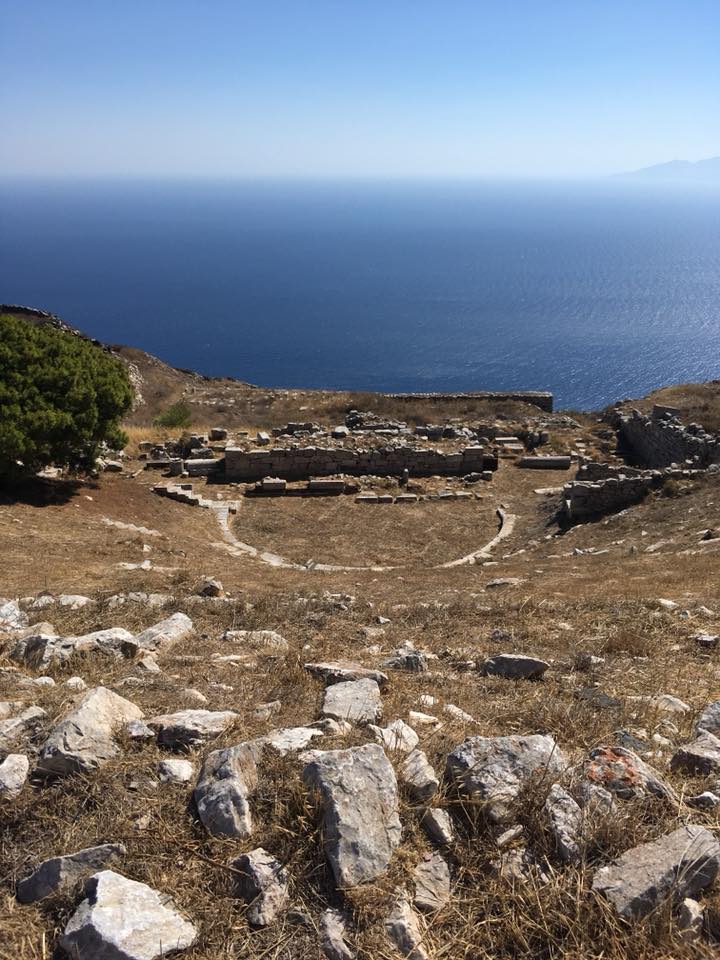
There was time when I didn’t know Shotover, and I remember my first visit with Stephen and Gerry in maybe 1977 – but I cannot remember a time when such places didn’t hold some power for me. Even way back, in Harrogate, woods and crags, oblique sunlight through pine trees. Then Badbury Rings in Dorset, with the wood where the hillfort enclosed it. Then the huge trees and their green light in Epping Forest where I played my recorder and I swear that a cuckoo answered. Then the Pennines and the little shaws in the hidden cloughs. They are particular places and particular times. There is, when a new place is visited – or (and this is important) when a place is visited with a new eye – a sense of a threshold crossed, an earlier time and a now. The first view of the caldera in Santorini; the sun rising as I sat on the sand in Boggle Hole; the first sight of a face in the rock at Ludchurch. I suppose all I’m saying is that there are places that have the potential to be thresholds to cross, and for me these might also be places of awe and wonder: thin places – or thresholds to the numinous. Cross over into the wood, pass out onto the moor and who knows where you’ll be?

By the very way we describe those significant moments, we acknowledge that place can be the site of a peak experience: Moses’ encounter with the burning bush would be one, now represented in the monastery of St Catherine; Christianity is full of them, from Tabor, the Mountain of the Transfiguration to sites of apparitions such as Knock or the tombs of saints such as Vezelay and if I start from my own traditions here, that is not to deny the call of pilgrimage in Judaism, Islam, Buddhism… People come with expectations fuelled by stories of previous experiences or of the fame of the people buried at the spot. These visits are grand events, full of expectation and ritual. It is as if the expectation of a peak religious or spiritual experience is taught, explained, made important by the story, built up to by the publicity and the journey.

The story is part of the journey; the explanation of the story is part of the experience. This is another threshold: between exegesis and eisegesis; what you take out, what you put in. When as an undergraduate I studied Julian of Norwich and the Cloud of Unknowing I was warned beforehand to read them as spiritual texts before I started on them as academic source material. Even at its crudest, it is not bad advice for anyone who thinks they might be coming up to a threshold: acknowledge what you bring to the act of interpretation. It can be books, it could be a place, and I contend that who I am as a reader or walker allows me to depend on both places I have been before and books I have read. At our last visit to Uffington this time last year my friend Mat and I brought books and a sense of awe. It was a wonderful day, and remembering it has sustained me through the gloomier parts of this year – but I come back to Jim Crumley’s over-cooked and over-seasoned broth: look for the peak experience in landscape and you may not find it; go out simply (never merely) attentive and open-hearted and maybe there is a threshold to cross.

So there was time when I didn’t know Uffington. The fact that this post commemorates my last visit there, just before lockdown was imposed (another earlier life), is a sign of how important this place has become. When Rosemary Sutcliff describes the place in Sun Horse Moon Horse, her vivid description makes her hero Lubrin, I have suggested previously, the stuff of legend. Is it possible that this descriptive power also creates a threshold? Or maybe that the narrative itself is the threshold, into a place full of significance, full of a possibility of transcendence?

The very sky no longer high

Comes down within the reach of all.

John Betjeman: Uffington (The Best of Betjeman, p110)

So does this turn out to be more about terminology than anything? Is a thin place a threshold? Or is a thin place a threshold on which we linger, waiting to be invited or drawn in? Peak experiences are often ones that come at me sideways: Malham Cove was amazing, but I was readied for it by doing a geology component of my geography class at school; I was not at all prepared for the waterfalls at Ystradfellte. But even there, on my weekend training in Forest School, I brought waterfalls from other visits (Janet’s Foss, while I remember Malham; the waterfall in Lewis’ The Last Battle). Where does the wonder come from? Does it, in some paradoxical way, require you to be prepared for the encounter you didn’t look for?

Jim Crumley again:

If you walk the Gleann Einich track from Coylmbridge you are immersed almost at once in a depth of trees such as you will not encounter anywhere else in Scotland – trees to darken a sunny day…

An atmosphere of trees bears down. You look left and right and at first all that happens is that the forest moves past you, tree by tree by tree by tree. You hear your own feet, your own breathing, and these move to to the rhythm of the pibroch in your head.

A foot stamps.

You startle, whirl towards the sound, freeze.

The Great Wood, ch 8; Rothiemurchus

Jim stands looking at – and being observed – by a Roe Deer. This mutual gaze, as powerful as Rob Cowan‘s encounter in Common Ground, differs in the insight gained:

She was trying to tell you something about the worth of stillness in the company of nature, in the company of trees.

Ibid

Stillness, a encounter with nature. Looked for and not looked for.

I

held my breath

as we do

sometimes

to stop time

when something wonderful

has touched us.

Mary Oliver: Snow Geese

I walk into a wood, a known wood if I’m thinking about Shotover, and find something else to discover. I look at the overgrown coppice in Brasenose Wood and I can think of the words of Oliver Rackham about light and seasons and underwood, or the mycelial insights of Merlin Sheldrake, but something else remains. Quiet. Attention. Wonder. I am not just a critic: I drink in the not-quite-there leaves of early spring, and the sound of running water, the possible thickets to explore and the paths I have not walked, when something wonderful has touched us.

Worms

It might be that at some point I write about worms as mythic beasts, maybe dragons, or the pull of the Lambton legend, or its folkloric influences, or (as I have before) about Mayne’s retelling. This is not that post; this is a brief reflection on worms on my allotment.

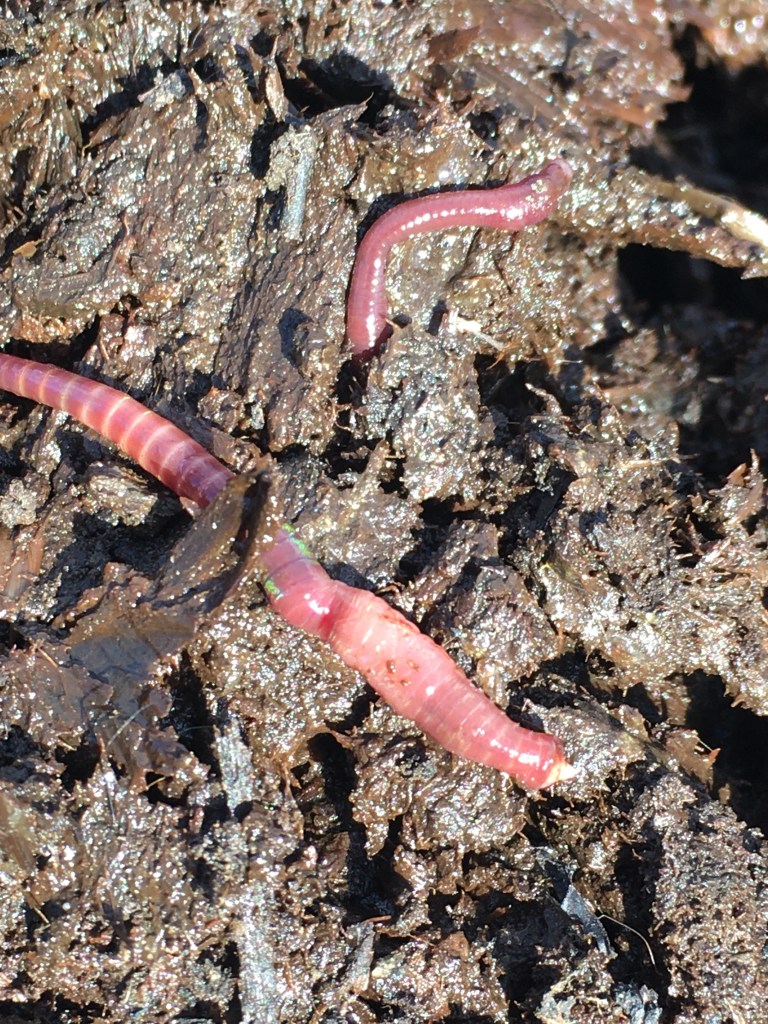
Thanks to a colleague of Maggie’s we have some generous piles of muck ripening on the plot. Turn but a spade and start a wriggling congregation of worms, working away in the wet bins this poo is in, and from time to time I move some manure (and worms) into the compost bins or to round the rhubarb or the fruit trees, or wherever. It feels good to help the soil and the plants along, and the worms do their bit, eating their decaying organic surrounding (and by the way, this isn’t an advice piece on wormeries: check out the RHS or someone) and helping turn rather odd claggy and sandy soil into the stuff that gives us pumpkins and potatoes,

And there I have it: helping. I have phrased this in such a way as to making these co-habitants appear to be working with us to produce something for our consumption – yet really I am using the same material they are, and profiting from their industry.

This isn’t a plea for a kind of extreme pro-animal gardening in which I avoid using any animals’ processes to better my plot, my enjoyment, my diet. I am aware, with the poet Anne Stevenson that lost to the angels, it appears/We share with rats and fleas a murky source. Acknowledging this, I find worms fascinating in what they do and how they live (look at this for guidance in schools, again from RHS, or this, from the Earthworm Society of Britain) yet as I dug, and spread, and mixed I did wonder: if it freezes tonight will I have harmed the worms? That writhing pink mass that got distributed to the new rhubarb and the goosegogs: was it some wormy gathering I broke up, a striving for mating, even in some sort a family? And the robin on the plot, and the corvids in the trees – will they profit from my digging at the expense of these worms? At home the chickens will slurp up a worm they find like a child attacks spaghetti.

So I dig and spread. The robin keeps an eye on what it can have when I am gone. The blackbird too is carefully noting what I am up to. The jackdaws (and even the raven, I think) patrol the allotments for what they might have. The worms are our – what? Helpers? Coworkers? Victims?

And if I think that at least my warming compost and sticky middens are a nice place for these creatures, what does that mean? I am not farming them, keeping them there to break up my manure (well, not my manure, but you know what I mean, I hope); they simply arrive in a way that makes me see the plausibility of spontaneous generation, and I am profiting from it, using their consumption to make better compost, to enrich my soil, feed me. Me, me me, mine, mine mine. Maybe it is this framing that shows how lost to the angels I am.

Our plaited genes mean nothing to the spheres;

contingency, not prayer, will plot your course.

Anne Stevenson, To Phoebe (at five months)

I can’t leave it there. Even in a wormy pile of farmyard clearings, there is much more than this. A history of hunter gatherers bettering themselves, of birds pecking and cows shitting: as Hopkins sees it, a rich pattern of everything that is swift, slow; sweet, sour; adazzle, dim. Anne Stevenson, too, is aware of the to-and-fro of divinity and the secular (in part what Andrew Wright, in moving towards a definition of spirituality calls the mind-matter dualism that shapes our struggle for meaning) and brings it out wonderfully:

The sea is dark

by virtue of its white lips;

the gannets, white,

by virtue of their dark wings.

Gannet into sea.

Cross the white bolt

with the dark bride.

Act of your name, Lord,

though it does not appear so

to you in the speared fish.

Anne Stevenson: Gannets Diving