Beard, Shorts, Tattoos, Strappy Tops

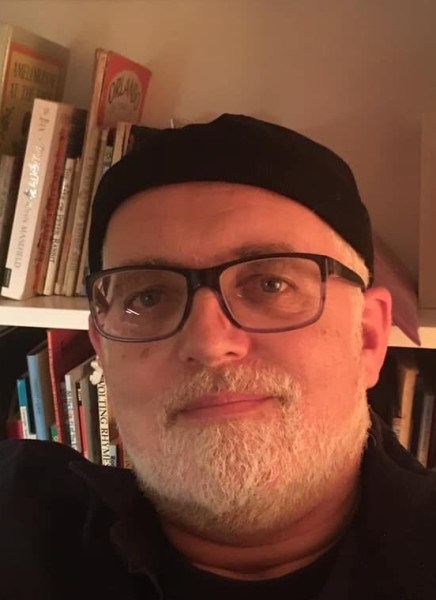
I grew my first beard aged 19 and was really stupidly proud of it, in a month I spent with some nuns in what these days might be called my “gap year.” The sisters’ reactions were varied: for some it was a real curiosity, having seen men with beards and men without but not a man actually starting one off; for one Dominican sister it was nothing she hadn’t seen before, and she would advise on itchiness, shampoo &c. quite happily. As a woman who had served in the WRNS, she explained, she had “seen plenty of boys [ouch] try out a first beard.”  I shaved it off when I got to University: other students used to ask me things like where the library was and I would tie myself in knots trying not to admit I was as lost as they were. But this was where I learned something about beards: they make you look like you know stuff. The history of beards suggests that they are markers of sagacity, in the west, certainly – but also of scruffiness and a lack of care.  A wobbly history of  disputed masculinities in the West? The attitudes change, of course (this is a great digested read, which points out great beards of the past as well as work-place “clean shave policies;” Margaret Thatcher was apparently deeply opposed to beards); it’s really quite an ephemeral thing.

It is clear that some school managers feel strongly that children have naturally fewer rights around what they wear, how they behave, and that these codes will reflect issues of belonging and compliance to a degree that means non-compliance is bad behaviour. Teachers will likewise dress “appropriately” or “professionally,” and while I would often advise trainees about to enter a placement in a general way, and sometimes have had to discuss dress codes with individual students (never a happy conversation),  dress as a teacher has always been something I’ve found hard to grasp. Early Years men, unless they are in an institution that has a uniform, can be a bit torn.  I was asked to wear a suit when teaching in Reception – but at the other end of the spectrum also not to wear shorts in one nursery. For women, shorts and the dread “strappy tops” seem to constitute some kind of marker in the same way. Shoulders are “inappropriate;” knees too. Jeans? Someone ( a resolute chino wearer) recently suggested I was “bold” to wear jeans in Higher Ed.  Sandals? Is a bow-tie appropriate or comic?  Kilt? Gown?  There seems to be no simple way to manage these routes to appearing like a professional.

Tattoos. The recent fashion for body art has reached employed and employable people in new ways over the last maybe ten or so years and teachers are sometimes asked not to show theirs. The Vox Pops (or should that be Voces Pops?) here in the Guardian give a good idea of the pros and cons from school leaders. I had an ear pierced as a trainee teacher (my first headteacher asked me not to wear a ring in my ear to church on Sundays); I had three ravens (from Thomas Ravenscroft’s song)IMG_0167-2 tattoed on my shoulder a few years ago, in my late fifties. I’m not hiding them; they are where I wanted them – occasionally on show, and something I can see and smile at.  They are there rather than my forehead because I don’t think my forehead would look very nice with a circular tattoo.  But of course this is where the trouble lies: what is “nice,” or “appropriate” or “professional”?  Fashions change, attitudes to fashion change, how fashions mark professions or “class” (or lack of these) change. Maybe, too, the placing and reason for the tattoo matter: a wedding ring finger tattoo is approved of, where a heart and anchor and “Mother” might not be. But an arm tattoo is OK as long as you keep it covered?  What about the educator with a usually covered tattoo who wears a short-sleeved shirt that reveals it? Dress codes are subtler than they first appear, and context is everything.

And so at length to professionalism.  NQTs or about-to-be-NQTs are concerned about this (I remember a poolside conversation on this in Greece [the marvellous Pension George, actually – but is this product placement?] once with three young people just about to start their NQT jobs), and while I can understand the punctuality and dress professionally stuff, of course I can, all I think I’m really saying is that there are ways of expressing authority and professional attitudes that go beyond outward markers.  We might consider what they are.  They probably need to be embedded in teacher training: the outwards signs of professionalism may change (hence the previous paragraphs) but the need to appear a member of a caring and well-educated profession sees to me to be a fixed point.

Planning is a good marker, and all those pedagogic behaviours sort of go without saying, although adjusting to different schools’ ways of and attitudes to planning/record keeping can be a shock for an NQT – or indeed for anyone moving school. The subtler things like how to sound professional face to face and in terms of address are not as hard as they look: a bit of distance but coupled with a warm greeting will top off the ways in which you convey your knowledge. Does it need a tie? Know the children, be clear about what the school has planned, be able to pull out the big words and big ideas when necessary – and be ready to talk plain and simple teaching-and-learning without waffle. This is basic.

But the ground is shifting. Sod the beard. the suit, the tattoo and all that stuff: how many followers have I got?   Social media seduces us – me –  into thinking that professional status is akin to celebrity.

A very thoughtful blog post came my way at the start of the month. Thoughtful, but painful, Twitter’s @MrHill34 is bemoaning how much of the inimical and confrontational material on social media “exhausts the energy needed to develop some meaningful actions/solutions to such issues. We solve nothing this way. All we do is hang our professional dirty linen up to dry within a giant online echo chamber.”  Great image.

It seems to me that we are in a time of such flux that Headteachers can go public with their political views, and when soi-disant leaders on Twitter can use all sorts of wolf-pack strategies and bullying that (one would hope) they would crack down on in the school they teach in (of course some don’t teach in schools, but that’s a distraction).  I would join him in my disquiet about pontificating (knowing I am guilty of it) and the ways in which seniors in the profession  – or at least self-professed leaders – bully, mock and indulge in name-calling without regard for the standards of the profession they aspire to influence. This can’t be the message we give to new teachers: shout as loudly as you can, be abrasive to people you will in all probability never meet, as long as you score the point or look brilliant on Twitter, or get your name in the paper.

There is a sense – and maybe it’s the uncertainty of the times that encourages it – that what we really need is coherence, compliance. Put-up-and-shut-up is part and parcel of the rise of the guru: not listening is endemic in our politicians.  And when we don’t get the compliance we want (I think that emphasis is important), we are entitled (somehow) to mirror the name-calling of our most infamous of current world leaders. We look far worse on social media than we do with a bit of scruff as the beard grows in, or with that tattoo about love that shows when you roll your sleeve up.  What this snarling does, of course, is to make us all look incompetent, losing our way, a squabbling bunch of people arguing about their seats in the lifeboat.   And that’s not professional.

Perhaps we should look at a different model of human interaction here. One that is fashioned around respect as well as passionately held beliefs, one that is founded on a genuine regard for others rather than point-scoring, one where arguments about behaviour are not a reductio ad absurdum, where phonics is not an excuse for ad hominem snapping.  My school is better than your school? My pedagogy is better than yours? Really?  We cannot have a system that is genuinely compassionate (and that can mean high standards for the marginalised just as much as it can an understanding of the out-of-school lives of the disruptive: I’m not making a point here) without this sense of respect for one another as colleagues, a real attempt to see what is at the heart of the educational project for these people who so readily object to others or do them down.

As Sue Cowley has said on Twitter:

I yearn to see more coverage of HTs quietly doing good, inclusive things in their schools without feeling a need to generate headlines or talk negatively about the work of their colleagues…


Underland Thoughts II

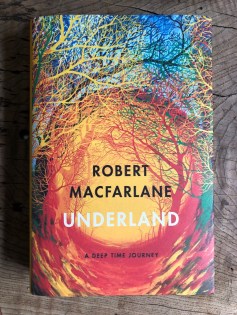
More selections and thoughts arising from them as I revisit Rob Macfarlane’s Underland. Again, quotations will dominate, with the uncomfortable balancing act of celebrating a great work and wanting to preserve its voice, yet not wanting simply to reproduce it. If you have got this far with me and haven’t bought the book, maybe you should. I am tempted to buy another copy and have it interleaved so I can take note after note.

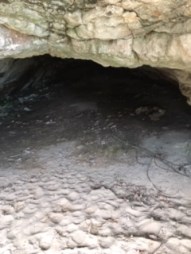
To back track a little. The previous post left the author in a storm by the caves of ancient cave art, where his journey is remembered

…mostly as metals. Silver of the pass. Iron of the bay and its clouds. Rare gold of the sky. Zinc of the storm in its full fury. Bronze and copper of the sea to the south as I escape.   p254*

We are still, in ch 9, in Norway, now looking at the Maelstrom,

the underland of the sea   p291

and the complexities of the economics of oil and fishing. The pace changes, and human characters – never far from the narrative throughout most of Underland – are more important. Human geography – and our need to sanitise our use of resources:

Those industries [extracting oil] understand the market need for alienated labour, hidden infrastructure and the strategic concealment of both the slow violence of environmental degradation and the quick violence of accidents.   p311

I had not heard the term solastalgia, the “distress cause by environmental change,” so this is eye-opening:

the unhappiness of people whose landscapes were being transformed about them by forces beyond their control… We might consider John Clare a solastalgic poet, witnessing his native Northamptonshire countryside disrupted by enclosure in the 1810s… a modern uncanny, in which a familiar place is rendered unrecognizable by climate change or corporate action: the home becomes unhomely around its inhabitants.   p317

and we walk a shoreline of human detritus.

Nature is no longer only a remote peak shining in the sun or a raptor hunting over birch woods – it is also tidelines thickened with drift plastic, or methane clathrates decomposing over millions of square miles of warming permafrost.   p321

Kulusk now, in Greenland, and the global melt releasing anthrax and revealing hidden military bases.

unweder – unweather  p334

and

uggianaqtuq – to behave strangely  p335

and because this section is about exploration of the underland of Greenland, Rob gives us a meditation on ice:

Ice has a memory. It remembers in detail and it remembers for a million years or more.

Ice remembers forest fires and rising sea. Ice remembers the chemical composition of the air around the start of the last Ice Age, 110,000 years ago. It remembers  how many days of sunshine fell upon it in a summer 50,000 years ago.  It remembers the temperature in the clouds at a moment of snowfall early in the Holocene… It remembers the smelting boom of the Romans…

Ice has a memory and the colour of this memory is blue.   p337-8

And then we are off into a glacial landscape where orange lichens and emerald leaves of dwarf willow stand out. The boom of breaking ice, and in the Northern Lights

The mountains shoot jade searchlights into space.     p346

Rob descends into a moulin, a meltwater shaft in a glacier,

a portal giving access to the blue underland of ice.   p369

and witnesses – with a vivid, almost Chthulhu-like horror a short quotation could not reproduce – the upsurge of a massive berg, ice broken from a glacier.

The penultimate section, ch 12, is no less shocking: our exploration of the “tomb” (RMc’s word) or deep storage facility for our nuclear waste:

The tombs that we have constructed to receive these remains are known as geological repositories, and they are the Cloaca Maxima – the Great Sewer – of our species.    p400

They are designed to outlast us, something I find appalling. And even though much of what we create will outlast the individual maker, this is legacy on an altogether different scale.  Death haunts so much of this book – echoing the human pattern of burial to preserve or to conceal – until we meet the challenge:

What legacies will we leave behind, not only for the generations that succeed us, but also for the epochs and species that will come after ours? Are we being good ancestors?     p410

How do we tell these people/these creatures of a time to come not to disturb the toxic giant we are interring?

Oh, Underland has so much more, even in my own reading, IMG_0149to highlight, to praise, to explore, to discuss, but this is a book to read slowly and then to return to. These notes are for me, really, and some of what I see or connect with seems nefas to share here.   As a final non-sharing, I will say that the last, short section, a return home like in The Wild Places, reduced me to tears.
________________

*Page references are to Macfarlane, R (2019). Underland: a deep time journey. London: Hamish Hamilton.

NB The Guardian has a resource of stuff they have produced around Robert Macfarlane, which includes his own very thoughtful illustrated essay arising out of Underland.

Underland Thoughts I

I’m not sure this isn’t really something for a Wild Spaces Wild Magic research page rather than a couple of blog posts, nor am I entirely sure what I can add to the massive work that is Rob Macfarlane’s Underland,  a moving, detailed, Bible Moralisée C66033DA-9011-4149-85C3-F6FC8F658B52that looks at landscape and souterane and human uses for and vision of the spaces we find or create.
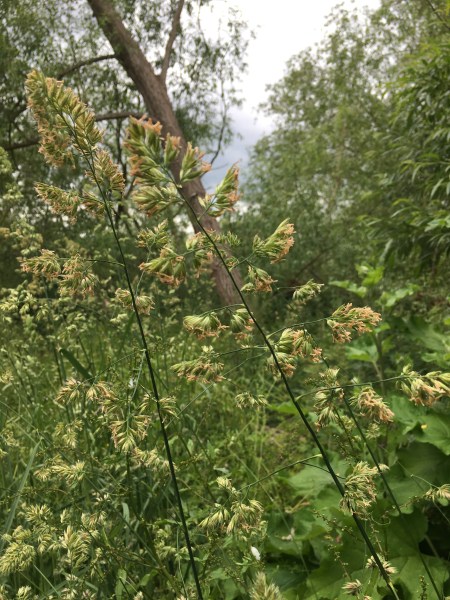
Then don’t.

OK, instead I’m going to put together some of the images and lines that give me most to think about, whether in terms of the brilliance of their wordsmithing or because their message is worth pondering.

That’s not to say loads more isn’t wonderful: just go read it and make your mind up yourself.  I’m not copying the book out or appropriating the ideas: mine is an idiosyncratic selection (a bit of commentary may sometimes set a context), a few lines from a massive work that deserves a good slow read.  I said in my initial review on Goodreads how this could be a scripture for our time; perhaps this is my Lectio Divina.

____________

There is a lot to ponder in the opening pages:

I have often noticed how claustrophobia – much more so than vertigo – retains its disturbing power even when being experienced indirectly as narrative or description. p12*

This is the point at which Rob caught me, by moving from this into Garner’s claustrophobic description of the Alderley tunnels in Weirdstone and then into Gilgamesh.

Our ‘flat perspectives’ feel increasingly inadequate to the deep worlds we inhabit, and to the deep time legacies we are leaving. p13

then

…to think in deep time can be a means not of escaping our troubled present, but rather of re-imagining it; countermanding its quick greeds and furies with older, slower stories of making an unmaking. p15

The second chapter, Burial, is set in Britain.

We are often more tender to the dead than to the living, though it is the living who need our tenderness most. p27

It concerns cave-repository of the dead, but also the tragic death of Neil Moss, an early autumn descent in the Mendips to where

Language is crushed p49

Ch 3 moves to the intense research hidden from the noise of particles in Yorkshire, linked in the book to the network of (nearby and further afield, now ruined) Cistercian Abbeys

in which prayers were offered to a presence disinclined to disclose itself to the usual beseechings p67.

R S Thomas’s voice echoing quite literally de profundis, as Rob moves us past the Komodo Dragon-like mining machinery to a discussion of the term Anthropocene, and how we have reached here. This is one of my favourite passages, and will have to stand for so many:

We all carry trace fossils within us – the marks that the dead and the missed leave behind. Handwriting on an envelope; the wear on a wooden step left by footfall; the memory of a familiar gesture by someone gone, repeated so often it has worn its own groove in both air and mind: these are trace fossils too. Sometimes, in fact, all that is left behind by loss is trace – and sometimes empty volume can be easier to hold in the heart than presence itself.  p 79

If someone finds this blog and is wondering what to read at my funeral, that’s the passage.

The wood-wide web, discussed as we explore Epping Forest in Ch 4 is an idea so powerful I am still digesting it. Some beautiful, tender images and amazing ideas. The wonderfully named Merlin Sheldrake, and Rob’s own meditation on roots and language where

The real underland of language is not the roots of single words, but rather the soil of grammar and syntax, where habits of speech and therefore also habits of thought settle and interact over long periods of time. p112

And so on to Paris and the catacombs, for me the most terrifying and claustrophobic exploration in the book. The cataphiles and Hell Well. The Salle du Drapeau. London, and in a slate mine in Wales

a carchive, a slewing slope of wrecks p166

cars dumped to save scrappage.

Death is never far away, and we travel past a not-quite deserted Mithraeum to swimming deep in a submerged system, where a tunnel beckons the author:

The pull of the mouth through that eerily clear water was huge. Just as standing on the edge of a tower one feels drawn to fall, so I experienced a powerful longing to swim into the mouth until my air ran beautifully out. p200

Beautifully. The challenge to find beauty is not always about death and danger: Ch 6 ends with a lyrical description of an Adriatic beach at night where a chill current recalls the snow-fed starless rivers Rob has visited; in ch 7 a near-naked Macfarlane negotiates

the snowmelt bite of the water  p232

But the travelogue is not always beautiful, either: there are executions commemorated in Slovenian valleys, and much later there are warnings of the waste storage the  Anthropocene demands…

Even in the most overtly spiritual section, where we travel to visit the cave paintings of Lofoten, we are not far from a curious sense of disaster and mystical experience. He ties together the discoveries of Lascaux with the emergence of the news of the Nazi Death Camps, and on leaving the red-painted dancers Rob has

a strong sense of being watched…

What did I see in the dark? A shadow-play of pasts, events refusing sequence, the fingertip drawing its lines through time far from the well-lit world, there in the unfathomable cave. This was a place that absorbed those visitors who crossed its threshold – as it had me, another in the long history of meaning-seekers and meaning-makers in its shadows.  p284

What happens next is so deep, and it feels to me so important, I can’t write it out: we see Rob in mourning, and the tutelary genius loci is at best an ambiguous figure. That “strong sense of being watched,” the sentient landscape, brings me from the northerly storms to the Peak District, to Thursbitch and Ludchurch, and since this post started with Garner, I thnk it right to end it here.


*page references are to the Hamish Hamilton hardback, London 2019

(Semi)retired

In 2018, on 11th June, after much humming and hawing (to the point where I must’ve bored Maggie and my work friends to pieces) and a memorable walk with Roger (my manager at the time) to talk it all through, I sent off the paperwork to apply for Voluntary Severance from my post as Programme Lead/Principal Lecturer in the School of Education at Oxford Brookes.

The back story is that I had been thinking about it for some time, pondering back in the January on this blog  “whether vocation and profession are coterminous.” Then it crashed in on me a year ago, at a time when (as the still rather raw-to-read blog posts such as this and this or the more comfortable this attest), I had had enough. Doctor; Occupational Health; Counselling: VS came at the point where I was (as those compassionate or foolish enough to get caught in the flood)  everything from tetchy to sleepless or weepy . I thought about it, thought about the other possibilities, and metaphorically signed the papers (e-documents). I am tempted to give an Oscar-like list of thanks to all those people who let or helped me let go of all those things I felt increasingly unable to do well, or who gave me sage advice. But I  won’t –  except that it’s now my turn. Here are some thoughts about the last year or so.  I won’t advise on how anyone not yet at pension stage should check their payments and lump sums &c regularly – although to have done so earlier would have saved me literally days on the ‘phone. This is a bit more personal. Well, a lot more personal really.

I wrote in January ‘18 that it came as “something of a surprise at this end of my working life to find I have friends deeply woven into my appreciation of a working day.” I was right when I said I enjoy people’s company.  It is still a good day that has coffee with Mat, or with Elise,  Chris or  Helena, or tea or something more refreshing with Jon. It is still a good day when coffee in the Weston means meeting Catharine, Carol, Georgina or Susannah. I still feel guilty about leaving when colleagues asked me not to.   It can be a bad day when I have to remind myself that not everyone is as flexible as I can be…  I wouldn’t describe this as loneliness, but as a realisation that I was right: life at Brookes can go on, does go on. Gloomily, I likened my going to a stone dropped into a pool: a splash, and then the calm waters close over. I had seen colleagues leave before and know that organisations and systems fill the voids very quickly.  That this is true is inexplicably sad. Nobody told me how big a part of this would be regret.

So the first message was that I wasn’t going to leave behind some of these gloomier things. I thought I might; I said to my counsellor I understood I wouldn’t; I really didn’t think it would be as big a deal as it is.  While Elise had advised it would take a year, I didn’t realise it would be a hard year. 

Other things have stayed, too. I feel like the reinvention of Nick has been like a second go on the adolescence rollercoaster, but with some knowledge of the track.  I sleep badly still – but then,  I always have. I spend too much time on social media and modern tech. Too much telly, too much iPad or ‘phone. A worry last week about a student’s programme meant I saw the dawn, heard the dawn chorus. Avoidance strategies to make things that are hurtful seem smaller. But with that has come running.

I am not a good runner. I am not like some of my extended family who moan about the Trench Foot or broken toes their umpteenth Marathon has brought them. BAA6F010-890B-422D-8483-6C7981D1D1EBI am a tubby jogger who is proud to be able to cover 6.5k without collapsing. Nevertheless, I look forward to it, enjoy it (mostly), really appreciate the contact with the natural environment of suburban Oxford, and of course boast of it when I can (like here).
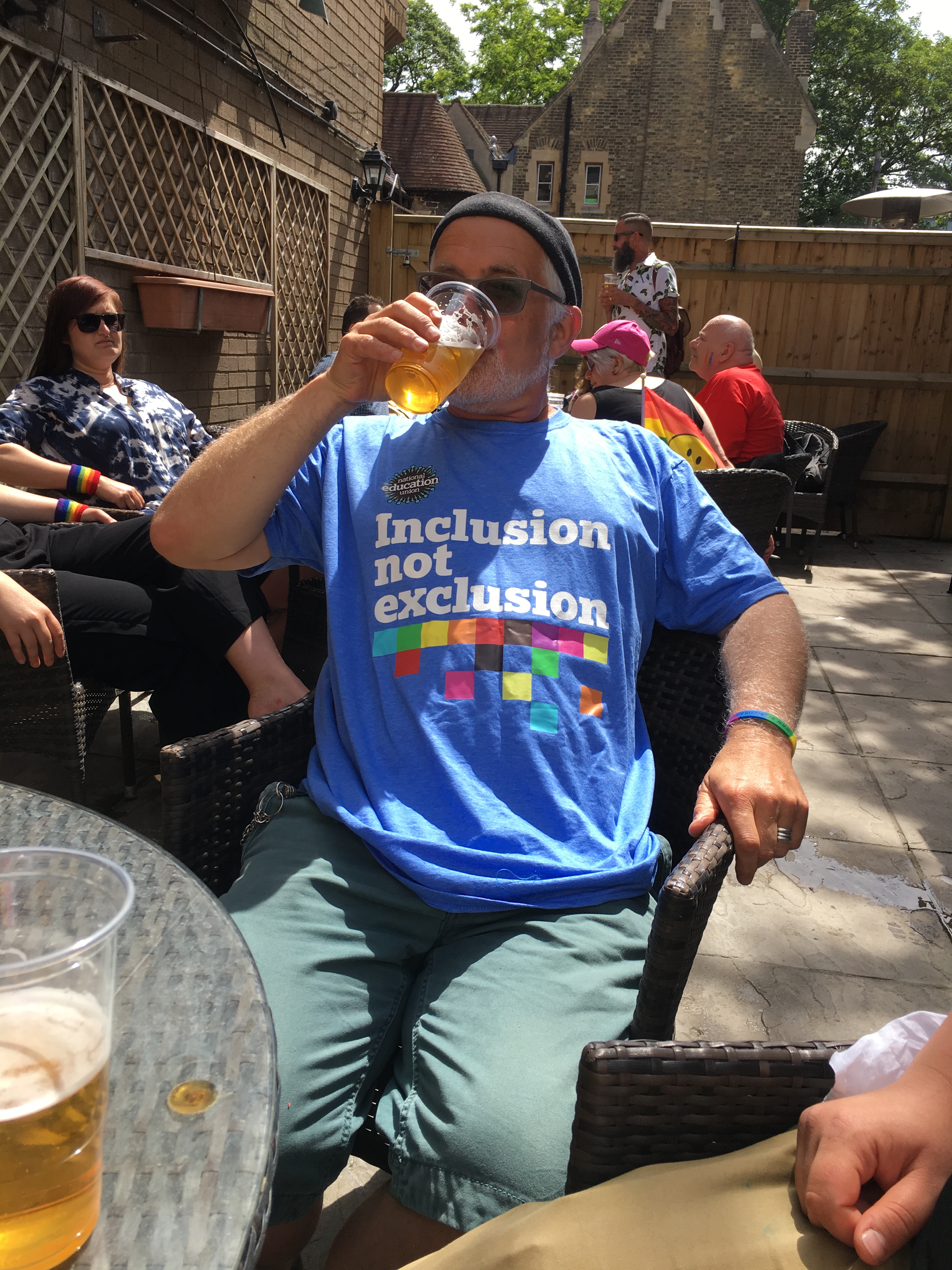
Therefore the second message: new things may arise. I keep seeing jobs that I think “Ooh, I could apply,” only to realise that those opportunities are closed to me. But there are new chances, new possibilities, and I now know that vocation and profession is not the right dyad: it is much more like profession and full-time paid employment are not coterminous, and the new things arising can’t always be seen in terms of money.  Being not-entirley-retired has a lot of plus points: it allows me above all to ponder what I really want and need from my profession as an educator (yes, I know that’s ponderous and full of windbaggery).  

And as for the rest? Well, the new opportunties may not be what was expected, they are smaller, but they make the shape of a day feel different.  It’s such a joy to share stories and books with school children; a challenge to learn from pottery; a grace to go to Mass more often – and who is this person that writes household To Do lists? Tomorrow I will be reminded by various bits of music that it’s a day for running. This piece of Nina Simone from the music of Billy Taylor has been key, a life saver in the darkest times, and if it is an anthem for the liberation of oppressed minorities in the States, I don’t mean to equate my desires with the plight of African Americans in the 50s and 60s, but this came on as I went for my first run, and has stayed with me.

…I wish I could say
All the things that I should say
Say ’em loud say ’em clear
For the whole ’round world to hear.
 
I wish I could share
All the love that’s in my heart
Remove all the doubts
That keep us apart
I wish you could know
What it means to be me
Then you’d see and agree
That every man should be free…
 
It’s powerful stuff, all that wishing, all that desire for freedom.
 
And it’s reflecting on this that will bring this rambling to a close. I knew I would lose a lot when I left, some good, some bad – or maybe some immediately pleasant and some stressful: avoiding a judgment of good and evil – and I dimly realised there would be some things I would take or leave that would be in my power. I hadn’t expected that a lot would be outside my immediate control, and again some of that has made me really happy, and some has taken me to very miserable places.  I suppose one way of thinking about this is a Detox, but of course not everything was toxic in my job, not by a long chalk –  although I think one of things that I became addicted to was the stress…  and bang: work stress is gone.  
 
And that’s perversely one of the things that make leaving feel like a sentence that has been interrupted, a me that no  longer is me. The fish who escape the Aquarium at the end of Finding Nemo are free – but what do they do now? What will Caliban find when he has no more dams to make for fish? Another “language learnt but nothing understood,” perhaps? Freedom is also freedom to be caught by squalls of depression or aimlessness. Maybe these are the very spurs that send me out trotting round the meadow.  Like Caliban we all create who we are with what we have….
 
The poignant lyrics (and very James Taylor harmonies) of Before This World and The Jolly Spring Time have some useful thoughts:
 
Give up the love that takes and breaks your heart
Let go the weight of all that holds you here
 
and
 
Let the resin risin’ up in the tree
Make the green leaf bud…
 
Yes the winter was bitter and long
So the spring’ll be sweet
Come along with a rhythm and a song
Watch creation repeat.
 
Thin thin the moment is thin
Ever so narrow the now
Everybody say got to live in today
Don’t nobody know how
I know that the lyrics alone don’t cut it. For some people these are threadbare sentiments except, maybe, to a sixty-something who smiles when he’s running through the meadow and James Taylor’s singing comes on the lighten the last few minutes of a run. But they stop me running away from something: they make me think I’m running in something, which feels very different.  Running in the now. 
 
Maybe the third message is that I think this is my new job.    


Pontificating

Social Media seems to have exploded with vitriol over the last few days. Educationalists (or soi-disant educationalists) know The Way to teach poetry; Bishops know The Way – or at least a way important enough to splurge it out on Twitter – to avoid harming children; another voice (on the right) wants to resort to shaking an autistic child for her daring not to know her place; Politicos from the US are eyeing up the NHS and meeting with sharp put-downs; opposers of Trump look at our current establishment activity in anger and despair, and apparently one at least of the Brexit crew is looking to science for a cure for homosexuality. I’m not glorifying any of this with a link, and while I think my own irritation with some of this is probably all too apparent,23AE611B-71B5-49B9-9C19-6F30B6B7F6A8 I am not joining in bashing Twitter Education, Bishops, or anything. Not this day, anyway. Here’s a photo that might give a clue as to my stance, and that’s enough.  Inclusion is a radically compassionate act – and of course sometimes it requires a stance, a line that cannot be crossed.
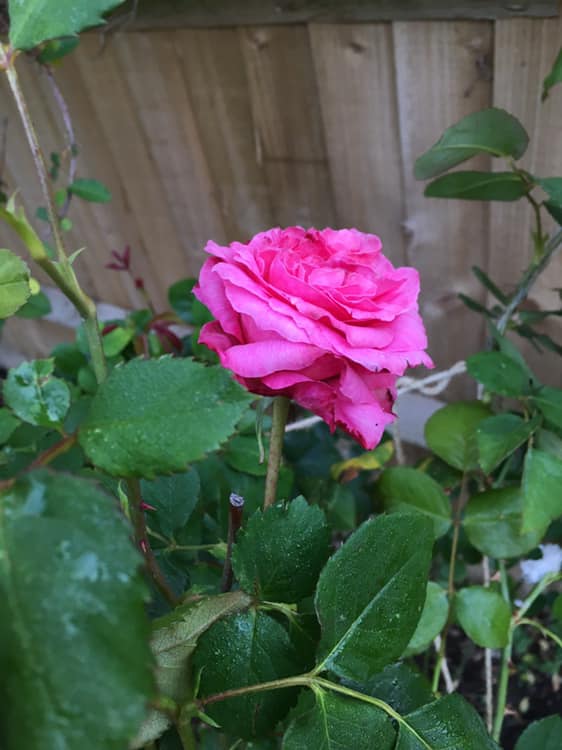
But this morning I want instead to think about a different way.

Chris Winson’s 365 Days of Compassion Review was kind enough to link to an earlier blog post of mine from here in which I look briefly educators “at the edge of this difficult world where a desire to be empathetic meets real children.” And this is my problem. I don’t know if it’s a problem with social media – I am minded to see a disjuncture between a US Bishop telling Catholics not to attend LGBTQ+ events and the Pope’s own meeting and discussion with Stephen K Amos; longer meetings, face to face meetings are much more productive of effective communication and at the heart of that, of understanding – or just that the world, in current uncertainties, has become a boxing ring of ideas, where putting people down is the only way to argue.   Who’s in, who’s out? Whom can I trust, whom can I demonise?  Philip Sheldrake (whom I quoted here in a blog post, again linking to 365 Days) warns

The pages of Christian history are strewn with marginalized people and traditions as well as forgotten or disparaged ideas…

and what has struck me has been the singular failure to enter into dialogue. One pundit is wrong because she is old and ugly; another because of his (admittedly pretty awful) track record on safeguarding…  No progress is possible under these circumstances. The compassionate response, the revolutionary response is, in general, to listen rather than disparage – and from the point of view of classic roots of Christian Spirituality, to avoid judging…

…and if you can’t avoid judging (I know I can’t, so often), to remember St Benedict who warns that

the spirit of silence ought to lead us at times to refrain even from good speech.

And this blog post (which has gone on long enough) is sufficient evidence of how hard I find that. I may not be a Bishop, but I can pontificate.

More Dragons: St George’s Day

Ignoring the debates about how much the Church has baptized pagan celebrations, part of me wants to ask people to back off the appropriation of Christian festivals for secular ends, from the feast of All Uncomfortable Family Obligations (25th December) to Chocolate Bunny Day (which this year fell earlier this month).    It is perverse of me, I expect, to push the fact that today is celebrated by many/most Western Christian Churches as St George’s Day, the solemnity that remembers the martyrdom of a saint from the Middle East whose cultus spread during the crusades as a sort of military demi-god. The feast has moved because the week (“octave”) after Easter is deemed to be so special it clears the calendar of other celebrations. I shall not comment on the crusader link, and for now I’ll skirt round those other ways in which tales of George and his emblems and cross have supported or excused violence against the enemies of England or Western Christendom.  It is my fervent hope that, as I said earlier this year, those dragons are in the end going to burn themselves out, but today I find myself in some doubt.59610823_10161841658920341_2877297955658792960_n

Just briefly, however, to reflect on whose saint George is. Not in terms of whose patron saint he might be, if that means who he might support in a battle or a football match, or whatever (all of which seem pretty empty to me, although I recognise the power of Shakespeare both at the time of his writing Henry V and of Laurence Olivier’s stirring speech in his film version), but in terms of tradition.   Tradition is  powerful thing, of course, and the St George tradition renews itself through the institutions of English monarchy, flags on church buildings – and more recently by appropriation of a mythic, medieval past by right-wingers that reminds me uncomfortably of Romanita in Mussolini’s celebration of Vergil. Mind you, Vergil’s own plea to a mythic past is also open to exploration…

What are we left with?  Lots of English images of churches, flags, the rolling countryside of the story of a land fit for heroes that has given rise, indirectly, to the powerful love of landscape and nature that might yet save our environment? Shall I wind up the gramophone and start the Vaughan Williams or Holst … and go on a search for a Land of Hope and Glory of 1220, 1420 or 1950 that never really existed?  It is not to be denied that imagery, music, tradition are key to understanding identity, and these myths are important. Above is a nod, in some form, to the traditional iconography in the red(ish) rose in my back garden this morning, out early, out in time for St George’s day (the white Yorkshire rose is hanging back, I note). So when is St George’s Day? Does the tradition of 23rd April stand, and if we get a new national holiday, that will be it? Or is it something for Christians, with our own calendars, celebrating a saint from such uncertain past histories we are unsure who we are celebrating, or for people looking for an identity?  Do Christians cede St George to people in search of a mascot, a symbol of a (xenophobic, possibly violent and unthinking) nationalism? What did I celebrate when I opened my breviary today?

I have to wonder if what I celebrated was not St George, and certainly not Englishness, but a curmudgeon’s hankering after a faith identity that separates itself – or has been separated – from a nationalist identity, and this is born, in part, from the Reformation script that meant Catholics were seen as in some way foreign. Here we are at the us-and-them of identity: we are us because we are not them. Perhaps this is why a combative dragon-slayer fits so well.  Perhaps we are all looking at mythic pasts for identity guides.  Uncomfortable thoughts on a fine spring morning.

Family

This is me:Me, study, Christmas


and my brother. 3378BABA-5EAA-47A0-939F-9BA534BA2A83


He is quite a bit older than me, and is, in fact, my older half-brother. This is the story:

Our mum has a baby, my brother Glenn, but her husband Jack is killed at sea in WWII. Eventually (in the 50s) she marries my dad, another sailor, Ray, and I come along. A series of miscarriages and my brother being abroad mean I am, more or less, an only child at this time.  Mum dies the year I go to University and my brother and I lose touch. We are eventually brought back together some ten years ago. I am, physically at least, quite like Glenn – to be honest, a shorter and -erm – less athletic version of my brother (and of his son, my half-nephew, Ben).

(I also have another half-brother and half-sister, Mark and Hannah, who are the children of my dad’s second marriage, to Val. Hannah is only about six months older than my oldest child, Joe, but for this post I want to mention Glenn and me).

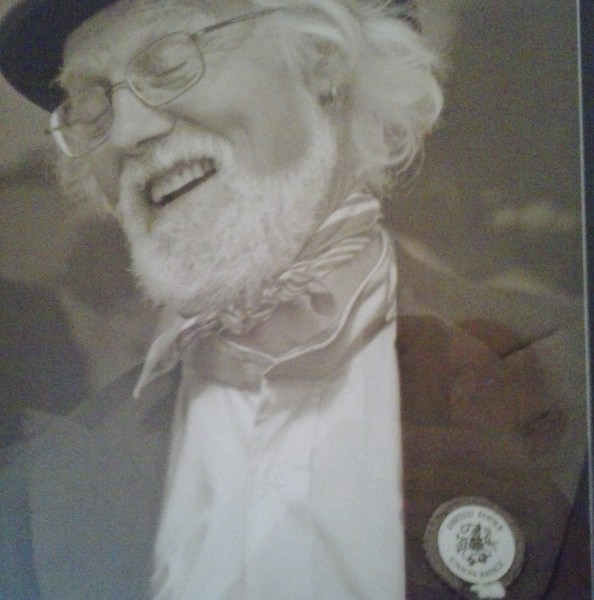
Glenn is a fool and I am not. That is to say, his role in his local Morris side is that of a fool and I am in no way nimble enough to be a Morris Man. We share common interests in folklore, although mine tend to be bookish and his practical. We are both gardeners. We both have beards and white hair. I had quite a bit of contact with Glenn as I was growing up: I loved it when he came home, loved going on his motorbike from Blandford to Badbury Rings, loved going to visit him and his family – loved his garden, and walking on the wide beaches of the North East coast. In some ways he gave me experiences of outdoors, folklore and family that stay with me. Habitus. We aren’t twins separated at birth – but I am astonished by how strong I now perceive his influence on me to be. Was it really his dancing that led me to Wild Spaces, Wild Magic? How does his social circle of beardy beer drinkers influence my choice of appearance and choice of beverage? Was it our mum’s deep admiration of him that convinced me that here (in some respects) was what growing up was about? How, in the twenty or so years we didn’t meet, did those choices Glenn had made tell me about being who I am?

I am (as I have been before) reflecting on “history’s curved shell,” as R S Thomas says in his poem Eheu Fugaces, on how pasts come together in the present, on these strands of influence, and the more I think, the more I find the Nature/Nurture argument often too simplistic. There are physical differences as well as emotional ones, beliefs and life decisions we have made that are different, life circumstances (his losing his dad so young, for example) that are just not replicated…  Where do our choices come from, and how are they determined by people we meet, or see, or imagine? How do we look back at attitudes and choices?

*

To change tack: lots of things conspire to get me thinking about my family at the moment, but (for the purposes of this blog), I want to think about the struggle for identity so vividly described in Anthea Simmons’ Lightning Mary, a fictionalised account of the early life of Mary Anning.  In it, Mary is trying, with a “head full of pain and sorrow and anger” to establish what it means to be a scientist, coming from a poor background with numerous hardships; how does she identify as a woman without being seen as a potential wife and mother?

“Did I ask to be a woman? I did not… I hate babies and husbands and men and being poor and the sickness and the toil and the injustice. What have we done? Why are we to be punished so?”

Into Mary’s mouth are put the cries of impatience of generations.  Her mother responds,

“Whoever told you that life was fair, Mary? Not I. It is what it is.”

The injustices and hardships are depicted brilliantly in the book: her clashes with the landed gentry and “proper” scientists, her sustaining but troubled friendship with the precious young Henry de la Beche…  Mary becomes a real heroine, although as Simmons acknowledges in her afterword, her story is “profoundly sad,” and the novel ends, rightly, on a down-beat.

My brother’s and my story is not (so far!!!) sad, and neither of us, I think, is a frustrated genius, “born to blush unseen” but we (all) tread the difficult line between self-identity, the urge to be Henry de la Beche’s “friend and scientist” and Anning’s mother’s line that “life is what it is.” But our similarities and differences do highlight the ambiguities and tensions of upbringing and choice, of lack of freedom in various generations, of societal expectations. For us it is just ordinary life, in so many ways, but for Anning it was painful and frustrating.

“There were days, dark days, when I felt as if I had lined up for a race and then been told to take two steps back because I was poor, and then two steps back because Father had been a Dissenter, and then ten steps back because I was not a man…”

Anning in the novel is prickly and wilful, but also determined, resourceful – and ultimately doomed (the passive voce is important, I think) to be by-passed by the scientific revolutionaries with whom she deals. The book is a rallying- cry for young woman thinking about science as a career. It is also a plea for educators to remember how complex the stepping stones of privilege and the nets of disadvantage can be.


Understanding

Does an author (and I will use the term to mean authors and illustrators and author-illustrators; see below) always write with the intention of perfect clarity?

No.

Next question.

I’m thinking of a number of authors of books  children read whose writing has caused me to stop and puzzle. Lots of authors do it, and part of my problem with the Goodreads/Amazon way of presenting books (“What did you use the product for?”) is that too often this leads to a “Didn’t like it? Next!” reaction, the kind of literary equivalent of the whistle stop tour; this approach can (I’m not saying it must) mean we read to write the review and move on, just as we visit this palace to take that picture. “Rushing past… No more time to stay and dream…” as Dowland has it (look, for example, at this version from Les Canards Chantants) .  We actually need time to stay and dream, and puzzling over a book’s ambiguity provides some of that.

Let me very briefly take a few examples: Le Petit Prince; The Rabbit and the Shadow; My Brother’s Book.  I could go on, of course, but these are especially ambiguous in lots of ways. I may be displaying my ignorance here, and to others the answers may be very obvious indeed but

  • Is the little Prince in the novella a hallucination?
  • In The Rabbit and the Shadow,  how many characters have an independent existence? Are they all in a child’s play? Is the soldier, because of their humanity, the one playing?
  • When Guy dives into the maw of the bear in My Brother’s Book, is he already dead?

Notice I haven’t asked these first of all in terms of the author’s intention. I think it’s a different thing to ask “Who does Saint-Exupéry want us to think of when we see the little Prince?” “Does Mélanie Rutten intend us to see this as in some way a “real” adventure, or is it all in the child’s mind?” “Sendak plays with Jack and Guy in other work, and with the notion of death in Outside Over There. Is the Bear the same as the goblins?” These are not so different from exam questions that could be

  • Explore the role of the angelic in Le Petit Prince and Mary Poppins
  • In what ways might the Stag-Rabbit relationship in The Rabbit and the Shadow be a parent-child model and what does this tell us about contemporary models of family?
  • Discuss (with reference to both texts), how death is represented symbolically in the Winters Tale and My Brother’s Book (NB: use of the online game in Winterson’s The Gap in Time will gain extra credit).

None of these nine are, at heart, bad questions, and maybe my query could simply come down to something like “Is it always an author’s task to clarify – or might their work also challenge us to think more , to do some digging?”  We expect it, of course, in some authors (it is central to the work in the Wild Spaces Wild Magic project) and for example in Garner’s “adult” texts, Boneland and Thursbitch (parallels between these two and Le Petit Prince, The Rabbit and the Shadow and in particular My Brother’s Book have not escaped me). We expect it, too, in the Brontës, Sterne, Heaney (hence the digging)… we expect, maybe work for these connections, keen eyes peeled for antecedents, symbols. It seems to me the author makes a choice to be ambiguous: think about the mystery and half-told stories in Jane Eyre until the blunt (and beautifully timed) “Reader, I married him.”  Does a “children’s author” make the same choices?

I don’t think all do – but I do think they can do. I look at Mat’s exposition (again the digging metaphor) of Town is By the Sea or his discussion of the book with the artist here on his blog, and see that there is a real chance for children and adults to think critically and deeply about the books they read.   I also don’t think this always needs to mean that we can work through a line-by-line exegesis or pinpoint exactly where an illustrator is standing when they sketch, but that thinking deeply might mean living with and savouring rather than codifying and commenting on the subtleties of a text or picture. Barring the odd editorial mistake, we must trust the author to have intended a lack of clarity, an image half explained (Simon and the giraffe in Hilary McKay’s The Skylark’s War springs to mind), because life is not neat, every dilemma does not resolve like a Restoration Comedy – and as Saint-Exupéry (half) explains

On ne voit bien qu’avec le cœur


Omens

It’s a spring day as March comes to its “out like a lamb” ending. The sun is shining and I’m out on Warneford Meadow, treading through tufty grass, and along paths worn by commuters. It is our local Green and a valuable space, with a rich and (I suspect) growing biodiversity.   I am one of a number of visitors, human and non-human – and as I trot down one of the paths I see a bunch of magpies. The Opies record the rhyme as:

One for sorrow
Two for mirth
Three for a wedding
Four for a death.

Lots of other versions are on record, testimony to the respect  people (maybe) had for these striking birds as messengers.  The Boke of Saint Albans has, in its lists of the Compaynys of beestys and fowlys has a tiding of [mag]pies (but beware: I’m not sure I trust a list with  Superfluyte of Nonnys or Noonpacience of Wyves)…

One for sorrow,
Two for joy,
Three for a girl,
Four for a boy,
Five for silver,
Six for gold,
Seven for a secret,
Never to be told.
Eight for a wish
Nine for a kiss
Ten a surprise you must not to miss.

(It received a boost by being the theme tune for the Thames TV production of Magpie, ITV’s Blue Peter Rival, when perhaps other customs and rhymes have fallen by the wayside – but that began when  I was the key audience: a long time ago, now.)

Back to Warneford Meadow as I slog over a possible Roman settlement and try not to think about the Quis Est Iste Qui Venit of such a run.   Nine magpies, then as I approach it’s four then seven and then just one. What do we make of portents whose mobility makes the I Ching look solid?  Well, of course, we don’t, in general; it’s a bit of mind play while I run.

I remember that as I qualified as a teacher, the National Curriculum was just coming in, and the course leader was ending his goodbye speech to the PGCE with “May you live in interesting times.”  He did not foresee where we might be today: if we were only contending with conflicting views about curriculum that would be enough, but we have Schoolsweek announcing scandal upon scandal, Unionist bands and racists openly on the streets in London vying for publicity (and no, they don’t get links) with crowds and crowds of people with more politeness and less threatened violence, a Parliamentary struggle the likes of which I have never seen before… These are interesting times, but not in a good way. There are no signs or portents to match all of this rubbish.

And while I trundle my sixty-something way and wonder about what the list of magpie numbers might portend (I really did get the one above the other week), part of my mind is wondering: instead of nines and sevens am I just seeing magpie after magpie after magpie? Sorrow and sorrow and sorrow?  I don’t think I have ever felt gloomier about the state of my country and my profession.

So instead of corvid fortune telling, I will end with part of my play list for running:

Nina Simone whose version of Billy Taylor’s anthem to Freedom has been a lifesaver this winter.

And while we’re at it, her singing of Randy Newman’s great hymn to compassion.

Sod the magpies, stuff the omens: this is what we need.

Back into Storyland

Let’s start with the lyrics:

When a knight won his spurs in the stories of old
He was gentle and brave he was gallant and bold
With a shield on his arm and a lance in his hand
For God and for valor he rode through the land

No charger have I, and no sword by my side
Yet still to adventure and battle I ride
Though back into storyland giants have fled
And the knights are no more and the dragons are dead

Let faith be my shield and let joy be my steed
Against the dragons of anger the ogres of greed
And let me set free with the sword of my youth
From the castle of darkness the power of the truth.


I loved this song as a child: perfect Junior School Assembly stuff. I sang it in college with my friend Robert, too: a shared memory of school even though we hadn’t known each other. It colours, also, my understanding of fantasy literature: the wistfulness is something of a challenge and full of the pull of nostalgia, and for me (some way from assembly in Harlow), this folksy version by Martin Simpson of it really rings a chord.

I’m not swapping from wolves to dragons as an interest, but just to record, for National Storytelling Day, the wonderful variety of dragons. Here are some of my favourites, drawn, I ought to say, from the European tradition. The song I’ve cited above always reminds me these days of Tomie de Paola’s The Knight and the Dragon, where the luckless knight and dragon come to terms with each other, make peace and live happily. But there is also Eustace in  C S Lewis whose encounter with – and transformation into – a dragon are an allegory of sin and redemption; there is Rosemary Manning’s urbane and charming R Dragon, standing for the whole of Cornwall, wistful for the time of Arthur; the urbane and vain dragon defeated by The Paper Bag Princess… And there is Smaug the Stupendous.

It seems to me that dragons are (like wolves) personifications of a certain type of aggression, and that the fire they are often surrounded by is its potent symbol. Michael Martchenko‘s wonderful fire in the Paper Bag Princess has it all: all-consuming but ultimately exhausting. And at an uncertain hour, when anger is rife, maybe storytelling can remind us of this: those dragons of fear and anger (and criticism and self-doubt) are in the end going to burn themselves out.