
I presented the work of Geoffrey Bache Smith earlier this week, and I was wondering about who I might look at among other poets and writers of various kinds that explore their environment. Other poets? OK: I was browsing Mary Oliver’s second volume I came across this poem. No less plangent than Bache Smith in many ways, and with a great, straightforward look at a little bird she saw so long ago. Some thoughts follow, but the poem really does say it without my squawking.
Dipper
Once I saw
in a quick-falling, white-veined stream,
among the leafed islands of the wet rocks,
a small bird, and knew it
from the pages of a book; it was
the dipper, and dipping he was,
as well as, sometimes, on a rock-peak, starting up
the clear, strong pipe of his voice; at this,
there being no words to transcribe, I had to
bend forward, as it were,
into his frame of mind, catching
everything I could in the tone,
cadence, sweetness, and briskness
of his affirmative report.
Though not by words, it was
more than satisfactory way to the
bridge of understanding. This happened
in Colorado
more than half a century ago –
more certainly, than half my lifetime ago –
and, just as certainly, he has been sleeping for decades
in the leaves besides the stream,
his crumble of white bones, his curl of flesh
comfortable even so.
And still I hear him –
and whenever I open the ponderous book of riddles
he sits with his black feet hooked to the page,
his eyes cheerful, still burning with water-love –
and thus the world is full of leaves and feathers,
and comfort, and instruction. I do not even remember
your name, great river,
but since that hour I have lived
simply,
in the joy of the body as full and clear
as falling water; the pleasures of the mind
like a dark bird dipping in and out, tasting and singing.
And the first thing I wanted to note was that WordPress – measuring characters and words alone – says that this poem will take a minute to read. Scan down that, highlight a bit, move on. If I’m honest, Morning Prayer was a lot like that today. Did I actually say the Benedictus? I remember when I was seventeen (in the 70s) assisting at an old rite Mass – what would now be called the Extraordinary Form – where the priest got through the whole liturgy in ten minutes: a liturgical patter song I found it hard to keep up with. Such, perhaps, is familiarity, or maybe such is reading until we fine-tune that as something that is reading for the deepest meanings possible.
And with Dipper there are two I want to think about.
The first is MO’s choices of image and words. She is a writer who is wildly in love with each day’s inventions (“Of What Surrounds Me”) and who looks – as in Dipper – for the moment that excites the human response: gratefulness, compassion. One of her most popular poems, “Why I Wake Early” is, like Dipper, of this kind: a noticing of a something; a realisation of the importance of that event; an answer from the writer, and similarly the poem “Wild Geese” – with the line You do not have to be good which first brought her to my scattered attention – and “Landscape,” quoted here, where the crows as seen as realsiing thier dreams as they break off from the rest of the darkness/ and burst up into the sky. She challenges with these perceptions of natural events; the reader is confronted with the suggestion, the question sometimes, of how to seize the world with the same freshness as a grasshopper, or a bird.
Even this cannot be read quickly, or if it is skimmed through – I find I cannot read more than a couple before I “feel full” – I find I miss the impact of these sermons from nature, even from lines like these, from “When Death Comes.”:
I don’t want to find myself sighing and frightened,
or full of argument.
I don’t want to end up simply having visited this world.
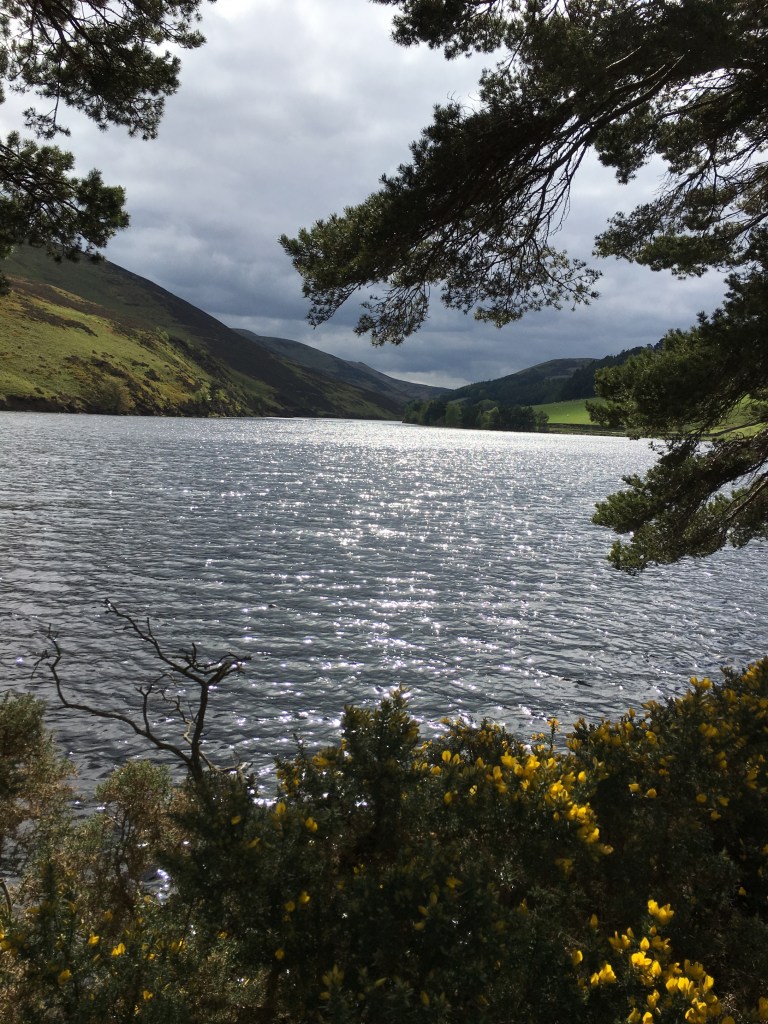
The second is an occurrence which suggests why this poem appeals to me. Visiting my daughter Lizzie in Edinburgh we went on a bus trip to Penicuik and off into the Pentlands. We saw a Dipper. I had known them since I took the Tell Me Why magazine in the 60s; I had seen them in Scotland once before. This, however, was a chance to sit and watch as the little bird zipped about and hopped in and out of a little burn just below the reservoir. I now recognise, having read the Mary Oliver poem above, those attributes of sweetness, and briskness she writes about. Slow watching of a bird – slow reading of a poem – the appreciation of the poem having observed the bird – the reading of the poem enlightening the memory of the bird: a virtuous circle in which understanding of the natural event and the reading of the poem are mutually supportive.
And then what about these Mary Oliver challenges to live life to the full? How does this first yes not negate a whole load of other choices? How do we distentangle “what comes with the package” from other choices we just let happen when we make a choice for A rather than B? Choices I made in my teens or twenties have implications even today, and life in my sixties seems just as precious but carries with it the ache of mistaken choices, baggage of all sorts. Hard not to feel like this at the moment: all those pre-lockdown times I went to a Garden Centre rather than out onto the hills – but then how would the allotment have been dug? I suspect Mary Oliver would suggest we look over the shoulder of such anxieties to the dippers and heron and crickets, or the jay as I dig, or Mat’s discovery on our trip of a Bloody Nosed Beetle?
Another final set of lines, then, from Mary Oliver, from “The Summer Day:”
Doesn’t everything die and last, and too soon?
Tell me, what is it you plan to do
with your one wild and precious life?
But it is a Summer morning, and maybe I need to do more than write about it.


 Why does the glorious
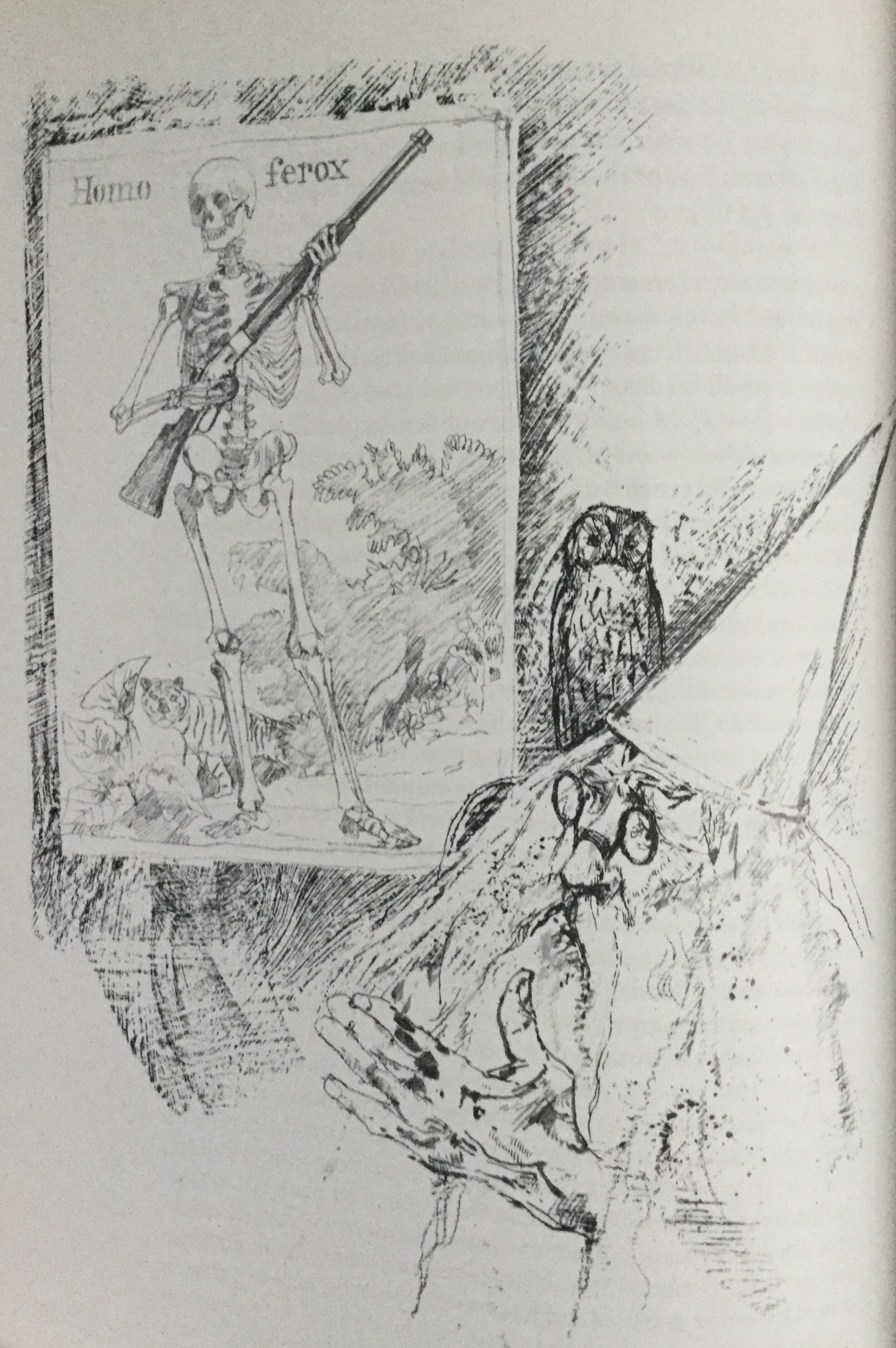 The gentle, bookish comedy aside, this allows Merlyn the painful knowldege that Arthur is to die in battle the next day, and for White/Merlyn to comment on fascism and communism, and for King Arthur, lost and tired, to ponder his path, as (with the the magician’s assistance) he visits ants, geese and takes advice from the donnish Badger and the Plain People of England in the shape of the Hedgehog… What makes Arthur Arthur? What makes a Human Homo Ferox rather than Homo Sapiens? Facing defeat of everything he thought he stood for, yet surrounded by his animal advisers and under the magic of the querulous Merlyn (beautifully depicted by
 nicktomjoe