The wish for restoration in the Passover Seder “Next year in Jerusalem” was poignant this year. Where will we be when the words are next used at the end of September? There is a great desire for a new dawn, a new day, but looking at the political landscape I can see bigotry and mauvaise foi, and I cannot see the wide spread of justice like an everflowing stream that so many of us desire. Utopias are precisely that: places that are ou-topoi, no-places. The British Library, in its excellent trail through the literature, explores a possible play on words between eutopia, a good place, and utopia, asking “Can a perfect world ever be realised?”
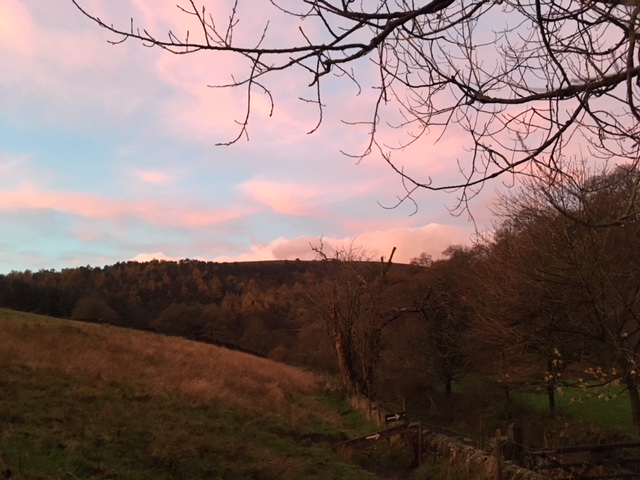
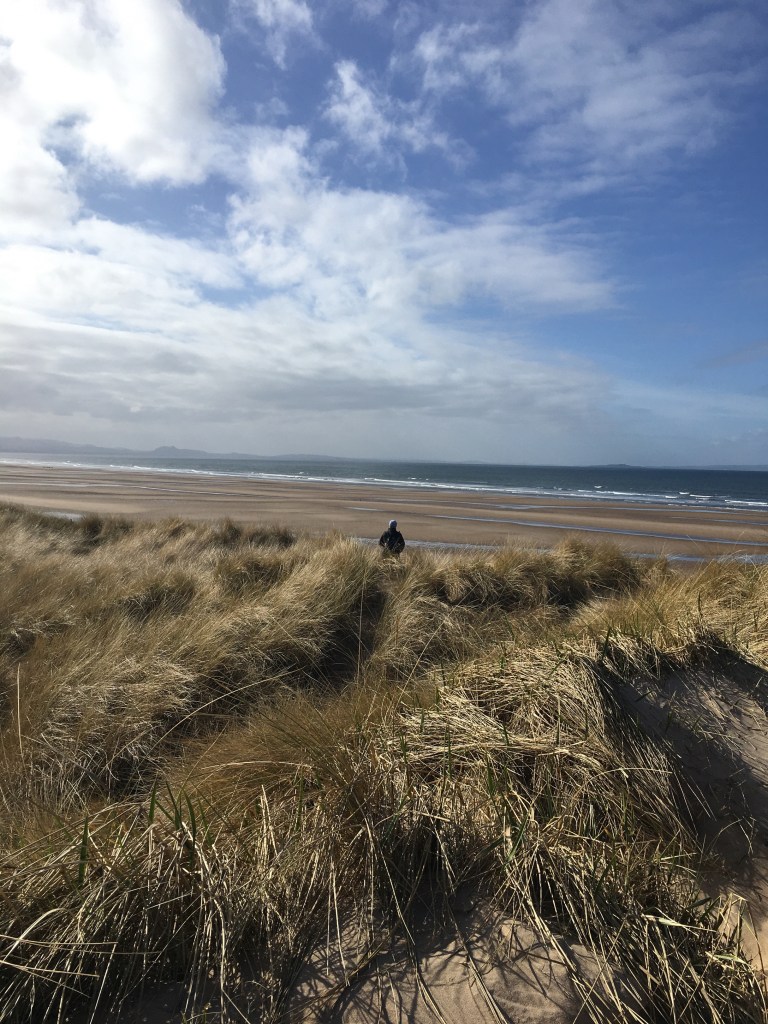
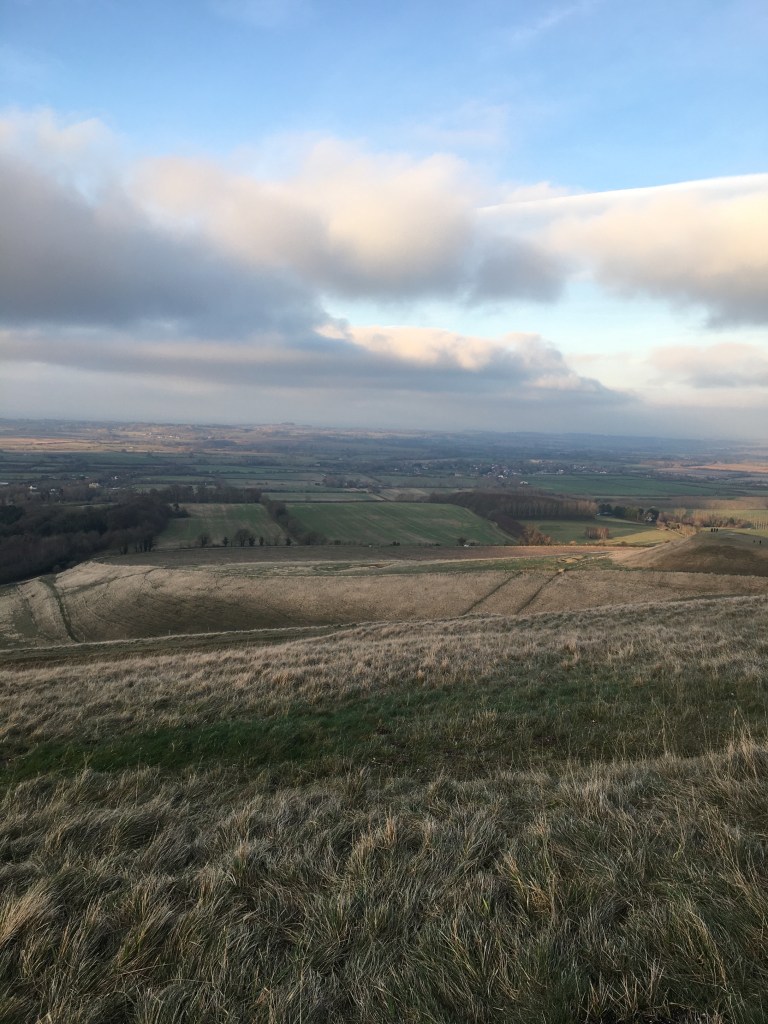
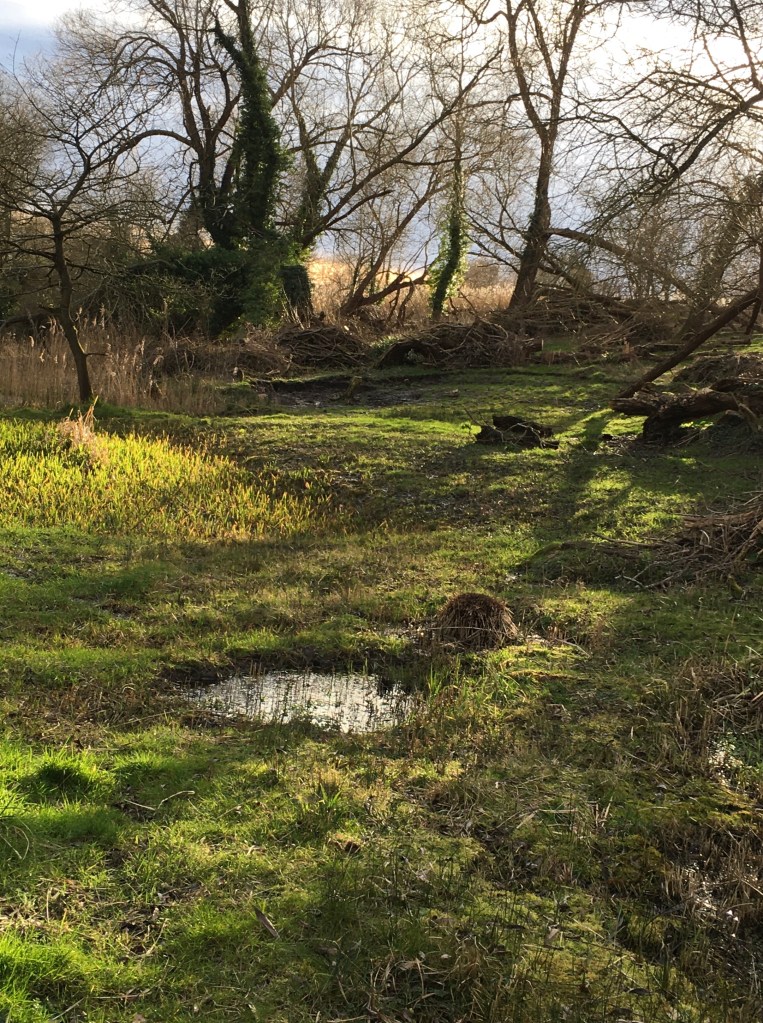
If, as Kathleen Jamie suggests of St Kilda, “their way of life broke on the wheel of the modern world,” it may be that this also signals how little validity there is in the harking-back of current political rhetoric. The eutopias of the past are Ealing Studio films (Comedies?) only: ou-topias. However, it’s possible to find personal places in a “when and where were you happiest?” sort of way. In Looking in the Distance, Richard Holloway is at his most plangent as he describes his “fierce and sorrowful anger” on a return to his old theological college: We know that nothing lasts yet the sudden awareness of our own finitude can surprise us into grief… But not always grief: they can be places of beauty and joy. The woods in Spring and Autumn above Nettlebed with Maggie might be such a place for me. Iconic for me (as anyone who has read back in my posts) is the visit just before we were were asked to stay home when Mat Tobin and I went to Uffington, the memory of which has sustained me when I have felt miserable during lockdown. Aberlady, Gradbach, Wychwood, Nettlebed… all sorts of places can do this, and can be the cloud of witnesses that surround us on a grey day or in a time of confinement. Here is a collage of photos of such places – places that are some of my eutopoi:
I notice how selective I am when choosing these photos: the hill of Ludchurch, Aberlady Bay, Uffington, the Lye Valley: outdoors places rather than, say, the churches of Rosslyn, Cordoba or Durham, or the Bodleian, or Magdalen.
These eutopoi suggest something about where I feel wholeness. However, I look at these airy, quiet places and see they are not the places I am regularly: the kitchen; the allotment; my preferred social media platforms… They are outdoors, rural or semirural heterotopias, where difference is key. I am often accompanied by people dear to me: I experience both the Kaplan’s notion of escape and a social aspect that I think is connected – for me – to their idea of fascination (the link here takes you to one of my explorations of their work). These good places might be a delight of solitude, but often for me have a human presence, a human perspective to them – but it is easy (maybe – under normal circumstances, at least), to pick a friend and go somewhere like this. The “human aspect” of fascination is about a compatible voice, a hand to hold.
So when I look to wholeness, wellness, I have to ask what the human aspect actually is. It’s a tough question when dealing with mental health, not just because, thrown on our own resources I come back time and again to my own mental health, but to a bigger question about “When This Is All Over:” what will wellbeing be like? I hope it will include pubs, hugs, time together, as well as all the bigger societal things, but thinking personally (and irrespective of the broader political machinations particularly) here I am struck by a suggestion from Jon Reid on Twitter today that has brought me right back to the present, a brilliantly simple humanistic examen that asks us to identify:
Three ways I have looked after and cared for myself and
Three ways I have looked after and cared for others
It is really tempting to see September (or January or 2022 or even the next scheduled General Election) as a time when everyone will vote for a humanity-based society where peace and justice take into account the needs of the most vulnerable, where society is a seen as a whole entity, full of interconnections and mutual dependencies, where truth is embedded in politics more than vote-grabbing, where care workers are paid properly… and yet I don’t believe it will come. So let’s take the “next year” wish and (to nick an idea wholesale from William Blake – but he is not alone in wishing it) build our own places of wellbeing and belonging, around three daily occurrences of self care and three of care for others. It will be up to us to kindle that hope into something bigger.
It is a start at least. Each pool of light might connect with others.
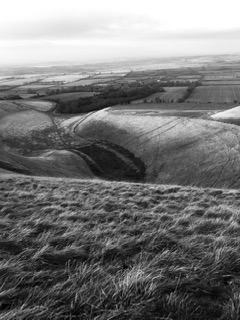
Uffington is a glorious sweep of downland, a sleeping body under wide skies.
The path between Cat’s Tor and Shining Tor is a magical place, with suns’ rising tattoed into the outlines of the escarpment, and in the hills beyond, Ludchurch, that thin place.
These have been “event spaces” for me, places where even going there means something.
Lockdown means that Uffington remains the event place that I last visited, unreachable except in my mind’s eye; Thoon is as beyond me as Monreale. And as for those big, bold holiday destinations, well, I wonder whether, as I ponder the urgencies beyond the virus attack, I will ever see these tourist places again. Maybe as “events” we see them, glory in them, and carry them with us.
And then there’s Boundary Brook.
I could, at the moment, call it Rat City: plenty of lively inhabitants of the Rattus Norvegicus kind scurrying around, and I wonder when the fox population will move in, or the badgers and hawks and owls step up…. and this is part of the problem with Edgelands: they are a stark mixture of human-stuff-we-like and animal-stuff-we-like with human-stuff-we-don’t-want and animal-stuff-we-don’t-want. Stark? Or vibrant?
If we are looking for writing that conveys the vibrancy of such spaces, then Rob Cowen can give it to us: at one point in Common Ground he writes that
the edges provided playgrounds for kids and illicit bedrooms for lovers. Whether consciously or not these spaces kept us in time and rooted to the rhythms of land and nature… We all still go to edges to get perspective…
and elsewhere
The ebb and flow of birdsong, the rise and fall of the sun, such things became my world. The slow spinning of the earth, the circadian rhythm is of the solar day, the life and death of the flowers and fruits, these whirred the mechanisms of my mended biological clock.
But the great Annie Dillard can also add to this vision.
Now [she is writing of late June] things are popping outside. Creatures extrude or vent eggs; larvae fatten, split their shells and eat them; spores dissolve or explode; root hairs multiply, corn puffs on the stalk, grass yields seed, shoots erupt from the earth turgid and sheathed… and everywhere watery cells divide and swell, swell and divide. I can like it and call it birth and regeneration, or I can play the devil’s advocate and call it rank fecundity-and say that it’s hell that’s a-poppin.
Pilgrim at Tinker’s Creek. 10: Fecundity
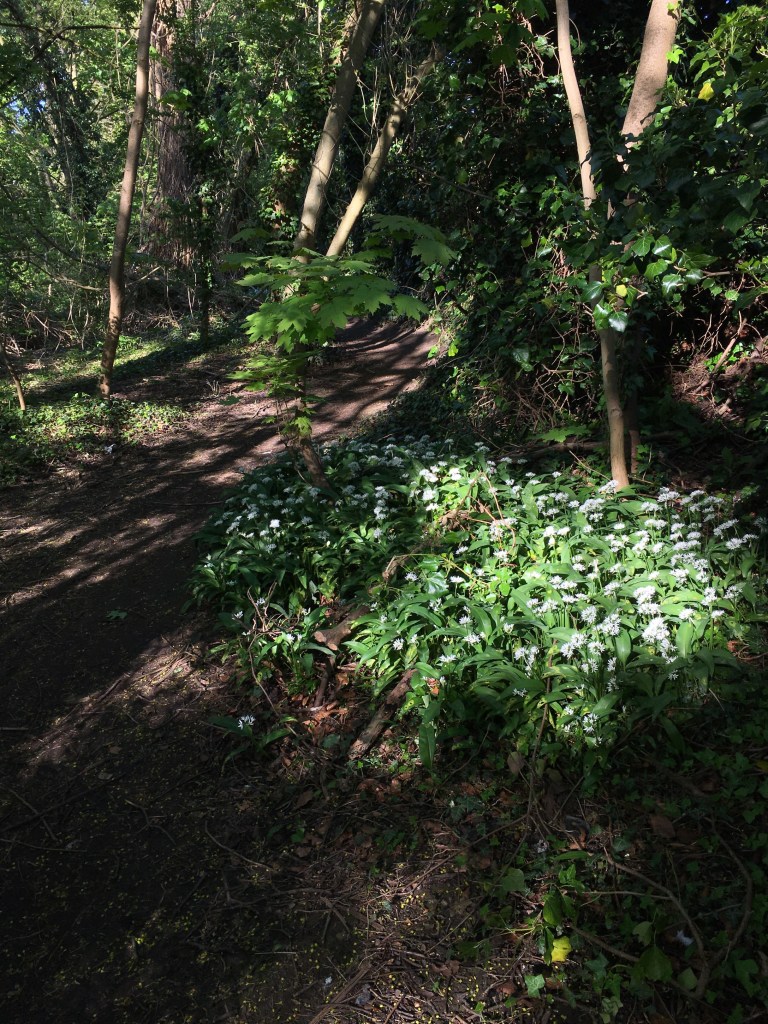
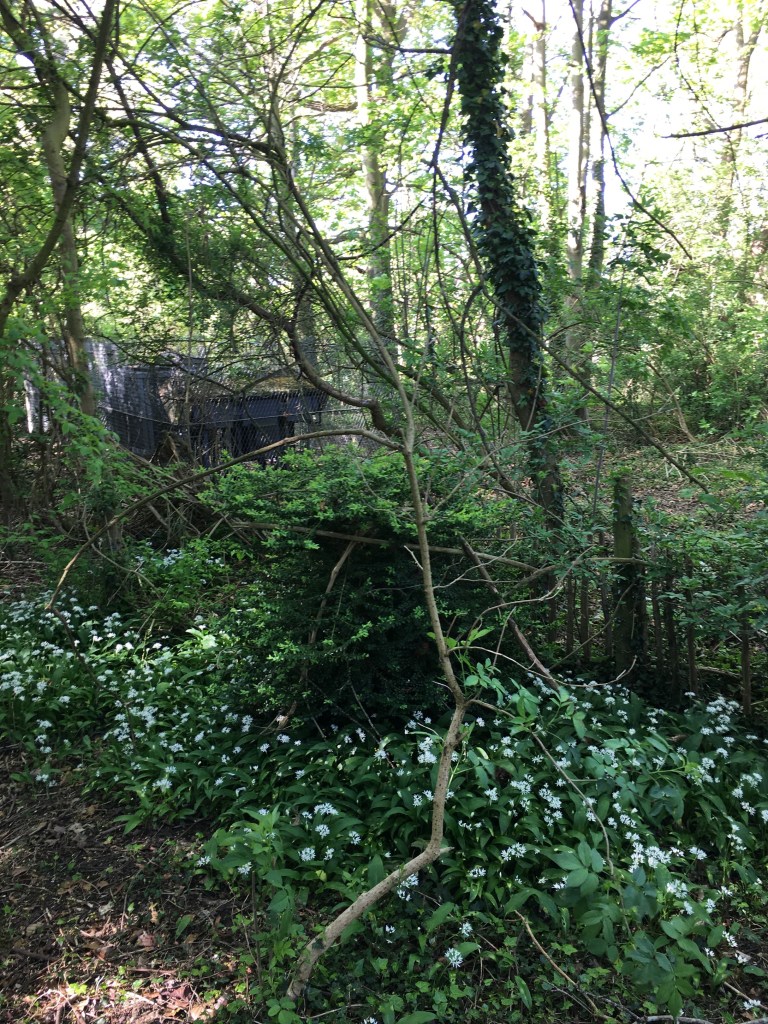
Cowen and Dillard give me two quite different views that I can take with me into the wildlife corridor that leads from by my house down to Boundary Brook and then extends onto Warneford Meadow. Despite its grandiose name, this is a strip – or a plait of interwoven strips – of self-seeded trees, wild clematis, ivy, Wild Garlic, squirrels, a pair of sparrowhawks, old fences demarking a different pattern of land use, an electricity substation, and (as is very obvious in a night time ramble) the street lights from Old Road and the car park lights from the labs and libraries of the campus buildings. So to make sense of this edgeland, I have to turn to two further sources: the book by Michael Symmonds Roberts and Paul Farley that gave me (and lots of other people, I suspect) the word Edgelands, and Richard Mabey.
First of these concluding words, then, are an extract from Richard Mabey and his Unofficial Countryside:
…It’s not often that the scrubland stage is reached. Where it is, it is in those awkward-shaped parcels of ground – left over like a hem when the surrounding areas have been sewn up – often called ‘marginal land.’ These seem to be multiplying with the piecemeal extension of built-up areas: a sliver of land left over between two strictly rectangular factories, a disused car dump, the surrounds of an electicity substation. Nothing can be done with these patches. They are too small or misshapen to build on, too expensive to landscape. So they are simply ignored – at least until the bushes start shutting out the light from the machine-shop. For that spell of ten or twenty years they form some of the richest and most unpredictable habitats for wildlife to be found in urban areas…
The Unofficial Countryside: Bearings
and (almost) last words to Symmonds Roberts and Farley:
It’s always a surprise… To find a gap in the shiny advertising boardings or a bent back sheet of corrugated iron which affords a few onto an open wasteland carpeted with flowers in summer… The city suddenly has a new scale and underness and an overness.
The journey to a high moor or heath in search of wilderness and communing with nature involves a slow readjustment in terms of scale and space, but a city wasteland is all the more mysterious for the manner of our encounter with it: the imagination does the travelling.
This is what the Edgelands represent, an No mans land between the two sides…
I wrote “almost” because the typing of that quotation was initially overridden by the computer, unexpectedly throwing up a very different (and much more dramatic) touchstone on the constantly shifting border: Rob Macfarlane and Stanley Donwood’s disturbing meditation Ness – in that my text at one point read “and under Ness and an over Ness.” So I turn to this shattering prose-poem about the fall of a Babylon to the greater Principalities of wood and water and lichen, and find similarities with the rotting stumps and rusting gateways of where I run.
The encounter in the poem of the Powers of Nature with the grim purposes of humanity is exposed in an “environmental takeover,” and the willow-boned, hagstone-eyed entities that possess the nuclear defence site do so in their own time:
& time to them is not deep, not deep at all, for time is only ever overlapping tumbling versions of the now.
It has about it the bitter vision of triumph after oppression of the Book of Revelation; ruination; shattering; repossession. In the same way in the Edgelands, the everyday submits to the unbounded potential of weed sycamore and umbel and the run of the brook as the spring puts out, in Robert Macfarlane’s words, the green where shadow meets leaf.
When Moominpapa leads his little tribe away from Moominvalley he is trying to negotiate a new way of being the Father. In Moominpappa at Sea he has left his study and gone back to his childhood wanderings as depicted in his memoirs – except that this time he has family to deal with, and instead of hilarious annoyances like the Hemulen Aunt and Edward the Booble, settles on an island and is concerned with keys to the lighthouse, protecting his family, and the fact that – as we maybe all discover in some ways – that our shadows follow us when we make changes to our lives. Change in purpose, in attitude, in relationship (to one another, to the landscape we inhabit, to our selves) is at the heart of the story.
Following them in her inexorable, inexplicable, icy rage is the worst Nemesis in any book for children: the Groke. Symbol of crushing depression, she kills everything in any place she sits. This is perhaps the most terrifying illustration of the creature in all of Jansson‘s depictions (I am even fond of the darkening paper of my soon-to-fall-apart copy). She frightens me like the revenant in the final sections of Michelle Paver‘s terrifying Dark Matter.
The Moomin family have been described as “surprisingly complex and plausible.” Part of me wants to jump up and down at that “suprisingly,” but it does reflect something of my own disquiet when I first read this book – and I read it as an adult. In fact I did remark to one of my children that “I didn’t think it was a book for children.” I think my opinions about “for children” have changed now – but it reflects some of the themes Tove Jansson presents. These are characters with depth, full of love, sadness, frustration, loneliness: capable of wrong decisions, reconciliation, fear and delight – and because they are Jansson’s characters, able to worry too about the lack of paraffin and to enjoy a birthday tea.
Reviews on Goodreads go from a five-star “poignant and empathetic” to “a deeply distasteful story of toxic masculinity.” It is worth remembering this is a book from 1965, of course, but in the way that Moominpappa is trying to restart his life, and the ways Moomintroll is trying to make sense of the haunting chill of the Groke that has pursued him and the beauty of the seahorses he encounters, we are looking at an exploration of growing that goes way beyond the anachronism of “toxic masculinity.” If anything, these two male characters are asking for ways to make sense of their place in family and society: how can I be a “family man” when so much is beyond my control? asks the father. How do I tame the depression that seems to negate my inner need for beauty and transcendence? asks the son. Or perhaps I read the two characters like this because in some way those are my own questions… Let’s return to the text. (NB: It would take a lot longer than a blog post to bring in here a discussion of Little My, or Moominmamma or the sea horses – they need looking at in their own right. This post will have to be about Moomintroll and Moominpappa, and revisists/revises some of my thinking from an earlier post.)
The way Moomintroll and his father interact in Moominpappa at Sea appears to me to be an indicator of both characters growing. With his comfortable self-assurance, Moominpappa in Ch 4 (“The North-Easter”) starts off in control when he and his son go to bring in a haul of fish: Now you can see I know something about the sea, he says, but he is panicky, unable to direct Moomintroll effectively, and the nets are full of seaweed rather than fish. All the father’s expertise temporarily ebbs away – and their boat capsizes. Tove Jansson knows her boats, and takes us through this disaster assuredly – but even though father and son come through the crisis, here, in this brief interchange, her characters show they are less sure of themselves:
“Well, we managed that all right,” said Moomintroll, looking cautiously at his father.
“Do you think so?” said Moominpappa doubtfully.
It is a revealing little scene: the self-assured, bungling dad loses face with his growing son, and when Moomintroll looks cautiously for reassurance, it is at this point that Moominpappa expresses his doubt. Simply told, but in an effective few words.
The chaos of the botched fishing trip is a metaphor for frustration (as Keith Negley describes his pirate in an interview with Mat Tobin), and is followed by the usually imperturbable Moominmamma’s sighs as Moomintroll’s obsession with the lantern (and the demands of the Groke) interrupt her plans. It is as if in this landscape of frustration, nothing can come right.
Moominpappa is contending with his island, his family, his worries. Instead of a study where the family interrupt him, he has a crag on which to sit: this life change has not been the success he had expected.
The ending is ambiguous, Moomin Valley is (maybe) lost, the characters (certainly) challenged, and if their issue around the custodianship of the lighthouse are resolved, I still feel a chill when reading
The thought of the Groke crossed Moomintroll’s mind. But he didn’t feel that he must think about her. He would see her later as usual, but he didn’t have to.
It now reminds me (with important distinctions, of course) of the final of Dark Matter. The narrator, Jack, having been menaced and haunted (“It can open doors“) in Gruhuken in the blackness of an arctic winter where his friend has drowned, now lives in balmy Jamaica, and once a year visits the sea:
When I’ve mustered my courage, I can just bring myself to crouch at the water’s edge and di[ in my hand, and hold it there while I talk to Gus. It’s a kind of communion. But it’s a dangerous one, for I know that I’m also communing with Gruhuken, and with what walks there in the dark…
The worst is not knowing if you’re still there.
What has Moomintroll’s repeated encounters in the dark with the Groke, this vengeful granddaughter of Nordic Frost Giants, brought him? An appreciation of his father’s ennui? There is a significant change in understanding between Moomintroll and the Groke so that she
…started to sing. Her skirts fluttered as she swayed to and fro, stamping on the sand and doing her best to show him that she was pleased to see him…
and I would – maybe even ought to be – happy with that, but what is the Groke’s new relationship with the Moomins? Is she in some way healed? Changed? She appears to me a figure of terror, but gradually Jansson introduces other ideas: her sadness; loneliness the coldest thing that ever was… Why do I come back to her as something to be scared of negotium perambulans in tenebris, Scaduhelma…wan under wolcnum? Is it, maybe, that these frustrated monsters are for me like the thursen of our research – and that what I am looking for is the very opportunity to grow? Moomintroll himself has grown, it seems – but what of Moominpappa?
The title in English gives us the “at sea” of this blog post: lost, aimless, adrift. The title in Swedish translates as “Moominpappa and the Sea,” reminiscent of Hemingway. Moominpappa has uprooted his family, tried to rewrite their relationships, and come adrift from the way his family works. Who lives in the lighthouse – who controls this important part of the environment? Most crucially: whose job is it to do these things? Who is using all the paraffin (it is his son’s night time meetings with the Groke herself). In the dialogue with the raging sea – which parallels his son’s gradual reconciliation with the Groke – Moominpappa rebukes the sea which in turn gives him a sign that the family should stay. It is not the task Moominpappa envisaged, but it is a mission nonetheless, to settle down there and enjoy themsleves, although they were surrounded by a vast, never-changing horizon closing in on them. Settle into this new life, and accept what is offered: re-invent this landscape not as one of frustration but as one of change. Just as it is not Moomintroll’s job to tame the Groke, but to live with her, to accept her, it is not for Moominpappa to control his environment, but to live with its ambiguities. The crucial symbolic action for Pappa is therefore much closer to home (for him and me? – and do I wear a hat so much because he does?):
[The lighthouse keeper] completed the puzzle. It was a picture of birds flying round a lighthouse. He turned round and looked at Moominpappa.
“Now I remember,” he said.”We’re both wearing the wrong hat.”
He took off the hat he was wearing and offered it to Moominpappa. They exchanged hats without saying a word.”
The lighthouse keeper, the lost Ben Gunn-like fisherman, gets his old hat back, along with his role as lighthouse keeper – and Moominpappa, who had said he didn’t need his top hat any more, has his iconic hat returned to him.
The blurb at the start of the Puffin edition (1974) tells me it is “for readers of eight and over,” and describes it as a “haunting, moving, beautiful book…perhaps the most satisfying of all the Moomin stories.” But just as I take issue with the word “surprising” from the Guardian, I wonder quite what “satisfying” really means here. So many unanswered questions remain – not least whether they will stay in the end – and for me, the psychodrama of Moomin and the Groke, and his father’s loss of faith in his role, pound at my reading like the breakers on the rocks.
Sitting in one of the cellar-reading rooms of the Bodleian (as I was when I read it) I was not sure about Jon Stallworthy’s poem(s) about the White Horse. Skyhorse (in Body Language) is a collection of voices from the earliest creators of the White Horse through Tom Brown’s scourers to the poet himself seeing in the new year and envisioning all these past people, all in a series of different poems. Some of them seem to me overblown – the rather odd parody of C13th lyric, the clumsy attempt at dialect straight from a C19th Archers character (if such a thing had existed – I was rather reminded of the country folk waking in Act 2 of Gilbert and Sullivan’s The Sorcerer) – and perhaps the whole attempt at a solemn parody across ages and languages and cultures misses me, but I have to say there are some wonderful lines and images.
“When the day’s eye opened
mine could see it shine…”
“No eye in England has seen so much…
Where legend says the Danes made their last stand.”
And for me (who saw in the dawn of a new millennium on another hill, above Oxford) the Wandering Scholar 1999/2000 has some resonance deeper than the words:
“…Lifting its lucent head
it turned a terrible eye to mine,
and a voice at my ear said
‘The skyhorse calls for his bondsman…’
For me, David Miles (yes, I have mentioned him before) has a clearer vision:
Landscape, as the word implies, is a matter of perception. We see it like a painting. We see what we expect to see; Flaubert and I, and everyone else, appreciate what we have learned to like. As an archaeologist I want to see beyond the immediate landscape into the palimpsest of fragments. To try and understand the interplay of geology, climate, plants, animals and humans.
As Philip Hughes puts it (with a directness that opposes this nuanced view) “To walk the track gives a very special feeling. You know you are in an ancient landscape.” His sparse and plain, largely unpopulated pictures of the Ridgeway or Orkney or the South Downs challenge the viewer to see shape and light, not history. Annie Dillon, likewise, paints the White Horse in beautiful, almost geological terms, from high above it like a Kite or a Buzzard or the Hill’s soaring skylarks. Like Hughes, her views of Oxfordshire are to do with colour and line, not directly people: the Thames at the foot of Wittenham Clumps; the clouds above the Clumps…
And yet of course they are to do with people, in both cases: Sarsens erected by people nameless now and dead; houses at the foot of Dorchester Abbey; fields ready for harvest or sowing; paths made by the tracks of humans.
The palimpsest of fragments: the idea that we piece together what we know about a place from the bits left, the ground written over by a later generation. It is a well-nigh perfect image. And maybe it continues as a model for literature? There has been some debate today in the run-up to the release of Hilary Mantel’s final Thomas Cromwell novel about what makes historical fiction work and what makes it popular. Is it about a reflection of the time and interests of the writer?
I know it’s rude of me, but I think I want to say “so what?” to that question. Of course historical fiction works like that, just as non-fiction writing reflects the interests of writer and reader; fantasy fiction too, in various ways in its various forms, might look at technological advance, at what moral choices are set before the characters…. Writing in “sundry times and in divers manners” (Hebrews 1:1) is not a fixed thing with a set purpose. The reader has the job of revelling in this richness – but maybe not being seduced into it. Was Peter Abelard the tortured soul his own account makes him out to be and which Helen Waddell picks up? Or a lecturer whose proximity to a very young female student had disastrous consequences for her, for him, maybe for their son? Writing and reading may have different contexts, and it is our job to read the palimpsests carefully – ours and the writers.
His century like a small dark cloud Drifts far; it is an eyeless crowd, Where the tortured trumpets scream aloud And the dense arrows drive.
but I almost feel the same about Chesterton himself: his life overlaps with that of my parents, but his ideas and his ambiguities seem of another time. Led by Miles’ study, I don’t need to accept GKC’s identification of Uffington, in the thornland of Ethandune, with the site of Alfred’s battles, any more than I do to accept the legend of the nearby Blowing Stone. I can appreciate the rhetoric of his poetry; I can at least feel the pull of his vision of/for England, maybe a despair at its state when he writes
The lamps are dying in your homes, The fruits upon your bough
and even though I don’t share the feeling behind them, I can see the battle sequences work as well as many in Tolkien:
Steel and lightning broke about him, Battle-bays and palm, All the sea-kings swayed among Woods of the Wessex arms upflung, The trumpet of the Roman tongue, The thunder of the psalm.
He has other voices here, too. When Chesterton writes
O’er a few round hills forgotten The trees grow tall in rings, And the trees talk together Of many pagan things.
Yet I could lie and listen With a cross upon my clay, And hear unhurt for ever What the trees of Britain say.
there is a poignancy I can really identify with. It is Kipling’s Charm Take of English earth reworked.
I can see, too, what he is imagining when he writes
One instant in a still light He saw Our Lady then, Her dress was soft as western sky, And she was a queen most womanly– But she was a queen of men.
Over the iron forest He saw Our Lady stand, Her eyes were sad withouten art, And seven swords were in her heart– But one was in her hand.
without the vision of Lepanto (which always seems a bizarre reworking of Marian theology) intruding on my understanding of the battles of Alfred.
How many layers of palimpsest are here? Scrape at the chalk of Uffington (actually don’t: I’m being metaphorical on a site of national importance), at Asser, at the Anglo-Saxon Chronicle, at David Miles, at Thomas Hughes, Philip Hughes, Rosemary Sutcliff, Jill Paton Walsh and Kevin Crossley-Holland…. These are the layers, the voices, that Stallworthy is attempting to uncover with his Skyhorse. These are the layers the critical reader of historical fiction needs to take account of, to work through.
One of the delights of using dictation software – and I use it increasingly to note down quotations – is the wild guesses it makes about words. Has it got used to me with place names such as Ludchurch or Uffington? I don’t know. As this blog post’s title suggests, it certainly wasn’t prepared for the dark and sacred depths of “the inner tomb at Maeshowe.” Maeshowe or Maes Howe, whose significance (detailed in very modern terms here) lies in its being, along with the rest of the complex archaeology of the area, such an astonishing “example of an architectural ensemble and archaeological landscape…” Even the dry report cannot escape a tone of wonder.
But I have to come clean and admit where I am: in my study in Headington, reading Kathleen Jamie’s splendid Surfacing. It has some spellbindingly great writing, and shares insights from all sorts of digging and wandering and wondering and loving from Sutherland (and back again) through the discarded bikes and tundra-preserved past of the Yup’ik and the eyes and spirals of the Noltland dig and the rummage through the layers of the author’s own life. Careful here, Nick, not to unearth too much: the book demands its own read.
But at least I can share a few things: all, this time, from the central section (as I read it) of Jamie’s visits to the Orkneys. It is full of lovely lines and images: If seals could watch Netflix, they would and I walked down to the shore, feeling like a child again, glad of hard to know there is still room in the world for a summers day and a cow called Daisy.
The author is shown a warehouse of finds:
Graeme opened one particular box to show me a slender implement reminiscent of those nibbled pens we used at school, to practise joined up handwriting. It could have come from his own school house.
“You see how the tip is stained dark?” He said. “We think it was used for tattooing…“
Hazel and Graeme showed me more beads, some made of animal teeth, and half-made beads, lots of beads. Thick pins of bone, as long as your hand, presumably used for fastening clothing…
For a moment, out of the twenty-first–century plastic boxes stacked in the gloomy Victorian store, they emerged a vision of people closed in animal hides, bearing spiral-designed pots, with hair braided, hanging with beads, people crazy about cattle, young people prematurely old, as we would think now.
Jamie has already asked about Neolithic ghosts, concluding, maybe rather sadly, that Ghosts have a half-life, it seems, lingering just a few hundred years, till they too fade away. I am reminded of the ghostly Lord Kildonan whose haunting fades with the years in M R James’s Residence at Whitminster – only to reemerge some years later in a different form. It could be an allegory of sorts for the antiquarian. Here in the Victorian warehouse however, she seems able to conjure such spirits like Prospero as she speculates on the Neolithic settlers:
Different groups, with their different clothing and accents, tools and designs arriving here, but very soon after their arrival, there will be no one alive who could remember the journey. Doubtless there were stories. Origin stories. Contact with other peoples of the same ilk, who spoke the same language, at other settlements. Great ceremonial gatherings, informed by movements of sun and moon, risings and settings, alignments of stones. The midwinter sunrise shines down the passageway at Newgrange, the midwinter sunset illuminates the inner tomb at Maeshowe.
How did they know that, these kids of twenty or thirty years old, with their bone and stone tools?
I am reminded of the poem of Frances Horovitz Poem found at Chesters Museum, Hadrian’s Wall (from her Snow Light, Water Light, and found in this collection) which likewise looks at finds at contemplates a culture long gone. Starting with the confident To Jove, best and greatest she chants the museum labels – billhook, holdfast, trivet/latch lifter, nail lifter, snaffle bit… until she reaches the unknowns and uncertainties dedication partly obliterated/with human figure in rude relief… All a bit of a challenge for the dictation software, because they are outside the range of frequency to be picked up by the software: just not used enough? So I am back thinking of the Lost Words – but then, oddly, of the book that inspired so many daydreams when Maggie and I were first married, John Seymours‘ Self Sufficiency. Such daydreams – and tonight is simply the Allotment AGM, and I am “doing the teas.”
One of the joys of the modern nature writers is that they will not only write of the sod lit hut by a seal-oil lamp but also of the welcome cuppa, not only a song about time and change but also about pub night and Wifi. The Inner Tube at Mike’s House would not be out of place. Kathleen Jamie is a writer whose poetic instinct draws us into her world of spirituality and history and topography; she is another of those writers, Rob Macfarlane, Peter Fiennes, Rob Cowen… travel writers, nature writers, topographers in what Robert Mac’s Cambridge page calls Geohumanities. A neat (and maybe not uncritical) review of Macfarlane and Jamie and the phenomenon of British nature writing appears here.
As an aside: the more I think of that term, the more I like it. It is Geohumanities (as a metonymy) that impells the glossaries in Landmarks; that makes connections (reliable or not) in Watkins’ The Old Straight Track, that watch the revelation of Yup’ik past in Surfacing… I am beginning to wonder whether it is a term that could be applied to fiction, too: to Peter Dickinson’s The Kin, or Rosemary Sutcliff’s Sun Horse Moon Horse. I don’t think I have an answer.
If all goes well, I will be taking time soon with my friend Mat on Uffington White Horse. In my hand I will have my (now signed!) copy of David Miles‘ The Land of the White Horse. On my ‘phone I will have a collection of poems about the place: Jon Stallworthy, G K Chesterton, and if I can find it in time, Kevin Crossley-Holland‘s poem which celebrates the Ridgeway – and of course Frances Horovitz. They all speak – in very different ways – of how landscape and language interrelate: Chesterton is full of a great battle that made England; Horovitz has a mystical white horse that she urges to strike fire to the earth from air. But behind all of this will be the repeated challenge of Kathleen Jamie that all the writers I’m lauding here are answering, as she asks again and again:
Why feel anything? Do you understand? Did you hear something move out of the corner of your eye? The path is at your feet, see?
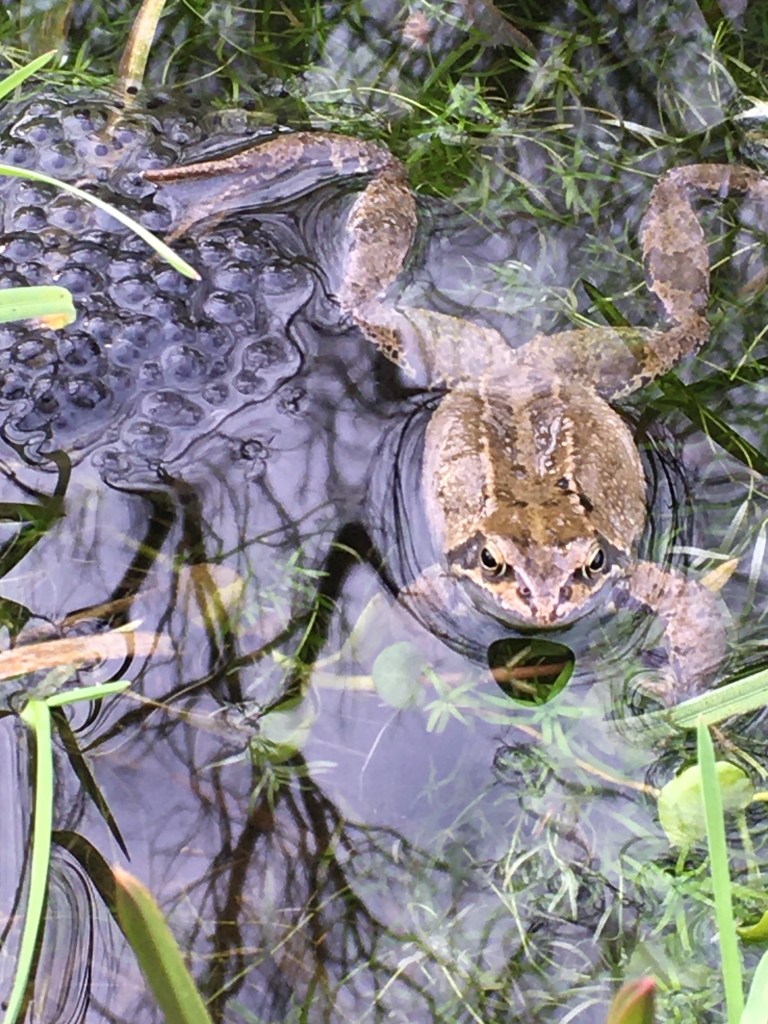
Except in some ways they are. They were today, down in the Lye Valley. In among the “warm thick slobber/of frogspawn that grew like clotted water” as Seamus Heaney puts it, were maybe a hundred frogs. Alerted by a notice from social media, I took Ivy, keen and energetic to see the frogs spawning in the fenny ponds near our house.
They weren’t Heaney’s “slime kings,” “their blunt heads farting,” but a congregation of animals, a welcome sign of spring on a warm afternoon. Not coarse, and not apocalyptic, just frogs: welcome, exuberantly sexual and productive. One watched us carefully as she sat in her grey cloud of eggs, her sides heaving; others climbed, swam, grabbed, and croaked like a distant motorbike starting up.
My immediate thought is that Bashō has it right: keep to the bare thing itself (a nice explanation of Bashō’s famous frog haiku and some translations are to be found here; more, with Zen comments, here) in a few terse lines: eschew the grandiose. Today at Mass, the preacher interrupted his own flow to correct his phrasing around a (very good) point of his sermon on Christology and spirituality and say “O dear, what pretentious twaddle!” – and perhaps Bashō does better with his short invitation to join him by the pond.
It is probably worth saying right at the start that writers such as Benjamin Myers and Peter Fiennes, writing about the Hebden Bridge and Mytholmroyd floods, are reporting on disasters that impact hugely on humans and their dependent livestock. I may have known these locations in Calderdale in the past, but I am in no position to comment on their powerful and much more up-to-date reportage. When Peter F writes “This is Yorkshire after all: the rains fall and the rivers run fast” he is not being dismissive, but moving into a critique of climate change, housing, development and farming that are having an impact on real lives and communities: I am writing about “just” a bit of Edgeland, a “wildlife corridor” some 0.5km from my front door. As Paul Farley and Michael Symmons Roberts put it “Edgelands landscapes grow in gaps, changing as they cross a road, circle a building.”
And this is “my” (our) Edgelands. Last night for the second time in a fortnight, the trees, leggy, scrubby, largely uncared-for, roared like the forest giant Khumbaba (here as Humbaba) or like the way that the Psalmist (103/4) envisages God “walking on the wings of the wind” when “the waters stood higher than the mountains ” – and this morning we went out to see what the aftermath was. Aftermath: the field after the mowing; even here we are into metaphor, half-remembered etymologies and myths. There were trees leaning where before they had stood up, trunks shattered and blocking paths (and even from last night, new paths emerging from early runners’ feet and padding dogs), little bits of branches down and bigger ones that have bashed through the canopy, cutting the bark on smaller ones, bringing venerable ivy down with them. It’s not a disaster, but there are trees that will not recover in their present state, I guess. They have been mowed down – wantonly, rather haphazardly – by the giants, like me bashing nettles with a stick – and we live around the stalks.
“Our woods,” Farley and Symmons Roberts write, “are a complicated and sustaining myth. We yearn for traces of the original tracts of greenwood…We imagine the lone copse surrounded by arable fields or the farmer’s shelterbelt of woodland to be the last remnants of a primeval forest that once covered the land, green pools left over in the bed of a vast retreated inland sea.” It’s hard this morning not to feel that we are walking through an area where some huge vandal has been at play, and somehow I wonder if the vandal isn’t Khumbaba or the Psalmist’s vision of God, but us: the bike in the brook and the scattered crips packets suggest as much. Fiennes puts it gloomily: “The growth of everything: towns, cities, roads and runways, the population, the carrier bags and all that pointless tat and crap that no one needs and never wanted. If you spend time in the woods, it’s impossible to avoid the biggest questions of all – what’s it all for? Not just the woods but everything. What do we think we are doing? What on earth is the point? Wouldn’t it be better if none if us were here?”
And yet… and yet…
And for all this, nature is never spent, as Hopkins puts it. “Natural forests contain trees at all stages of their life cycles,” as Whitmore notes. The willow that is now leaning into the mud will – if we let it – root and shoot and keep going; the tall trees by Boundary Brook will turn to mush, home for bugs and fungi and a whole chain of creatures living their lives in the faltering and decomposing timber. Light breaks in in places it did not before, even on a grey morning.
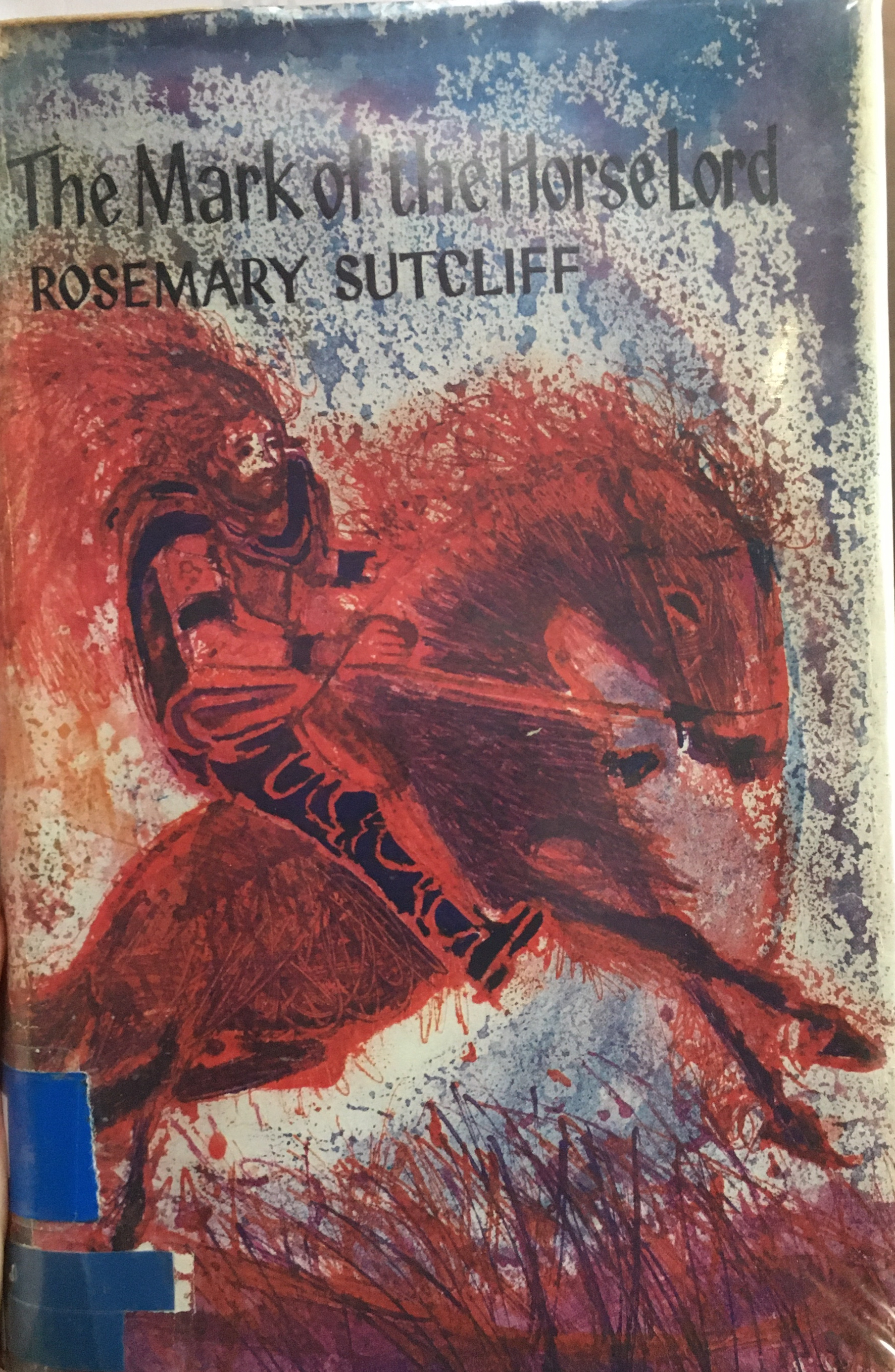
To do no more this morning than record this astonishing section from Rosemary Sutcliff’s Mark of the Horse Lord. The protagonist, newly made king of the peoples of what we might describe as Western Scotland, Red Phaedrus,
is out to catch the woman appointed as his wife. These are horse-people, as the book’s title suggests, and this rough “courtship” (here as in the Lantern Bearers Sutcliff does not shy away from the nature of marriage and being given in marriage and its impact on woman) is the bridgegroom’s chase after his bride. They are both mounted, and she has a head start as the groom’s party pursue her through the country of the Dál Riata. Just look at this amazing use of colour and shade, and how Sutcliff anchors this in the landscape features – the whirlpool of the Old Woman, the mountain of Cruachan she has already introduced us to in map and in narrative.
The track was pulling up now, out of the great flats of Mhoin Mhor, and the quarry, striking away from it, was making north-eastward for the hills around Loch Abha head. And the wild hunt swept after her, hooves drumming through the blackened heather, skirting little tarns that reflected the sword-grey sky, startling the green plover from the pasture clearings. Far over to the west the clouds were breaking as they came up into the hills, and a bar of sodden daffodil light was broadening beyond the Island, casting an oily gleam over the wicked swirling water of the Old Woman, while away and northward, the high snows of Cruachan caught the westering beams and shone out sour-white against the storm-clouds dark behind.
A storm was gathering yesterday that has hit us good and proper today. I had been for a walk and a coffee and came out from the pub to see the lights on in St Andrews across the way. Evening Prayer time in a warm, quiet, dark church.
And when I got home I looked up the words from T S Eliot because, I wanted, I suppose, some more of that sense of contemplation that Eliot tries for:
So, while the light fails
On a winter’s afternoon, in a secluded chapel,
History is now and England…
The aesthetic pathway of spirituality may be cultural, maybe victim to changing fashions or simply growing up, but it is not to be forgotten: it creates the thin places, or sharpens the senses to see those places where prayer has been valid, where the other and the now meet. Thin places. In the church the silent near-dark was stunning, and all those poems from all those Thomases, Thomas Merton and R S Thomas and T S Eliot (not to mention Dylan Thomas’ “close and holy darkness”) were somehow at my elbow. And maybe the incense smudge of a memory of the church when I was a child, after Compline and Benediction, or the quiet of Magdalen after Night Prayer…
But tonight it is different, and the blustery grey has been superseded by a Wild Hunt of a storm. Time then to go back in my mind to another thin place, to the little, basic cottage on the North York moors where this poem from Kathleen Raine was posted up by a previous inhabitant, and said so much about a keener, wilder, maybe more dangerous spirituality. I have cited it before.
Let in the wind,
Let in the rain,
Let in the moors tonight,
The storm beats on my window-pane,
Night stands at my bed-foot,
Let in the fear,
Let in the pain,
Let in the trees that toss and groan,
Let in the north tonight.
Let in the nameless formless power
That beats upon my door,
Let in the ice, let in the snow,
The banshee howling on the moor,
The bracken-bush on the bleak hillside,
Let in the dead tonight.
The whistling ghost behind the dyke,
The dead that rot in the mire,
Let in the thronging ancestors,
The unfilled desire,
Let in the wraith of the dead earl,
Let in the dead tonight.
Let in the cold,
Let in the wet,
Let in the loneliness,
Let in the quick,
Let in the dead,
Let in the unpeopled skies.
Oh how can virgin fingers weave
A covering for the void,
How can my fearful heart conceive
Gigantic solitude?
How can a house so small contain
A company so great?
Let in the dark,
Let in the dead,
Let in your love tonight.
Let in the snow that numbs the grave,
Let in the acorn-tree,
The mountain stream and mountain stone,
Let in the bitter sea.
Fearful is my virgin heart
And frail my virgin form,
And must I then take pity on
The raging of the storm
That rose up from the great abyss
Before the earth was made,
That pours the stars in cataracts
And shakes this violent world?
Let in the fire,
Let in the power,
Let in the invading might.
Gentle must my fingers be
And pitiful my heart
Since I must bind in human form
A living power so great,
A living impulse great and wild
That cries about my house
With all the violence of desire
Desiring this my peace.
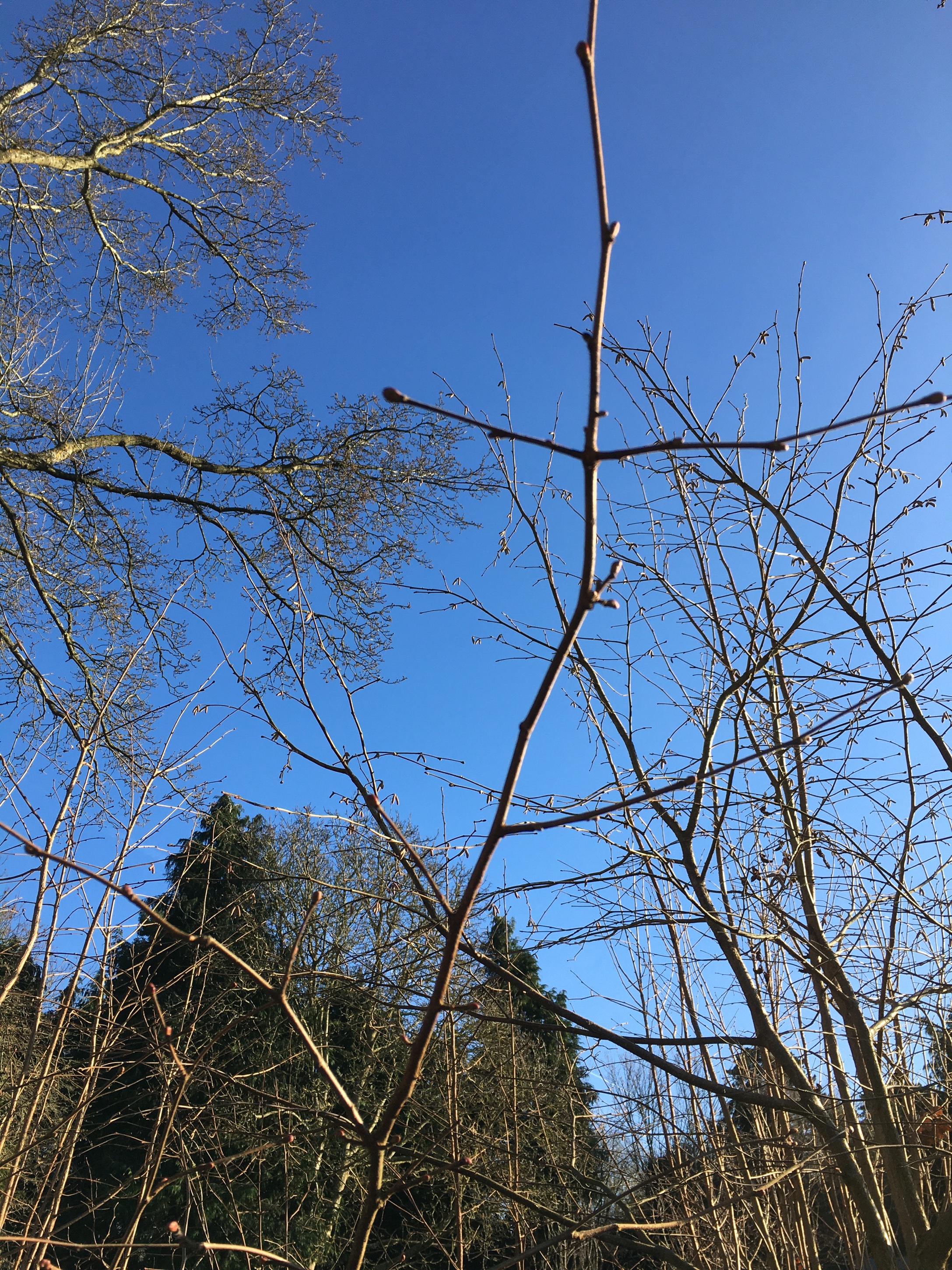
Just sometimes a day in January makes me want to believe in spring. A chilly day down the allotment – should have been the morning but we pressed on – and my task was to finish some hazel coppicing. Well, actually my task was to tidy the absolute dog’s breakfast I had made of the hazel I had undertaken to coppice on some communal land to one side of the plots. Hacking with a billhook like William Ager had been immensely satisfying but really untidy; a mixture of billhook, bowsaw and ordinary handsaw meant I managed better. At least occupied with coppicing there was was no diggin’ to be done in the claggy soil.
Two rods stand tall on one hazel stool, and turn round each other. At one point they meet, touch and begin a process of fusing together known as inosculation, a joining together: the term has its root in the Latin word for kissing. I am, because of how my mind works, really quite moved by the metaphor – but recognise that I need to get to work. The two rods have, I guess, been working at this for years, but now I need to get cutting. I sort of hope that I can cut the fusion out as a whole piece (but in the end I can’t)… but the time the hazel has taken and the time it takes my saw to undo the fusion seem out of all proportion.
Old man on an allotment hazel stand: hardly great forestry or John Seymour-like land management. Forest School is not survival training; allotmenting is not farming. But once in a while, what we potter about at is something that is in the shadows of a bigger husbandry and a longer history: the stone axe; the horse, the enclosures. And the kissing metaphor makes me think of so many nature writers’ respect and tenderness for the landscapes they represent. So when I come home, thinking of how this work is explored, I look at various texts. Edward Parnell’s exploring of the ghostlands of literature and his own biography; Thomas Merton’s monks whose “saws sing holy sonnets;” the changing and unchanging downs of the White Horse in David Miles’ book… and then into other writers on my shelves, where I am struck by this:
What a bare desert of a place the world would be without its woods and trees. How long would man live once he had broken the balance.
Ian Niall, in Fresh Woods and Pastures New (Little Toller did one with lovely illustrations by Barbara Greg) is keen eyed and dreadfully prescient about deforestation.
When he cuts down the planting, the copse, the old oak wood, it takes him a little while to see that the drainage is different, that the soil washing into the hollow, and new crops of rock are in his field. The lumbermen come and haul away the timber and every yard of the fields on either side changes in nature, new weeds, new grasses, more sun, less humus, water-logged drains in wet weather, overflowing ditches. A year or two, and the man sees what he has done, but how long must he wait to see it as it once was?
Believing in spring feels easy on a chill, bright January day: believing in a world where we can find ways to harvest from the earth when it looks like the Anthropocene crisis is upon us in the Amazon, Jakarta and Australia feels a lot harder. “Man sees what he has done:” but can we step back from it, somehow? Can we realise our need to reconnect, to re-fuse with the world we live in?





 In the church the silent near-dark was stunning, and all those poems from all those Thomases, Thomas Merton and R S Thomas and T S Eliot (not to mention Dylan Thomas’ “close and holy darkness”) were somehow at my elbow. And maybe the incense smudge of a memory of the church when I was a child, after Compline and Benediction, or the quiet of Magdalen after Night Prayer…
 Well, actually my task was to tidy the absolute dog’s breakfast I had made of the hazel I had undertaken to
  I am, because of how my mind works, really quite moved by the metaphor – but recognise that I need to get to work. The two rods have, I guess, been working at this for years, but now I need to get cutting. I sort of hope that I can cut the fusion out as a whole piece (but in the end I can’t)… but the time the hazel has taken and the time it takes my saw to undo the fusion seem out of all proportion.
 nicktomjoe