(Semi)retired

In 2018, on 11th June, after much humming and hawing (to the point where I must’ve bored Maggie and my work friends to pieces) and a memorable walk with Roger (my manager at the time) to talk it all through, I sent off the paperwork to apply for Voluntary Severance from my post as Programme Lead/Principal Lecturer in the School of Education at Oxford Brookes.

The back story is that I had been thinking about it for some time, pondering back in the January on this blog  “whether vocation and profession are coterminous.” Then it crashed in on me a year ago, at a time when (as the still rather raw-to-read blog posts such as this and this or the more comfortable this attest), I had had enough. Doctor; Occupational Health; Counselling: VS came at the point where I was (as those compassionate or foolish enough to get caught in the flood)  everything from tetchy to sleepless or weepy . I thought about it, thought about the other possibilities, and metaphorically signed the papers (e-documents). I am tempted to give an Oscar-like list of thanks to all those people who let or helped me let go of all those things I felt increasingly unable to do well, or who gave me sage advice. But I  won’t –  except that it’s now my turn. Here are some thoughts about the last year or so.  I won’t advise on how anyone not yet at pension stage should check their payments and lump sums &c regularly – although to have done so earlier would have saved me literally days on the ‘phone. This is a bit more personal. Well, a lot more personal really.

I wrote in January ‘18 that it came as “something of a surprise at this end of my working life to find I have friends deeply woven into my appreciation of a working day.” I was right when I said I enjoy people’s company.  It is still a good day that has coffee with Mat, or with Elise,  Chris or  Helena, or tea or something more refreshing with Jon. It is still a good day when coffee in the Weston means meeting Catharine, Carol, Georgina or Susannah. I still feel guilty about leaving when colleagues asked me not to.   It can be a bad day when I have to remind myself that not everyone is as flexible as I can be…  I wouldn’t describe this as loneliness, but as a realisation that I was right: life at Brookes can go on, does go on. Gloomily, I likened my going to a stone dropped into a pool: a splash, and then the calm waters close over. I had seen colleagues leave before and know that organisations and systems fill the voids very quickly.  That this is true is inexplicably sad. Nobody told me how big a part of this would be regret.

So the first message was that I wasn’t going to leave behind some of these gloomier things. I thought I might; I said to my counsellor I understood I wouldn’t; I really didn’t think it would be as big a deal as it is.  While Elise had advised it would take a year, I didn’t realise it would be a hard year. 

Other things have stayed, too. I feel like the reinvention of Nick has been like a second go on the adolescence rollercoaster, but with some knowledge of the track.  I sleep badly still – but then,  I always have. I spend too much time on social media and modern tech. Too much telly, too much iPad or ‘phone. A worry last week about a student’s programme meant I saw the dawn, heard the dawn chorus. Avoidance strategies to make things that are hurtful seem smaller. But with that has come running.

I am not a good runner. I am not like some of my extended family who moan about the Trench Foot or broken toes their umpteenth Marathon has brought them. BAA6F010-890B-422D-8483-6C7981D1D1EBI am a tubby jogger who is proud to be able to cover 6.5k without collapsing. Nevertheless, I look forward to it, enjoy it (mostly), really appreciate the contact with the natural environment of suburban Oxford, and of course boast of it when I can (like here).
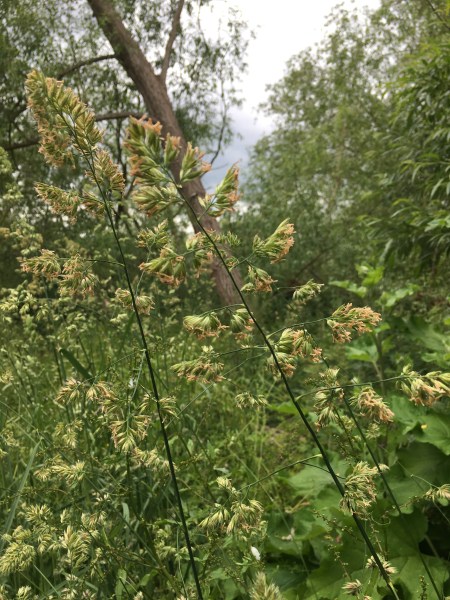
Therefore the second message: new things may arise. I keep seeing jobs that I think “Ooh, I could apply,” only to realise that those opportunities are closed to me. But there are new chances, new possibilities, and I now know that vocation and profession is not the right dyad: it is much more like profession and full-time paid employment are not coterminous, and the new things arising can’t always be seen in terms of money.  Being not-entirley-retired has a lot of plus points: it allows me above all to ponder what I really want and need from my profession as an educator (yes, I know that’s ponderous and full of windbaggery).  

And as for the rest? Well, the new opportunties may not be what was expected, they are smaller, but they make the shape of a day feel different.  It’s such a joy to share stories and books with school children; a challenge to learn from pottery; a grace to go to Mass more often – and who is this person that writes household To Do lists? Tomorrow I will be reminded by various bits of music that it’s a day for running. This piece of Nina Simone from the music of Billy Taylor has been key, a life saver in the darkest times, and if it is an anthem for the liberation of oppressed minorities in the States, I don’t mean to equate my desires with the plight of African Americans in the 50s and 60s, but this came on as I went for my first run, and has stayed with me.

…I wish I could say
All the things that I should say
Say ’em loud say ’em clear
For the whole ’round world to hear.
 
I wish I could share
All the love that’s in my heart
Remove all the doubts
That keep us apart
I wish you could know
What it means to be me
Then you’d see and agree
That every man should be free…
 
It’s powerful stuff, all that wishing, all that desire for freedom.
 
And it’s reflecting on this that will bring this rambling to a close. I knew I would lose a lot when I left, some good, some bad – or maybe some immediately pleasant and some stressful: avoiding a judgment of good and evil – and I dimly realised there would be some things I would take or leave that would be in my power. I hadn’t expected that a lot would be outside my immediate control, and again some of that has made me really happy, and some has taken me to very miserable places.  I suppose one way of thinking about this is a Detox, but of course not everything was toxic in my job, not by a long chalk –  although I think one of things that I became addicted to was the stress…  and bang: work stress is gone.  
 
And that’s perversely one of the things that make leaving feel like a sentence that has been interrupted, a me that no  longer is me. The fish who escape the Aquarium at the end of Finding Nemo are free – but what do they do now? What will Caliban find when he has no more dams to make for fish? Another “language learnt but nothing understood,” perhaps? Freedom is also freedom to be caught by squalls of depression or aimlessness. Maybe these are the very spurs that send me out trotting round the meadow.  Like Caliban we all create who we are with what we have….
 
The poignant lyrics (and very James Taylor harmonies) of Before This World and The Jolly Spring Time have some useful thoughts:
 
Give up the love that takes and breaks your heart
Let go the weight of all that holds you here
 
and
 
Let the resin risin’ up in the tree
Make the green leaf bud…
 
Yes the winter was bitter and long
So the spring’ll be sweet
Come along with a rhythm and a song
Watch creation repeat.
 
Thin thin the moment is thin
Ever so narrow the now
Everybody say got to live in today
Don’t nobody know how
I know that the lyrics alone don’t cut it. For some people these are threadbare sentiments except, maybe, to a sixty-something who smiles when he’s running through the meadow and James Taylor’s singing comes on the lighten the last few minutes of a run. But they stop me running away from something: they make me think I’m running in something, which feels very different.  Running in the now. 
 
Maybe the third message is that I think this is my new job.    


Pontificating

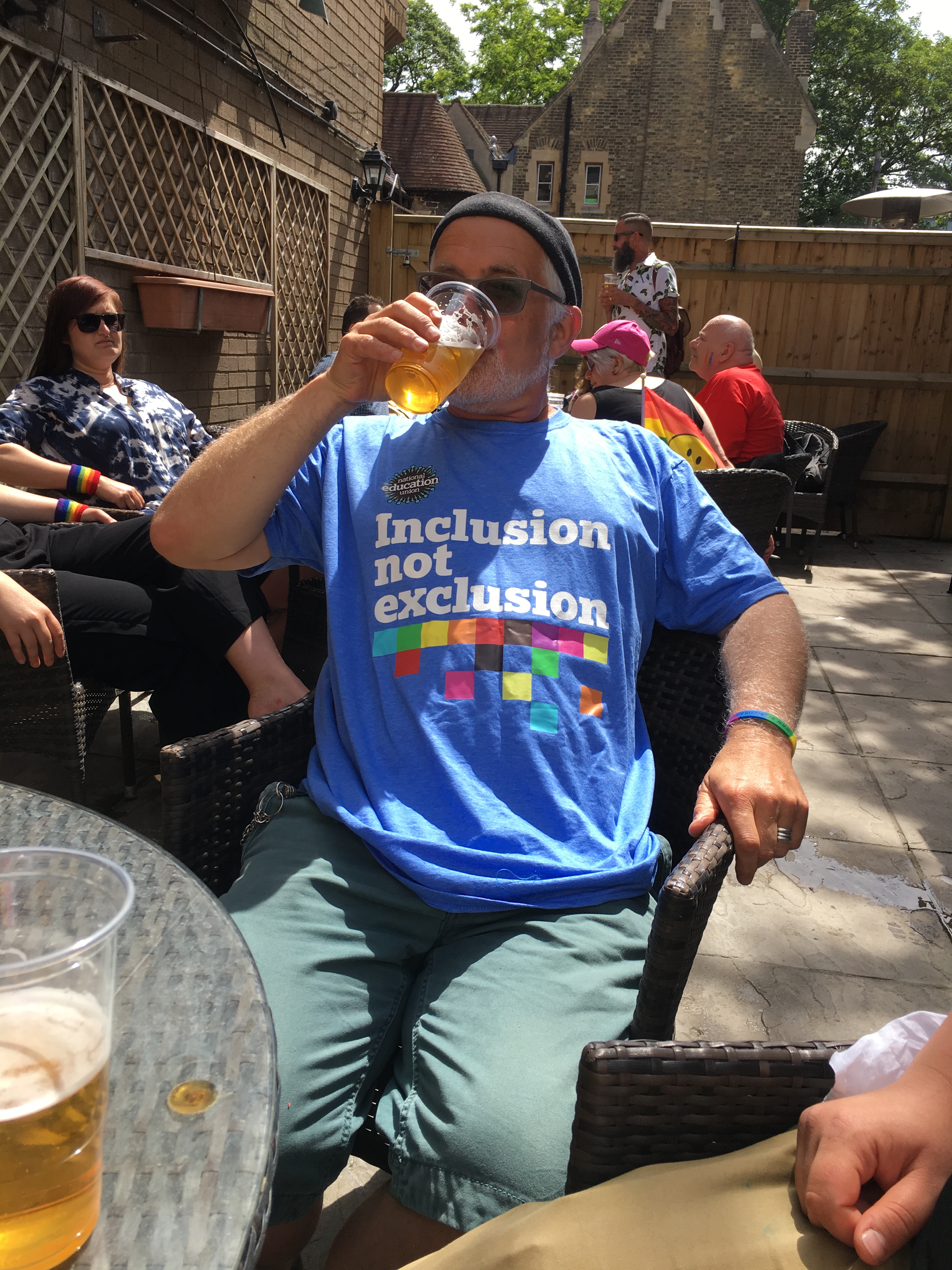
Social Media seems to have exploded with vitriol over the last few days. Educationalists (or soi-disant educationalists) know The Way to teach poetry; Bishops know The Way – or at least a way important enough to splurge it out on Twitter – to avoid harming children; another voice (on the right) wants to resort to shaking an autistic child for her daring not to know her place; Politicos from the US are eyeing up the NHS and meeting with sharp put-downs; opposers of Trump look at our current establishment activity in anger and despair, and apparently one at least of the Brexit crew is looking to science for a cure for homosexuality. I’m not glorifying any of this with a link, and while I think my own irritation with some of this is probably all too apparent,23AE611B-71B5-49B9-9C19-6F30B6B7F6A8 I am not joining in bashing Twitter Education, Bishops, or anything. Not this day, anyway. Here’s a photo that might give a clue as to my stance, and that’s enough.  Inclusion is a radically compassionate act – and of course sometimes it requires a stance, a line that cannot be crossed.

But this morning I want instead to think about a different way.

Chris Winson’s 365 Days of Compassion Review was kind enough to link to an earlier blog post of mine from here in which I look briefly educators “at the edge of this difficult world where a desire to be empathetic meets real children.” And this is my problem. I don’t know if it’s a problem with social media – I am minded to see a disjuncture between a US Bishop telling Catholics not to attend LGBTQ+ events and the Pope’s own meeting and discussion with Stephen K Amos; longer meetings, face to face meetings are much more productive of effective communication and at the heart of that, of understanding – or just that the world, in current uncertainties, has become a boxing ring of ideas, where putting people down is the only way to argue.   Who’s in, who’s out? Whom can I trust, whom can I demonise?  Philip Sheldrake (whom I quoted here in a blog post, again linking to 365 Days) warns

The pages of Christian history are strewn with marginalized people and traditions as well as forgotten or disparaged ideas…

and what has struck me has been the singular failure to enter into dialogue. One pundit is wrong because she is old and ugly; another because of his (admittedly pretty awful) track record on safeguarding…  No progress is possible under these circumstances. The compassionate response, the revolutionary response is, in general, to listen rather than disparage – and from the point of view of classic roots of Christian Spirituality, to avoid judging…

…and if you can’t avoid judging (I know I can’t, so often), to remember St Benedict who warns that

the spirit of silence ought to lead us at times to refrain even from good speech.

And this blog post (which has gone on long enough) is sufficient evidence of how hard I find that. I may not be a Bishop, but I can pontificate.

Family

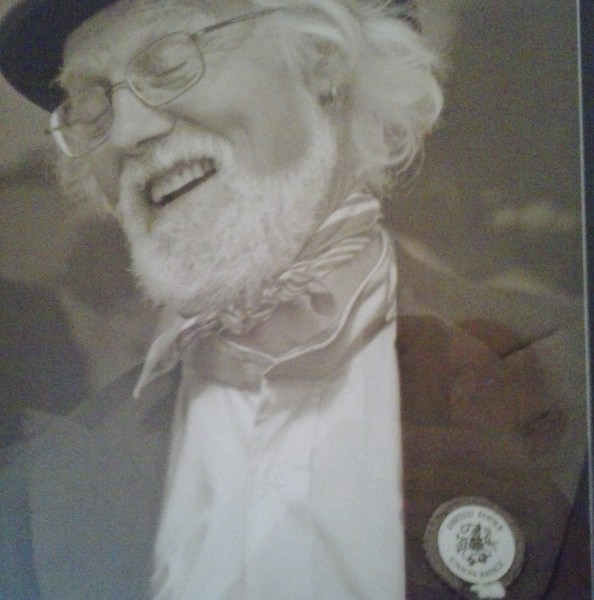
This is me:Me, study, Christmas


and my brother. 3378BABA-5EAA-47A0-939F-9BA534BA2A83


He is quite a bit older than me, and is, in fact, my older half-brother. This is the story:

Our mum has a baby, my brother Glenn, but her husband Jack is killed at sea in WWII. Eventually (in the 50s) she marries my dad, another sailor, Ray, and I come along. A series of miscarriages and my brother being abroad mean I am, more or less, an only child at this time.  Mum dies the year I go to University and my brother and I lose touch. We are eventually brought back together some ten years ago. I am, physically at least, quite like Glenn – to be honest, a shorter and -erm – less athletic version of my brother (and of his son, my half-nephew, Ben).

(I also have another half-brother and half-sister, Mark and Hannah, who are the children of my dad’s second marriage, to Val. Hannah is only about six months older than my oldest child, Joe, but for this post I want to mention Glenn and me).

Glenn is a fool and I am not. That is to say, his role in his local Morris side is that of a fool and I am in no way nimble enough to be a Morris Man. We share common interests in folklore, although mine tend to be bookish and his practical. We are both gardeners. We both have beards and white hair. I had quite a bit of contact with Glenn as I was growing up: I loved it when he came home, loved going on his motorbike from Blandford to Badbury Rings, loved going to visit him and his family – loved his garden, and walking on the wide beaches of the North East coast. In some ways he gave me experiences of outdoors, folklore and family that stay with me. Habitus. We aren’t twins separated at birth – but I am astonished by how strong I now perceive his influence on me to be. Was it really his dancing that led me to Wild Spaces, Wild Magic? How does his social circle of beardy beer drinkers influence my choice of appearance and choice of beverage? Was it our mum’s deep admiration of him that convinced me that here (in some respects) was what growing up was about? How, in the twenty or so years we didn’t meet, did those choices Glenn had made tell me about being who I am?

I am (as I have been before) reflecting on “history’s curved shell,” as R S Thomas says in his poem Eheu Fugaces, on how pasts come together in the present, on these strands of influence, and the more I think, the more I find the Nature/Nurture argument often too simplistic. There are physical differences as well as emotional ones, beliefs and life decisions we have made that are different, life circumstances (his losing his dad so young, for example) that are just not replicated…  Where do our choices come from, and how are they determined by people we meet, or see, or imagine? How do we look back at attitudes and choices?

*

To change tack: lots of things conspire to get me thinking about my family at the moment, but (for the purposes of this blog), I want to think about the struggle for identity so vividly described in Anthea Simmons’ Lightning Mary, a fictionalised account of the early life of Mary Anning.  In it, Mary is trying, with a “head full of pain and sorrow and anger” to establish what it means to be a scientist, coming from a poor background with numerous hardships; how does she identify as a woman without being seen as a potential wife and mother?

“Did I ask to be a woman? I did not… I hate babies and husbands and men and being poor and the sickness and the toil and the injustice. What have we done? Why are we to be punished so?”

Into Mary’s mouth are put the cries of impatience of generations.  Her mother responds,

“Whoever told you that life was fair, Mary? Not I. It is what it is.”

The injustices and hardships are depicted brilliantly in the book: her clashes with the landed gentry and “proper” scientists, her sustaining but troubled friendship with the precious young Henry de la Beche…  Mary becomes a real heroine, although as Simmons acknowledges in her afterword, her story is “profoundly sad,” and the novel ends, rightly, on a down-beat.

My brother’s and my story is not (so far!!!) sad, and neither of us, I think, is a frustrated genius, “born to blush unseen” but we (all) tread the difficult line between self-identity, the urge to be Henry de la Beche’s “friend and scientist” and Anning’s mother’s line that “life is what it is.” But our similarities and differences do highlight the ambiguities and tensions of upbringing and choice, of lack of freedom in various generations, of societal expectations. For us it is just ordinary life, in so many ways, but for Anning it was painful and frustrating.

“There were days, dark days, when I felt as if I had lined up for a race and then been told to take two steps back because I was poor, and then two steps back because Father had been a Dissenter, and then ten steps back because I was not a man…”

Anning in the novel is prickly and wilful, but also determined, resourceful – and ultimately doomed (the passive voce is important, I think) to be by-passed by the scientific revolutionaries with whom she deals. The book is a rallying- cry for young woman thinking about science as a career. It is also a plea for educators to remember how complex the stepping stones of privilege and the nets of disadvantage can be.


Omens

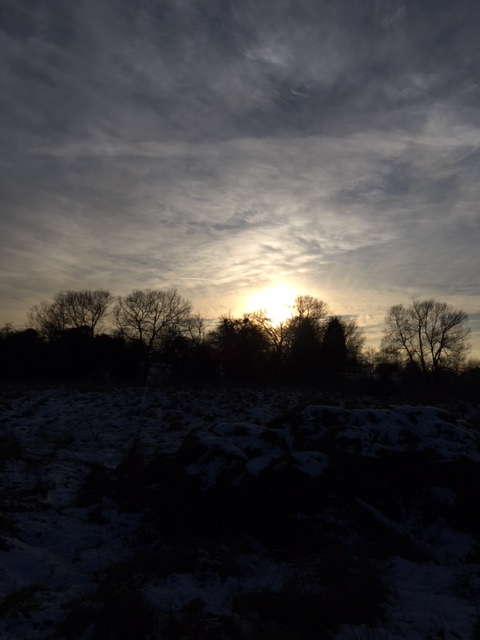
It’s a spring day as March comes to its “out like a lamb” ending. The sun is shining and I’m out on Warneford Meadow, treading through tufty grass, and along paths worn by commuters. It is our local Green and a valuable space, with a rich and (I suspect) growing biodiversity.   I am one of a number of visitors, human and non-human – and as I trot down one of the paths I see a bunch of magpies. The Opies record the rhyme as:

One for sorrow
Two for mirth
Three for a wedding
Four for a death.

Lots of other versions are on record, testimony to the respect  people (maybe) had for these striking birds as messengers.  The Boke of Saint Albans has, in its lists of the Compaynys of beestys and fowlys has a tiding of [mag]pies (but beware: I’m not sure I trust a list with  Superfluyte of Nonnys or Noonpacience of Wyves)…

One for sorrow,
Two for joy,
Three for a girl,
Four for a boy,
Five for silver,
Six for gold,
Seven for a secret,
Never to be told.
Eight for a wish
Nine for a kiss
Ten a surprise you must not to miss.

(It received a boost by being the theme tune for the Thames TV production of Magpie, ITV’s Blue Peter Rival, when perhaps other customs and rhymes have fallen by the wayside – but that began when  I was the key audience: a long time ago, now.)

Back to Warneford Meadow as I slog over a possible Roman settlement and try not to think about the Quis Est Iste Qui Venit of such a run.   Nine magpies, then as I approach it’s four then seven and then just one. What do we make of portents whose mobility makes the I Ching look solid?  Well, of course, we don’t, in general; it’s a bit of mind play while I run.

I remember that as I qualified as a teacher, the National Curriculum was just coming in, and the course leader was ending his goodbye speech to the PGCE with “May you live in interesting times.”  He did not foresee where we might be today: if we were only contending with conflicting views about curriculum that would be enough, but we have Schoolsweek announcing scandal upon scandal, Unionist bands and racists openly on the streets in London vying for publicity (and no, they don’t get links) with crowds and crowds of people with more politeness and less threatened violence, a Parliamentary struggle the likes of which I have never seen before… These are interesting times, but not in a good way. There are no signs or portents to match all of this rubbish.

And while I trundle my sixty-something way and wonder about what the list of magpie numbers might portend (I really did get the one above the other week), part of my mind is wondering: instead of nines and sevens am I just seeing magpie after magpie after magpie? Sorrow and sorrow and sorrow?  I don’t think I have ever felt gloomier about the state of my country and my profession.

So instead of corvid fortune telling, I will end with part of my play list for running:

Nina Simone whose version of Billy Taylor’s anthem to Freedom has been a lifesaver this winter.

And while we’re at it, her singing of Randy Newman’s great hymn to compassion.

Sod the magpies, stuff the omens: this is what we need.

Back into Storyland

Let’s start with the lyrics:

When a knight won his spurs in the stories of old
He was gentle and brave he was gallant and bold
With a shield on his arm and a lance in his hand
For God and for valor he rode through the land

No charger have I, and no sword by my side
Yet still to adventure and battle I ride
Though back into storyland giants have fled
And the knights are no more and the dragons are dead

Let faith be my shield and let joy be my steed
Against the dragons of anger the ogres of greed
And let me set free with the sword of my youth
From the castle of darkness the power of the truth.


I loved this song as a child: perfect Junior School Assembly stuff. I sang it in college with my friend Robert, too: a shared memory of school even though we hadn’t known each other. It colours, also, my understanding of fantasy literature: the wistfulness is something of a challenge and full of the pull of nostalgia, and for me (some way from assembly in Harlow), this folksy version by Martin Simpson of it really rings a chord.

I’m not swapping from wolves to dragons as an interest, but just to record, for National Storytelling Day, the wonderful variety of dragons. Here are some of my favourites, drawn, I ought to say, from the European tradition. The song I’ve cited above always reminds me these days of Tomie de Paola’s The Knight and the Dragon, where the luckless knight and dragon come to terms with each other, make peace and live happily. But there is also Eustace in  C S Lewis whose encounter with – and transformation into – a dragon are an allegory of sin and redemption; there is Rosemary Manning’s urbane and charming R Dragon, standing for the whole of Cornwall, wistful for the time of Arthur; the urbane and vain dragon defeated by The Paper Bag Princess… And there is Smaug the Stupendous.

It seems to me that dragons are (like wolves) personifications of a certain type of aggression, and that the fire they are often surrounded by is its potent symbol. Michael Martchenko‘s wonderful fire in the Paper Bag Princess has it all: all-consuming but ultimately exhausting. And at an uncertain hour, when anger is rife, maybe storytelling can remind us of this: those dragons of fear and anger (and criticism and self-doubt) are in the end going to burn themselves out.

Happily Ever After

..Happily ever after.

That’s the story, but in this case,
The wolf wins,
Jack the Giant Killer falls

No youngest son outsmarts the shadows;
in this case the most that can be said
of those left
of those eager to believe
of the listeners at the doors of faith,
yes the most that can be said is
And they lived…


I wrote this for my son Theo when he died, nineteen years ago. The (for me) unfortunate  concurrence of National Happiness Day and National Storytelling Day on his birthday prompt me to post it. Not every story has a happy ending.

Not many people have seen it, and I hope the few new people who do now aren’t upset by it. It stands, I guess, as a remembrance that Happiness is not (or should not be) a smug thing but a springboard for compassionate action, and that for millions of people their lives are far worse than mine, and for millions the sadness of losing a child is a painful reality. And as it is this afternoon I have chopped logs and chased away the shadows, and am typing tentatively as I watch a kestrel on the top of a tree in our garden, I rejoice in my family and my dear friends, but…

Western Roots of Compassion

Not much more than a  retweet, really.

I was chuffed to be asked for a contribution to the blog #365daysofcompassion  and responded with this piece. The idea that compassion is a new phenomenon is the West is a bit silly, and i wanted to turn a rather random spotlight on a few authors and ideas. There is much more to say, of course – so much so that I can’t help thinking that there is a richer seam here than might first appear, books and books of stuff. I would have liked to explore St Ambrose more, or look at the world of Julian of Norwich, not just her writings, and then maybe looked at the charitable orders of the period immediately prior to and post the Reformation. Or gone beyond my own Catholic point of view to look at the Salvation Army, the Friends (Quakers) such as Elizabeth Fry or Christian Socialists such as the McMillan sisters – or to look at movements and people in different ways?

As Philip Sheldrake puts it,

The pages of Christian history are strewn with marginalized people and traditions as well as forgotten or disparaged ideas.

and looking at a range of compassionate practices in detail would require a meticulous exploration of   people we sometimes overlook, from Beguines and Eudists to Leprosaria.   Some of the institutions have changed in purpose or patronage and some of this has been in response to changes of understanding in what suffering is and where it can be alleviated. The biggest thing I think I’d want to add, therefore, is something about how our realisation of suffering changes and has changed since the writers I explored in the 365Days blog, and how a critical appraisal of the “history of compassion” needs to take this into account. 

I said in my 365Days post that “compassion… appears in all sorts of different guises.” As we become aware of the pressure or demands on that compassion,  perhaps we do need to look back more, to find some sense or strength – or simply answers to problems – to create the kind of opposition to the looming clouds of intolerance we seem to be facing in uncertain times.  This cannot be something that a positive overview such as my 365Days blog can achieve, and Sheldrake concludes this section in Spirituality and History by noting that 

…cataclysmic events such as the Holocaust have caused much heart-searching about Christian history and have heightened our consciousness of its ambiguity…It seems that we can no longer avoid the need to approach even our cherished spiritual traditions and their history in a much more critical fashion.

That this dehumanisation also occurred in the Middle Ages (and earlier) is not the issue here: it’s how our hearing and seeing now brings about a different response.

Or can do. We are faced on one hand with compassion fatigue, on another by the celebritisation of charity – and on a grimmer side by holocaust denial, or the outpouring of hatred when an enemy is seen suffering. Slower communication means less frenetic communication, perhaps?


From accepting to celebrating imperfection

In the run up to my birthday (yesterday) I found myself thinking about the Japanese craft of mending a bowl by joining the shards together with golden lacquer.  I even went to the Ashmolean to see if I could find some examples (I didn’t find any). The Book of Life, part of the School of Life, explains it like this:

It means, literally, ‘to join with gold’. In Zen aesthetics, the broken pieces of an accidentally-smashed pot should be carefully picked up, reassembled and then glued together with lacquer inflected with a very luxuriant gold powder. There should be no attempt to disguise the damage, the point is to render the fault-lines beautiful and strong. The precious veins of gold are there to emphasise that breaks have a philosophically-rich merit all of their own.

and here is the full text, an essay on their rich and carefully thought-through website. I’m not sure what to  make of the organisation, but I passed their shop/centre in Marchmont Street last weekend before my final visit to the Anglo-Saxon Kingdoms exhibition at the British Library, which I blogged about before.

Plenty of people have explored the psychological metaphor before me.

Gold-Joining, Kintsugi.   Too easy to go back to my crises of the spring and summer (and the Christmas that has just gone) and say “There! Broken – but at least I shine with gold!”  Being broken is not like that. Whether a sudden crisis, or a dam-burst of emotional turmoil, or a long, limping condition, the brokenness of mental ill-health does not always shine with gold: but it invites a painstaking mending that will not hide but will (eventually) accept and celebrate. That painstaking is core, and for  me it also invites two related things: silence and compassion.  They are not easy, and I know I am really not good at these two things that, joined together, are transformational. Here I am, for example, blogging when the house is quiet and I could be sat still.

Cyprian Smith, whose book on Meister Eckhart has yet to be surpassed, writes in his book The Path of Life that silence

…takes us into the depths, the depths of our own minds….There is no spiritual progress without that descent into the darkness.

But  (to some extent) the descent into darkness, the pains-taking of spirituality, is not taken alone. That descent into darkness is partly the acceptance of our weakness, but the mending is informed and mitigated by the communal aspects of our lives. Cyprian goes on to talk of the silence of the carefully swept room, lifeless and suffocating, and some of that comes from not listening to our compassionate selves – or to others (in person, in written form, whatever) who extend a genuine compassion to us.  Feel (y)our own weakness, be confronted by it, stare at it; acknowledge and accept; be compassionate and know it is who you are, who makes you the lovely person you can be. It is in this compassion that we move to add the gold to the mend.

To extend the metaphor with which kintsugi is heavy, it is not the pot that mends itself.

Mindfulness

To talk about Mindfulness I want to start with Thich Nhat Hahn. Here he is working – except he says it isn’t work – on calligraphy that conveys his central messages. As he says:

Breathe and enjoy the Kingdom of God in the here and now. Breathe and enjoy this wonderful moment.

I’ll stop there and do just that before I continue.


*

In preparing a class on spirituality for the Education Studies students at Brookes, I have a number of choices about how to approach mindfulness.

In terms of resources, there is the possibility of using words from Thich Nhat Hanh himself and the wonderful music and Nature graphics in the Great Bell Chant.   There have been times when turning the lights back on after showing those 7 mins to students has felt really quite a disruption to a sense of quiet: it is (for me and for some of them) a moving little bit of film.

The universal dharma door
is already open.
The sound of the rising tide
is heard clearly…

(3 mins ff)

and I will probably need to weave these in with this cute and thought-provoking footage from a school in Ireland.

But here I find myself in a bit of a quandary. There seems to me to be something of a divergence of expectations here. Quite what does Mindfulness (or spirituality in general) do in schools? Let’s look at what the children say, speaking of their jars full of sequins and other glittery materials that exemplify their minds – shaken and busy with ideas and feelings:

“Your jar is like your heart and there’s loads of stuff inside it….”

“Your mind is so busy it can’t think of a load of things…”

“…and then when you leave it to settle you take a deep breath and then it all goes to the bottom.”

Lovely stuff, and drawing on a similar story from Thich Nhat Hanh about watching apple juice settle.   I would hope that the children are the better in some way from practising this.

The clip goes on, however, to present the children’s acts of kindness and what they are thankful for. They are personal, domestic things – making breakfast, giving mum some peace, feeding the dog; being thankful for food, presents, a warm house. So with one short clip (we have to admit it is short, edited, &c.) we move from mindfulness through kindness and gratitude.

These are interesting values and practices for schools to promote. The way they are presented is that mindfulness makes you think more clearly, acts of kindness earn the approbation of adults, and we can be grateful for what adults provide. Of course, the converse might be things we want to avoid – chaotic thinking from ungrateful, unkind children (or adults), but is this really mindfulness, or a new, maybe more accessible and acceptable catechism? Christian children all must be/Mild obedient, good as He, as the Christmas hymn goes.  This is less than the commodification of spirituality that many are wary of, but it could be its schoolification.

So in terms of practice, how might we look at Mindfulness in schools? I think we might take a lesson from Forest Schools. An initiative is seen and adopted faithfully by some, with minor alterations by others, and a dilution takes place until a school calls the weekly visit to the pond at the end of the school field by a name that might also be used by a wide-ranging, risk-taking experience some miles from the classroom. Similarly, a teacher might be a committed follower of the Plum Village Community of Engaged Buddhism, or they might be involved in some kind of sitting mediation themselves, or following a course of guidance on mindful meditation. I suppose That Candle Thing sits somewhere around this marker – and the original project for that was a largely improvised activity.  Or they might have read a book on the subject, or seen a bit of mindfulness practice as part of their Initial Teacher Education or some CPD and think that this is something they might spread more widely. I find I am thinking “Think Raisins:” the quick introduction to mindfulness many have experienced as CPD in schools where people contemplate a raisin. Is this enough to think about how one might adapt a practice to school life?

I’m not arguing for regulation and accreditation but for a recognition of foundational ideas and texts. Here – although Buddhist meditation can’t really have a foundation text from the 1970s (can it?) – I would want to refer back to The Miracle of Mindfulness. Not all books on mindfulness will acknowledge the source, something I find a bit disturbing, but here are some of the things Thich Nhat Hanh has to say, first about what mindfulness does and then what we do about or with it.

I like to walk alone on country paths, rice plants and wild grasses on both sides, putting each foot down on the earth in mindfulness, knowing that I walk on the wondrous earth. In such moments, existence is a miraculous and mysterious reality.

People usually consider walking on water or on thin air a miracle. But I think the real miracle is not to walk either on water or on thin air, but to walk on earth.

and then, more practically

Your breath should be light, even and flowing, like a thin stream of water running through the sand. Your breath should be very quiet, so quiet that the person sitting next to you cannot hear it… To master our breath is to be in control of our bodies and minds… Each time we find ourselves dispersed an find it difficult to gain control of ourselves by different means, the method of watching the breath should always be used.


And of course there’s much more.

Is this what the children are doing? Should their eyes be open or shut? Does it matter and if so why?  Do the foundation texts need to be in play? And is this spirituality?  Well, it will depend (cop-out phrase coming) on what we mean by spirituality. Is it about making sense of self and our relationship with others, in ways that Ursula King or Andrew Wright might recognise? Is it about transcendence, devotion? What are its links to communities of faith?

Some mindfulness practices – sitting quiet, listening to your breathing, trying to just be rather than plan dinner or think great thoughts, or fight feelings of inadequacy (yes, this is me, in meditation) – can be seen as practices arising from spiritual traditions in East and West. In that sense they are part of spirituality. They differ from some (largely Western) attempts to define spirituality in that they do seem, in their purest forms, to lack a goal. Sitting to sit, washing the dishes to wash the dishes: someone who sits in meditation may find clearer water in which to view their past and present (and maybe their future), but they are chasing a bird to put salt on its tail if they think meditation will automatically give that. Sometimes when I sit it’s like sitting on a block of ice, and I am desperate to finish, or I spend all my time chasing what I should have said, how I might have looked.  I certainly am not “better” when I get up. It is not Penicillin or Novocaine.

Martin Laird’s books are a good way to see some synergy between the goal-orientated or biography-centred definitions of, say, Wright or King and the goalless sitting of Zen. His (Christian, monastic) perspective looks at the therapeutic outcomes of silence in which arises an awareness of our own psychological states:

The specific focus of this book [Into the Silent Land] will be on the practical struggles many of use face when we try to be silent – the inner chaos going on in our heads, like some wild cocktail party of which we find ourselves the embarrassed host. Often, however, we are not even aware of how utterly dominating this inner noise is until we try to enter through the doorway of silence.

Just sitting, for me, needs my eyes to be open: to sit where I am and see things come and go, rather than plunge myself into the interior cinema of deadlines or wishful thinking or regrets. I’ve written about this before when reflecting on birdsong in the morning. It also needs me to see the things that worry me as the “weather on the mountain:” not me, just the stuff that swirls about me (this is another image from Martin Laird).

*

Back to the classroom – both the compulsory-age children’s rooms and the HE classroom I’m preparing for.   Although it’s a lot to ask, I think I would expect spirituality in an educational context to encompass three or more aspects:

  • Awareness of self and others
  • Compassionate attitudes
  • Practices that encourage these two.

Compassion and spirituality are sometimes artificially linked: Christian warrior monks, for example, in the twelfth century had compassion for some and not others, and coupled this with intense religious practice from Cistercian roots and combat to the death. Similar attitudes might be seen in religious groups today. Nevertheless, in general, spirituality is linked often to the awareness of others we might describe as compassion. It’s a tall order to “get schools” to do this work, but it has been represented in OfSTED guidance and in local curriculum materials. It is there in germ in the aims and objectives of Oxford Brookes and other Higher Education organisations – although I have critiqued this before.  Compassionate attitudes, spirituality, real vision and purpose: they might be enunciated but not embodied. Children are wild, students are on their ‘phones, teachers and lecturers are overworked or grumpy, systems prop up systems rather than support users. It is, as I say, a tall order.

If a bit of quiet sitting does form competent, reflective, self-aware compassionate students (and staff???), I’m happy. If a lot of quiet sitting is needed, well, maybe schools and Universities need to think this through and ask what the role of education is. If sitting quiet and sparkly jars help, then fine, whether they have the backing of a training group or no. If, however, sitting and the rest is tokenistic and without wider ripples into school, then I don’t see the point.

So while my class for the  Values and Religion in Schools module will have mention of mindfulness, will look at the SACRE on spirituality, and at thinkers like Wright, and Eaude, will mention outdoors and wellbeing and read some Thich Nhat Hanh, I do not see piecemeal adoption of spiritual practices as a cure-all, any more than I think a bit of woodland exploration will save the world. But it’s a start.


Wolf Moon

I missed the superbloodwolfmoon thing this week: cloud hid it in Oxford, although lots of amazing pictures emerged around the place. I tried, in compensation, to write a blog post linking back to my earlier explorations of Wolves and Red Riding Hood (my “Jack Zipes schitck” as someone described it) and the stuff I mull over a lot around outdoors and storytelling and wolves, and maybe (although this is where I stumbled and tripped) on the Black Dog of depression, nipping my heels nearly all this Christmas.

However, the death of Mary Oliver prompted me to buy a collection of her poems and comment on them. Social Media had all sorts going on – as is the way, some friendly and some not-so-friendly – but with today’s cold weather in England, I thought I would cite one of her bleaker pieces as apt for the weather and the moon:

Wolf Moon

Now in the season
of hungry mice,
cold rabbits
lean owls
hunkering with their lamp-eyes
in the leafless lanes
in the needled dark;
now is the season
when the kittle fox
comes to town
in the blue valley
or early morning;
now is the season
of iron rivers,
bloody crossings,
flaring winds,
birds frozen
in their tent of weeds,
their music spent
and blown like smoke
to the blue of the sky;
now is the season
of the hunter Death;
with his belt of knives,
his black snowshoes,
he means to cleanse
the earth of fat;
his gray shadows
are out and running – under
the moon, the pines,
down snow-filled trails they carry
the red whips of their music,
their footfalls quick as hammers,
from cabin to cabin,
from bed to bed,
from dreamer to dreamer.

Superb, and as bleak as the landscape and weather she is writing about.  It’s over ten years since I began to explore children’s literature as means to look at the outdoors, and literature continues to be a lens I use to look at how we react to landscape. My brother, I note (as I type), is in the snow at the Cat and Fiddle – close to Thursbitch in the snow. I think of Jack Turner, and the car off the road we saw in the fog by there:  worlds collide.

In Wolf Moon Oliver picks up the themes of Death and cold –  “his belt of knives,” “his gray shadows” –  in an almost Grendel (ettin or þurs)-like way; this is a Big Thing to terrify, with the wolves’ howling as the “red whips of their music” disturb the night. Because it is (perhaps) a simple point to make, but I feel it needs making: Mary Oliver is a good poet, not always writing comfortable nature poetry about childhood or inspirational lines about

I was thinking
so this is how you swim inward,
so this is how you flow outward,
so this is how you pray.

Five A.M. in the Pinewoods

and her sharp eye and the writing that comes from it is able to look at the aspects of nature that humanity finds inimical – and has, in some ways dedicated a lot of its evolutionary history to conquering.  She is able to write about the “roaring flamboyance” of the sea and the “hallowed lime” of owl pellets: the memento mori we can gain outdoors  that I mentioned in my earlier post.

The response of literature to the winter is itself interesting, and writers such as J R R Tolkien (think Caradhras the cruel) and Kenneth Grahame give vivid pictures of its dangers: although snow in The Wind in the Willows is softening, almost redemptive, the creepiness of Mole’s wintry experiences in the Wild Wood are very expressive “Then the faces began…Then the whistling began…Then the pattering began.” The winter wood; the dark wood; img_1355the wild wood as evening closes in. More modern writers have given us some great examples of snowy landscapes and confronting death: Philip Pullman works the theme extremely well in Northern Lights; Michelle Paver is terrifying in her adult book Dark Matter but also richly descrtiptive as Torak  battles the limits of human (and animal) endurance in the snow, and (again for adults – I wonder if this is significant) Garner deals with death and loss in the ice in Boneland, a death that stalks both strands of the book in different ways.

It seems to me that the immediate reaction is to see “outdoors” as somewhere positive, just in the same way as Mary Oliver is seen as uplifting – but we take on these broad judgments without thinking at our peril: literature does well to remind us that the outdoors is not always friendly, as sudden blizzards by Cat’s Tor can show.

Hope you’re OK, Mark.