Starting

Who makes learning desirable?

It is a sunny day, probably in 1997 or so. Despite a visit from my Early Years adviser – at least, I hope it was “despite” rather than “In a desperate attempt to show said adviser that a teaching Head could work effectively in the nursery outdoor environment” – I was out in the garden, watching, supporting, intervening and choosing not to intervene. I remember it involved a lot of transfer of water from the outside tap, while those not playing in the sand and water were climbing trees, running a shop…  Hesitant children were being given literally a helping hand to overcome their fear of mud; more confident Wild Things were being guided towards a way of playing that was more inclusive;  a small group were playing a game we had developed together called “1 – 2 – 3 – 4 – SMASH,” in which some children were waiting until five sandcastles had been built before they could jump up and down on them. All of these were, of course, of limited success: no single activity is likely to produce a piece of learning, perfectly formed and squeaky clean. Learning takes time, repetition, commitment from adult as well as child.

At the time – maybe as now – there was some debate about curriculum content, aims, approaches. We were moving (this is a truncated version of the development) from the Desirable Learning Outcomes through the Curriculum Guidance, until we came to the revision of the Early Years curriculum under the forbidding title of the Statutory Framework for the Early Years Foundation Stage, revision of which has brought us to where we are now, with all its supporting guidance. Maybe this fluctuation of emphasis and debate is how it should always be – provided it doesn’t slide into a power struggle like some kind of Tudor court politics, where which faction has the ear of the powerful is the indicator of what is “right” or “wrong.” At the time, in the late 90s, however, Early Years education felt embattled more than challenged, and I remember asking Julie – yes, the adviser was Julie Fisher, sharp-eyed and thoughtful as ever – whether she thought the “classic” state nursery education model had had its day, if we were looking at a model that was something of a creature on its way to extinction. “Not a dinosaur,” she replied, “but maybe an endangered butterfly.”

And part of me wondered how long we had.

Last week, however, Julie was kind enough to give Maggie and me a copy of the fifth edition of the book for which I think she will be remembered: Starting from the Child? She continues to write with the passion of a conservationist, but goes much further than simply wishing to preserve a fading set of practices.

Each edition has been worthwhile, but the new, fifth edition has some really interesting things to say. I don’t intend to make a line-by-line textual analysis of Prof Julie Fisher’s fourth and fifth editions of Starting from the Child, except to notice  that the question mark has come and gone across the editions and through the years. The question mark notes the approach taken in the latest edition: Julie is clear from the preface on:

I believe that recent policies and expectations pertaining to early childhood education now make it a challenge to always keep the child at the heart of best practice. SFTC?5, p xvi

The quiet(ish) shift away from what we might have thought of as child-initiated learning came more vividly to my attention when Prof Kathy Sylva was presenting findings that were part of the EPPE project, and a transcript of a (pretty dire) group time in which the adult kept peppering her attempts to keep the children on task with “I need to you know…I want you to know.” It was a far cry from the beautifully descriptive blog post in which Julian Grenier played with the ideas of a child enrgrossed in the spider he had seen at the tricky moment of transition:

“He had held onto something that was fascinating him, despite his upset, and he had wanted to share it with [his key person] once he felt calm enough.”

http://juliangrenier.blogspot.com/2012/12/magical.html?m=1

The little boy’s insistence on retuning to the spider meant that the teacher felt overcome by a child’s sense of wonder. It’s a lovely piece of writing, made all the more so by the fact that so many of us, alert to a key interest or moment in a child’s day, have seen similar incidents. Even back as far as Margaret McMillan herself (and in her particular style) the children experience the garden with wonder:

Gold and green, purple and white, rose and blue, meet us at every step : and the children look at this newborn wealth of colour with wonder. It is surely the moment to fix these glorious tints and shades in their memories and make of them living memories.

Margaret MacMillan The Nursery School (1919) p139

In more modern parlance, this is an important part of what Annica Lofdahl describes as

the teachers’ efforts to develop a pedagogical environment that creates positive opportunities for learning and development.

Annica Lofdahl, “Who gets to play?” in Brooker and Edwards Engaging Play (2010, p123)

Time and again the pedagogical decisions of the adults are about creating positive opportunities for children to greet their environment and their important people (children and adults) with questions about how the world works. Julie puts it clearly:

Curiosity is  provoked by a high quality environment in which children pose their own questions

SFTC?5 p27

We set up an environment in which the children can move from attachment to home people to adults and children they can trust, in an enviornment that allows curiosity to flourish. Not just busyness, note: a place where questions are at home, where adults build on what they already know of a child. This is how we “start from the child.” It is not a step-by-step “now you learn this;” equally it is not a vague wandering round a nursery with a key worker trying to entertain or distract the child. No: Julie is looking for a patient building on interests known from home, an understanding of how children learn and how sequences of learning and development work.

It is in the opening pages of Starting From the Child? Ed 5 (SFTC?5) that Julie talks about this in terms of the child being intrigued and curious. Likening young children’s learning to a traditional jigsaw, Julie – ever the one to choose an engaging image – points out how a child turns the piece round, examines it with patience. The adult is watching, maybe commenting or questioning, but fully grasping that this is learning prompted by the child’s own curiosity. Where then is the adult?

It is the skill of the educator to be aware of the pieces of the jigsaw that the individual child already has in place and whether or not they have fitted the pieces together correctly. If they have not, then supporting the child to review the construction of their cognitive jigsaw is as delicate and difficult an operation as persuading the child to remove a piece of misplaced wooden puzzle… The inappropriate imposition of connections can lead to the learner becoming confused and disaffected…The effort to make connections is all the more likely and all the more successful when a child is motivated to do so.

SFTC?5 p28

This seems to me to at the heart of what Julie Fisher is getting at, with the title of her book. It is by no means a worn-out phrase, but one that needs regular reappraisal and challenge. Starting from the Child might mean simply

What do I want this child/these children to learn and how will they best learn it?

SFTC?5 p67

Have I reduced this to such simplicity that this looks like a book of obvious assertions? It certainly isn’t that. When Julie explores fundamental differences between the adult and the child curriculum she is clear that

…it should never be assumed that learning [sc for every child] will be equally sequential. Each child’s sequence will be highly idiosyncratic according to the knowledge and understanding they already have and that they bring with them to the learning situation.

SFTC?5 p114

And this underlines what she has written earlier:

As educators we join the child some considerable way along their learning journey.

STFC?Ed 5 p11

And this previous experience – which can be positive or negative – has to be seen as fundamental to the learning attitudes and processes the child brings. Observation – and effective communication with parents and previous settings a child might have engaged with – allows us to hone in on what a child is motivated by. The chapter called Whose curriculum matters? has sections and examples on how context allows children to revisit and apply new knowledge and understandings. (SFTC?5 p116)

Yet – and this is where I have to finish – Julie would not want the reader to think this is something wholly in the hands of the child or children any more than it is in the hands of the adults in an Early Years setting, but often takes places in the negotiated space of a rich and curiosity-provoking environment. I love the section (SFTC?5 pp128ff) in which she exemplifies adult-led learning being used in child-led activity, and vice versa, child-led activity being picked up and extended in an adult-led context.

We are back in my nursery school in the nineties: how we move water with buckets and guttering was important to the children and the language was – thanks to the adults (not just me – but teamwork and shared adult expactations makes a whole different blog post) – extended and enriched by modelling, deep questioning, shared attention and excitement. The same was true with the sandcastles, the shop and the chasing games.

Having different purposes and different outcomes does not preclude adults and children from learning from each other’s plans and outcomes. Each must be given time to flourish and to conclude…

What must be achieved is a balance – a balance ensuring what children are to learn influences how they learn. But primarily, all that is known about the child as a unique individual is the starting point for planning the curriculum – whoever leads and whoever follows.

SFTC?5 pp129, 130

Okay, Let’s Go

So it’s book 5 of Heartstopper, and Nick and Charlie, after a painfully long time for the readers (although less for the characters) are prepared, have motive and opportunity… and from coy first kisses way back in book 1 are going to have …

Well, what are they going to have, and what do the readers have to read into text and image?

Conversations around sex and young adult literature seem to me to centre around two questions: Do the characters have to have sex? and How appropriate is the depiction of what they do? Since Alice Oseman’s style allows the (pretty inescapable) sex to take place, she is caught needing to decide on what to show. And it is “pretty inescapable,” in that the kissing that takes up the physical side of Nick and Charlie’s relationship from Ch 3 of Book 1 only starts to build much later – but build it does.

This has attracted a number of critical responses, summed up (and to a large extent demolished) in vlogs like this from Obviously Queer and elsewhere. [Heartstopper] “is unapologetically showing queer love being wholesome innocent and slow.” If this is not the case in other teen product or even in real life, the slowness of the developing relationship is charming, and leaves emotional room for the and finally of Book 5. This is a key scene, taking place some days before the excerpt below, and note that the reader is left to fill in at least some of the blanks.

It is clear from the conversations between characters that the blanks are to do with penetrative sex, and that after a very long period of awkward relationship development (the line “Why are we like this?” is a refrain in a number of scenes), we are seeing-yet-not-seeing something incredibly intimate, decorated with giggles and whispers, with trainers and trousers discarded, so with the condoms and lube Nick has bought in Oxford being brought out from his suitcase we have little room to doubt what’s going to happen. “Okay, let’s go” may sound more like the start of a rollercoaster ride than a key point in their relationship, but Oseman is entitled to depict these two star-crossed lovers as having fun.

Heartstopper Book 5, Ch 7, 1563

And this might be where the reader gets a shock: is it acceptable to see this as fun?

Of course it is. They may have taken what seems to me to be a very long time getting there, and Nick and Charlie, one of the satellite texts in the Heartstopper canon, suggests it was a bit nerve-wracking for the young characters to start, but maybe when we think of what is acceptable to be shown, we see Oseman’s skill at changing narratives. This is not about the mechanics (or geography, if you prefer the metaphor) of sex, or the metaphysics of love and sex, but simply about fun.

Is it right to depict sex as fun instead of guilt ridden (or even a liberation from guilt)? How does the adult gatekeeper react to this sidestepping of traditional attitudes and narratives? The argument about Lyra and Will in Pullman’s The Amber Spyglass (no time to talk about the do-they-or-don’t-they? or the Bowdlerisation of the US edition) suggests to me a deeply concerning attitide from adult readers: brought up on the post- D H Lawrence bonk fest, it is almost as if adults need to see the sex and then disapprove of it. Oseman is telling is This is Not Our World, even if once it was.

Points of needles, edges of swords, blades of axes

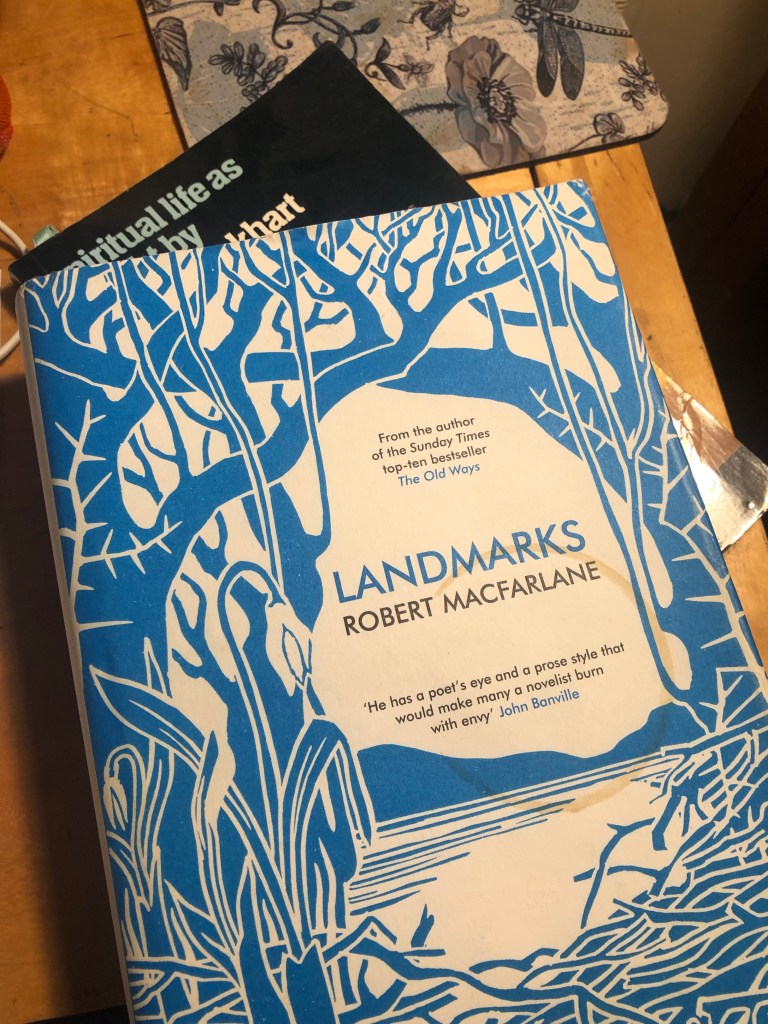
I started this post in February on what I described as “an odd day,” where I had been looking for material on meditation and spirituality, mostly because I was fretting about a postgraduate class on Early Childlhood spirituality that I was due to teach. One book leads to another like something out of The Name of the Rose, so for entirely different reasons than I’ve ended up with, I was looking at Rob Macfarlane’s great book Landmarks. I came across his account of the Kalevala (Landmarks, Ch6, by the way) and Vainamoinen Finds the Lost-Words:

Robert Macfarlane: Landmarks cover

Its hero, Vainamoinen, is trying to build an enchanted ship of oak wood in which he will be able to sail to safety ‘over the rough sea-billows.” But he is unable to conclude his shipbuilding for want of three magic words…

And along with various other things I’ve been reading, here was the image I was looking for – not for my class on spirituality, but actually for an entirely different class on Play. To Macfarlane, the finding of the lost words is the key or maybe even the origin-text, it seems to me, to his – and Jackie Morris’ – beautiful collaboration The Lost Words and the works that have come from it. For me it provides an entry into the search that Vainamoinen undertakes, and with it a search a lot of educationalists are seduced into undertaking: a set of spells from the past that will give us just a few magic words that will enable us to create the way we want to go across the rough seas of educational theory. To get there we have to look all over the place – see Rob Macfarlane’s account where Vainamoinen searches through improbabilities of swallow’s brains, swan’s heads and the like – until we face a place of conflict: in the Kalevala this is a journey over the points of needles, the edges of swords and the blades of axes.

And it struck me that far, far too often, educators spent their time looking for the three magic words that will solve their problems, and that they will seek those words out despite the cost.

Pinning one’s hopes to a single answer – and in the story just cited, a simple formula – is hopeless when critically exploring something as complex as pedagogy. the Education Endowment Foundation (summary review) gets round this by assuming that everyone can sign up to the statement:

Learning requires information to be committed to long-term memory

Acquiring language, developmental considerations would seem to be set aside, alternative provisions and pedagogies forgotten or (as the salivating Twitterati are wont to do) denigrated and mocked, were it not for the statemant that

Our review is founded on the view that translation of evidence from basic science is neither simple nor unproblematic.

EEF Review p6

So while I had thought of a (deliberately) controversial title for this post:

Why CogSci is Rubbish

To be quickly followed by

Why Forest School is Rubbish

I really have to avoid the cheap tricks and hark back to the word I slipped in earlier in this post

Critically

And it has a lot of work to do, that little word. Who gets to be critical about the work teachers do? Are teachers meant to be professionals? Do they critique their work reflectively? Most topically, given this week’s unhappy occurrences, are we to see teachers as direct agents of Government, QUA[N]GOs like OFSTED, individual ministers and their inner circle, &c., in a trend of disempowerment and control that was certainly well under way by the late Eighties? Or are they reflective workers, whose tasks are quality assured, both internally and through independent scrutiny?

And this is where we come to the points of needles. When the Early Years practitioner comes to articles such as Brain Development and the Role of Experience in the Early Years (Tierney and Nelson, 2009) we read that

 ….experience shapes the structure of the brain…for healthy development of brain circuits, the individual needs to have healthy experiences

and we might be tempted to take this to mean that this vital role of experience is all. This, however, denies the assertion that

Applying the principles of cognitive science is harder than knowing the principles and one does not necessarily follow from the other. Principles do not determine specific teaching and learning strategies or approaches to implementation.

In the same way, the unreflective CogSci advocate might be tempted to retort “Ah, but this isn’t what I mean by the word ‘learning.’ We are in the Humpty Dumpty world where this exchange is enviaged by Lewis Carroll:

“When I use a word,” Humpty Dumpty said, in a rather scornful tone, “it means just what I choose it to mean – neither more nor less.” “The question is,” said Alice, “whether you can make words mean so many different things.”

The word is either insufficient for the observant practitioner or for the theoretician mindful of where their words will go. The same is true of the unreflective use of ideas such as “freedom” (freedom to be a child) or even “nature:” which brings me back to where I started last month.

It is easy for me to hone in on pedagogy whether underpinned by applied cognitive neuroscience or whittled hazel sticks – but we (I) need to be aware of our own three magic words, those words we try to somehow make their own unspoken axioms. And what would my three magic words be?

When I came back to this post last week I started with the idea of an axiom and, of course, started a Google search. The second question in the list that came up was

Does axiom mean truth?

Do I just assume that spirituality is a thing? Is play not merely a slippery concept but a clumsy agglomeration of phenomena? And what about outdoors – my garden? The Lye Valley? Is my looking at Margaret McMillan a search through ancient lore for The Answer?

Lye Valley tree

Nearer the Sky

The Ridings, Headington

I was thinking and writing on St George’s Day of the hymn/school assembly song “When a Knight Won his Spurs,” and the moral ogres and dragons it prompts us to battle. Another of this genre is “Glad that I Live am I,” which M sang to me as we walked Jeff the Dog this morning. This site gives various versions, none matching the comforting wham-bam-plunk of a school assembly. Nostalgia and spirituality is a different blog post, but some of these versions really don’t work for me, and none of them take me back to Blandford Infants.

These are the words.

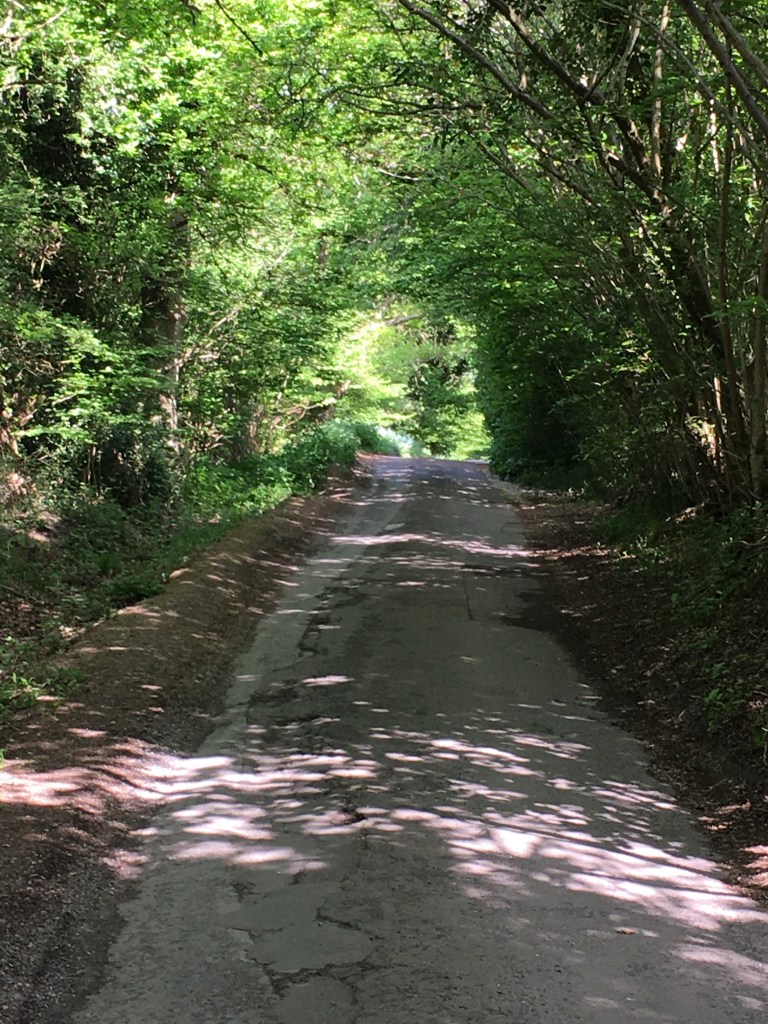
Glad that I live am I;
That the sky is blue;
Glad for the country lanes
And the fall of dew

After the sun the rain,
After the rain the sun;
This is the way of life,
Till the work be done.

All that we need to do,
Be we low or high,
Is to see that we grow,
Nearer the sky.

Do I mean “genre”? Perhaps for me they stick together just as the choices my teachers in State education made: vaguely religious lyrics urging a sort of morality in which we draw our understanding from the country lanes. No, it doesn’t make them bad lyrics. Yes, we sang “Praise my Soul the King of Heaven” and stuff too, but these stick in my head because of the odd mixture of woolly romantic nature appreciation and aspiration: Ladybird British Wild Flowers and an optimism I now see the twentieth century never really lived up to. They were all certainly different from Sundays, where as Roman Catholics we were still immersed in a vision of the Mass that Heaney (so to speak) celebrates. My dad can still sing a wonderful marching-band version of the music for the Easter rite of sprinkling Holy Water; I can still manage a lot of Compline with its Salva nos Domine vigilantes. This is a good source. And maybe this explains why knights winning their spurs and country lanes seemed something of an oddity to me. If Glad That I Live Am I was odd then, I think of it as more mainstream now: being outdoors is about wellbeing; the locus amoenus (a quick link here) being the locus salubris. Enough marking; enough screen time all round: when I post this blog I’m off for a run in the jolly springtime.

Perhaps the oddness resides in the nature of children’s spirituality. Perhaps closer to what I see in this mixture of ideals and imagery is Tony Eaude’s idea that spirituality is elusive, contested, as I explored some time back, something more basic, and wider, than religious faith or commitment. This would admit Lizette Reese’s final idea of growing nearer the sky, so that it becomes a metaphor rather than a child’s wish to grown nearer to heaven. I originally thought it was about growing taller. It may have that physical element, but there is more than that. As I’ve said before

It’s powerful stuff, all that wishing, all that desire for freedom

all that desire for growing nearer the sky.

What Dragons?

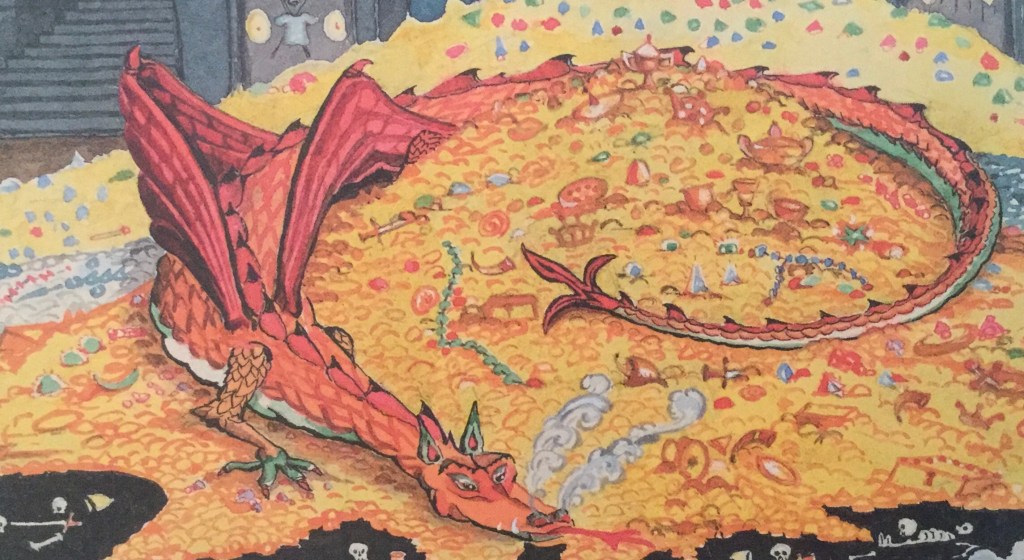
Smaug the Magnificent by Tolkein.

I’m starting – and won’t finish – this on St George’s Day. But while I’ve written about dragons before here, and on St George’s Day, too. And as is often the case, I’m spurred into action by a remark elsewhere – in this case Martin Flatman’s comment on Twitter that suggested we should have a St George to fight bots. A clever thought: some internet warrior whose job is to deal with the time and emotion devouring interjections into our e-life. But what are our foes? How do we counter them? Let’s look at some dragons.

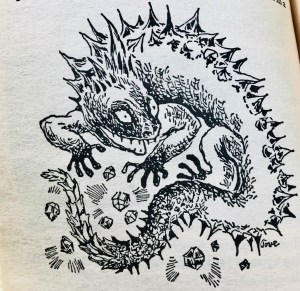
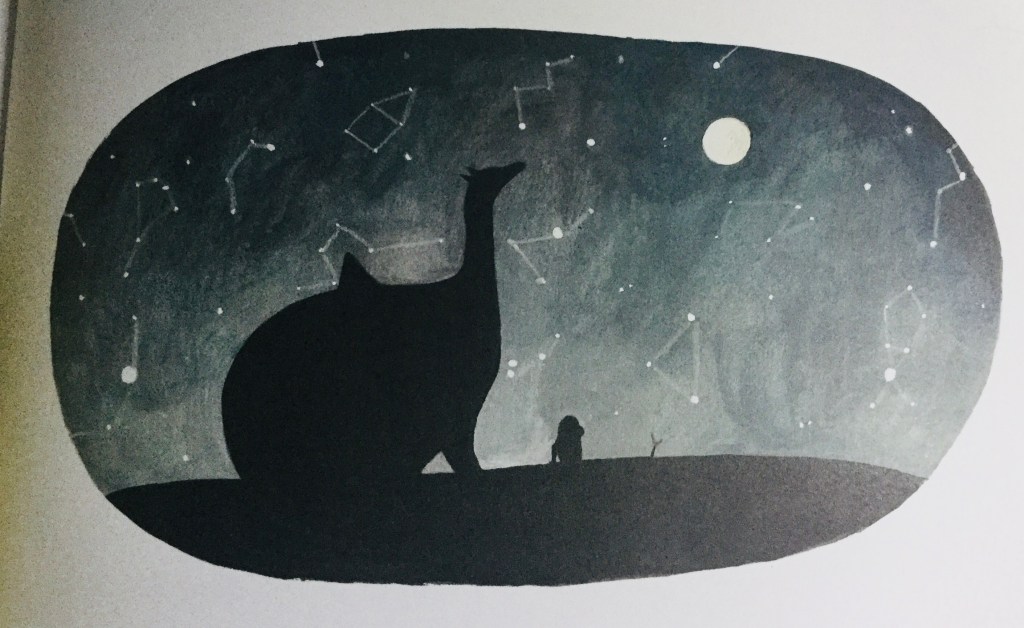
Lizard by Tove Jansson: curled round shining garnets.
“A giant lizard…like a hideous dragon guarding its beautiful treasure.”

Notice that it isn’t a dragon. As Tolkien suggests of a wider range of literature, dragons, real dragons, essential both to the machinery and the ideas of a poem or tale, are actually rare…There are massive brontosaurus-like creatures (the magnificently irascible Edward the Booble), and this lizard like a dragon, but of all the fantasies Tove Jansson conjures up, traditional creatures such as dragons hardly figure. We may have plants eyeing up Snork Maidens, and knitting ghosts, and the howling fire of the Comet’s nuclear blast – but no dragons.

“No dragons” makes me think of Thor Nogson, whose failure to confront his fear makes him so much a figure I recognise.

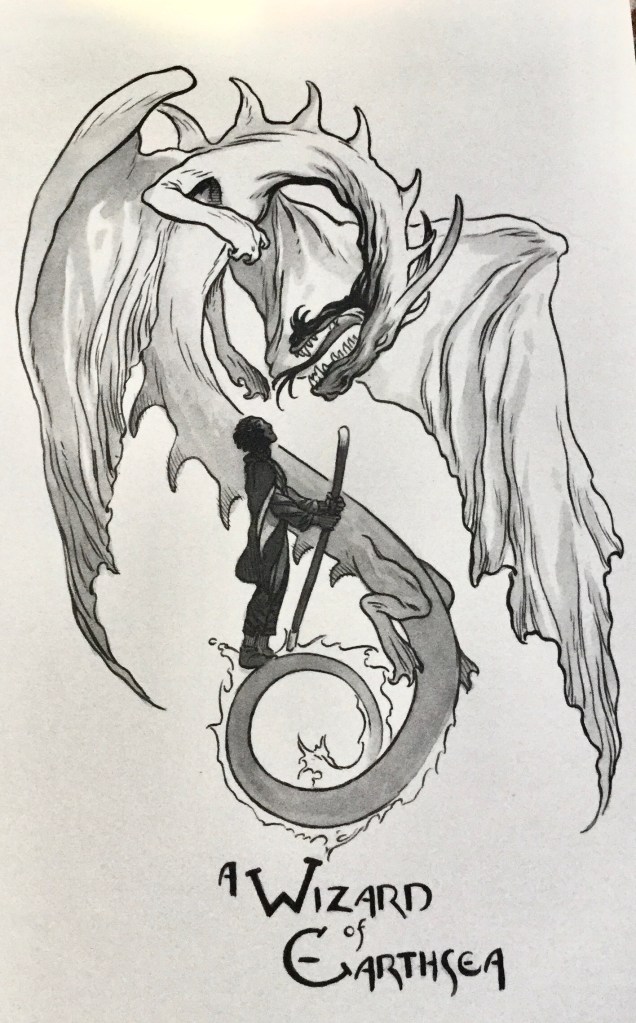
Then there is the sorry figure of the dying dragon whose form luckless, soulless Eustace inhabits/inherits much to his regret in Voyage of the Dawn Treader, that uncomfortable fantasy of redemption and repentance at the heart of the Pilgrimage of Perfection (or the earlier Pilgrimage of the Life of Man or maybe Pilgrim’s Progress?), and the awesome (in the earlier sense of the world) dragons in Earthsea [Cue at least one fantastic, menacing, serpentine LeGuin dragon from the artwork of Charles Vess: compare and contrast with poor Eustace].

Pauline Baynes: Eustace as a Dragon bewails his fate
Charles Vass’s sinuous dragon at the start of The Books of Earthsea.

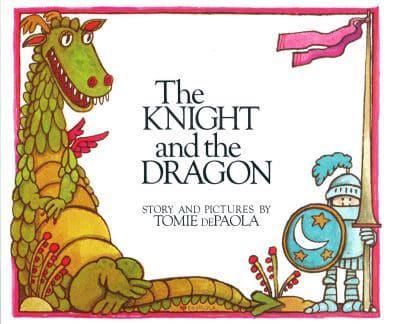
And nearer to my heart are the Knight and the Dragon, trying so hard to live up to the myth of who they are meant to be in Tomie de Paola’s parable of reconciliation and self-realisation, and the very modern, urban and urbane Franklin, in Jen Campbell and Katie Hartnett’s Franklin’s Flying Bookshop. Dragons have changed, been tamed (or come closer at any rate to us). Franklin seems a long way from Orm Embar.

“Luna and Franklin feel like they are made out of stories.”

Few of these – and I know they are self-selected (where, for example, would I put the greedy and self-centred dragon from The Paper Bag Princess?) – are the dragons we would fight. These last two in particular play with the terror, the aggression and turn it on its head.

So far, so predictable, perhaps. Beyond those texts, behind my understanding of what a dragon might be, is this song that I loved so much in school assembly. Martin Simpson performed a gentle, thoughtful version of When a Knight Won His Spurs, linked here.

“Let faith be my shield and let joy be my steed
Against the dragons of anger, the ogres of greed,” the song goes. These monsters that attack us, that with the current war in Ukraine seem closer than ever – and, it is noticeable, the war is fought most fiercely in the ruins of cities – but is also fought with anger and misinformation on the web. And not only this war, but the miry lies of governments, our own self-deception. I no longer wield a “sword of youth” but I still fight to set free the power of truth in myself. It’s never an easy task.

So with this simple song from my childhood we might be back to where we might need to fight dragons. Maybe this is the place.

So dragons from the past in Western literature stand as images of aggression, greed especially, and are a species apart. They are (often) merciless, or with their own way of thinking: symbols of our inability to think ourselves into the minds of others. The battle here is with an enemy we don’t understand – maybe one that is set not to understand us.

This is where Martin Flatman’s remark becomes clearer and cleverer: how do we stand against the slow acid attack on our ideas or our spaces in the maze of the Internet or in real life: intrusive, poisoning, interrupting. How would a St George deal with them? Perhaps it s not the clumnsy sword-weilding that deals with them; you wouldn’t use a sword to bash away flies after all. Simply saying “don’t” to bots (and their fleshier imps, the trolls) is like saying “Thou shalt not,” as Pullman suggests in his surprising praise of Jesus as storyteller: Thou shalt and thou shalt not are easily ignored and soon forgotten; but Once upon a time lasts forever. We need stories of hope, stories that laugh at the invading, venomous half-truth. I am holding out, not so much for a hero, but for a Teller of Tales.

A Roll of Honour for 1st March

A bit of a tortuous introduction to a simple theme. I was looking for a Name Day for Jono, our daughter’s partner, and was a bit stuck for a Saint Jonathan. It turns out – with a bit of a wobble – that Jonathan, the son of King Saul and confidant of the man who will become King David, is commemorated on 1st March. I rather suspect that Jonathan, son of Saul is commemorated here in a confusion with Saint David, the fierce and energetic patron saint of Wales, but the story of David and Jonathan refers to the early kingship struggles in Israel, and to the mutual friendship between the two. I also see that Jonathan is commemorated as one of the patron saints of friendship in some Churches. 

Emmett and Caleb

So today is today. The feast of St David of Wales and (very much in its shadow), a commemoration of Saint (?) Jonathan, and although John the Beloved Disciple and a choir of others might join him, it strikes me as a day one might celebrate friendship. We are a long day from the International Day of Friendship, the world looks awful, I am coughing and coughing: we need our friends… So here is a quick roll-call, not much more, of some Significant Male Friendships in (mostly) young people’s literature.

  • In High Fantasy the obvious Tolkien friends might be Frodo and Sam – but what about Legolas and Gimli? Sparrowhawk in A Wizard of Earthsea has Vetch; their true names are Ged and Estarriol, which I cannot omit because of how the latter name rolls around in the mind, echoing the stars, or Tolkien’s Estel. 
  • Historical fiction takes me to Dara and Lubhrin the Heart-Brothers in Rosemary Sutcliff’s Sun Horse, Moon Horse, and to Vortrix and Drem, to Artos and Bedwyr, to the tragic story of Randall and Bevis (I have discussed close male friendships in Sutcliff before) – but to other friendships, too – maybe to Thomas Becket and King Henry, for example. Not all friendships go well. Perhaps I unfairly stretch out of “children’s literature” with Sword at Sunset and with MydansThomas anyway
  • Other fiction must include Ratty and Mole, of course, Ping and Tolly, and the friendships that begin so awkwardly for Eustace (not a boy one could easily take to, himself) in The Voyage of the Dawn Treader and The Silver Chair: with Reepicheep and Puddleglum. And there is no forgetting Snufkin and Moomintroll, life-affirming and heartbreaking all at once.
  • Picture Books? Well, if I exclude Nen and the Lonely Fisherman it’s only because the significance of this male friendship seems to me to be much more romantic than many encounters, although almost its contemporary, Emmett and Caleb, provides a poignant example of ambiguity. The ambiguity of text is a thread for a labyrinth of half-meanings and unstated feelings going back to the story of Jonathan and David after all, and maybe its time to acknowledge the subtleties of such tales. But back to those passionate, wild child younger friends: how about Bernard and Alfie? How many Bernards did my children meet up with, or for how many of their friends were my children the Bernard? Rambunctious, up for a laugh, just on the edge of “naughtiness.” Whose house were they in when all the children took mattresses off the beds and used them to toboggan down the stairs? Who encouraged a young visitor to write her name on our bookcase?
Bernard throws the crayons

In fiction as in real life we meet friends on the edge of tragedy, comrades in arms and united in more gentle fellowship. We meet friends whose devotion to each other is deep and sustaining; comic; brotherly; on the cusp of romantic (and sometimes a coded version of this), so many invitations to adventure, to joy, to wholeness. Happy feast day, friends. 

Family, Friendship and Loss

‘There is no family any longer.’

Except, Tove Jansson will tell us in a roundabout way, there is – but this is not where she starts from. As Jake Hayes’ fantastic exploration of the book will tell us, Moominvalley in November “is a story about unfulfilled desires.’ And what we find is a different kind of family, where familial fit – the way a community wraps its skills and needs around one another – is re-explored, without most of the familiar main characters of the Moomin stories. But Snufkin is here, irresolute and disturbed.

One of the saddest sections in any of Tove Jansson’s Moomin books is where Snufkin, on his way for the autumn, remembers he hasn’t left his usual letter for his friend Moomintroll.

I forgot my goodbye letter, I didn’t have time. But all the letters I write are the same: I’ll be back in April, keep well. I’m going away , but I’ll be back in the spring, look after yourself. He knows anyway.

Tove Jansson: Moominvalley in November: ‘Snufkin.’

He knows anyway: the heart leaps at that comforting assurance, the two friends knowing that the other is secure in their friendship. And then Jansson pulls the rug out from under my feet:

And Snufkin forgot about Moomintroll as easily as that.

Way back, in what to me seems the sunnier autumn of Finn Family Moomintroll (the first of the books I had read), we had already seen Snufkin leaving before the end, to explore

all the strange places [he] longed for and would go to quite alone.

Tove Jansson: Finn Family Moomintroll

And he will enjoy being quite alone. His solitude is part of his complexity, as is his detachment. I live all over the place, Snufkin says when introduces himself in Comet in Moominland; my hands are free, because I don’t have to carry a suitcase. And along with garnets or any other precious things (apart from hat and mouth-organ) he carries little, physically or emotionally. Not for Snufkin any regret, the hopes for kindness at a distance. All Small Beasts Should Have Bows in their Tails playing on his mouth organ, he is off, answering the call he felt in the night of the storm on the Hattifatteners’ Island.

In the relationship between Moomin and his friend Jansson does a spectacular thing: she shows an unequal friendship, a love that Moomintroll feels and cannot really articulate, a friendship Snufkin picks up and puts down easily.

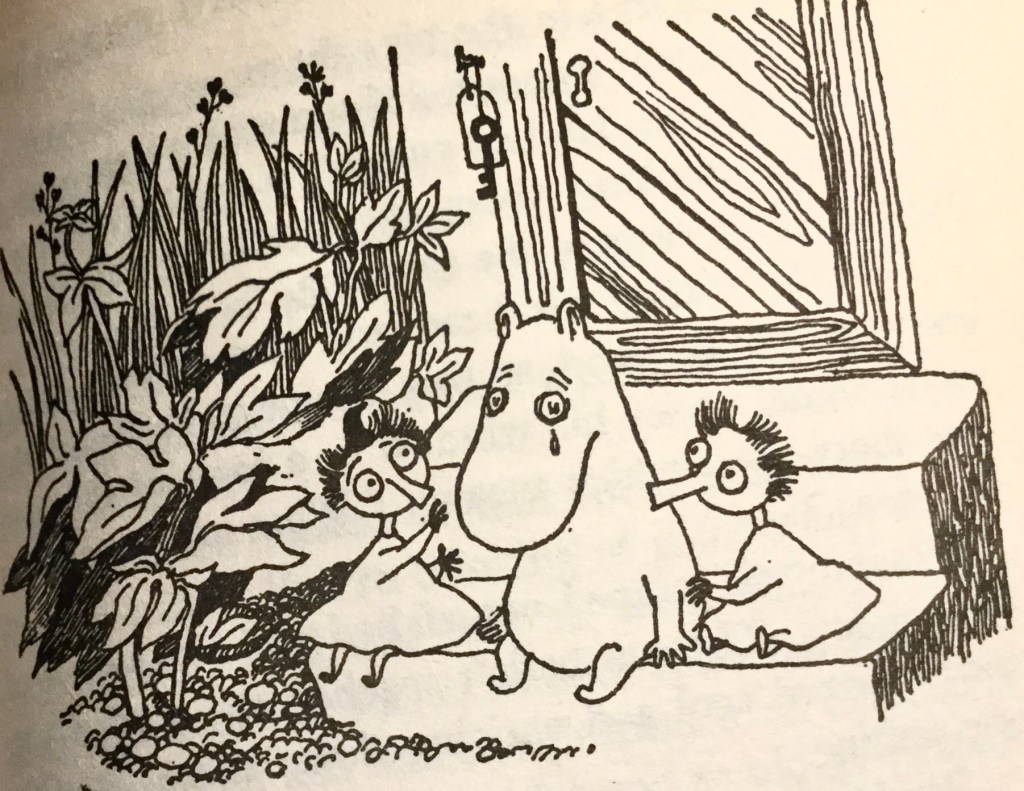
Moomintroll was left alone on the bridge. He watched Snufkin grow smaller and smaller, and at last disappear among the silver poplars and the plum trees. But after a while he heard the mouth organ playing All Small Beasts Should Have Bows in their Tails and then he knew that his friend was happy. He waited while the music grew fainter and fainter, till at last it was quite quiet, and then he trotted back through the dewy garden…

‘Are you crying?’ asked Bob.

‘N-no,’ said Moomintroll, ‘it’s only that Snufkin has gone away.’

Jansson gives us a simple, hesitant denial: it is the pain of absence that shows us the depth of Moomintroll’s feelings. What began in Comet in Moominland with Snufkin jumping up and down [shouting] Fancy that! What fun! Coming all this way to see me! leads to Moomintroll in Finn Family Moomintroll toasting his friend with a wish for a good pitch for his tent and a light heart, but sad for himself, as Moominmamma wisely notices.

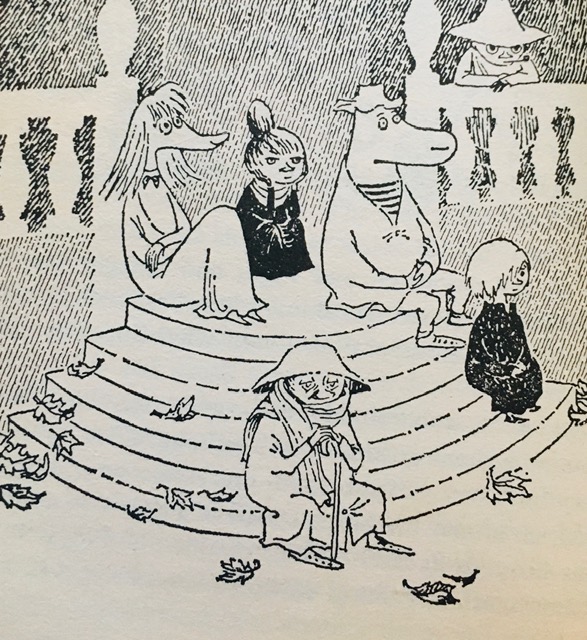
But when Snufkin, in the much later Moominvalley in November, ponders his relationship with the family, Jansson gives us further revelations. Snufkin, significantly in search of some creative completion, has returned to the Moomin valley to find assorted hangers-on have come too, looking for hospitality and companionship – locality and peace as Auden puts it – and while he is not pleased, the new arrangement at least gives him pause for thought:

And how different they are from the Moomin family. They were a nuisance too, they wanted to talk. They were all over the place, but with them you could at least be on your own. How did they behave, actually? Snufkin wondered in surprise. How is it possible I could have been with them all those long summers without ever noticing that they let me be alone?

Tove Jansson, Moominvalley in November, ch 11.

Moomintroll has all sorts of people he depends on and who depend on him: the annoying-little-brother-figure of Sniff; the prototype for Miss Piggy in the Snork Maiden; his father (who has taught me so much about being a father that I am sat upstairs in my study writing); the rarely flappable and always wondrous Moominmamma. But only one Snufkin: there is a beautiful, slow-burn depiction of Moomin’s close friendship with the wanderer, that comes to a half-spoken resolution in November.

In some ways, with the Moomin family following the mid-life crisis of Moominpappa, figuratively and literally at sea (my blog post here), Moominvalley in November is another of Jansson’s meditations on family, but this time, it is Snufkin’s turn to learn. He leaves the valley and his friend Moomintroll with hardly a second glance, but finds himself blocked artistically, and makes his way back – only to find that the annoying, noisy, emotionally engaged Moomins have been replaced by a cast of disfunctional who-are-we-and-what-are-we-doing? characters. But they are a rewriting of the Moominhouse community; another sort of family. Just as Moomintroll on the island in Moominpappa At Sea is struggling with the frustration of his growing into adulthood, here Snufkin is wrestling with similar Angst, questioning what family means to him. On this reading (nth of n times) it seems to me that it is the irritation and pain as much as the joy that suffuses all the Moomin books that makes them so real.

It is his interaction towards the end of the book with little-boy-lost Toft* which marks the turning point in Snufkin’s understanding: when Toft, wrapped in his own fears, seeks reassurance, Snufkin has to step up, making (we should note) two cups of tea, two sandwiches:

‘It’s me,’ Toft whispered. He went inside the tent, where he’d never been before. It smelt nice inside-of pipe-tobacco and earth. Beside the sleeping-bag was a candle on a sugar box and the floor was covered with wood shavings.

‘It’s going to be a wooden spoon,’ Snufkin said. ‘Were you frightened by something?’

‘There is no family any longer,’ answered Toft. ‘They’ve deceived me.’

‘I don’t believe that,’ said Snufkin. ‘Perhaps they just want to be in peace for a while.’ He picked up his thermos flask and fill two mugs with tea. ‘There’s the sugar,’ he said. ‘They’re sure to come home some time.’

‘Sometime!’ exclaimed Toft. ‘She must come now, she’s the only one I care about!’

Snufkin shrugged his shoulders. He made two sandwiches and said: ‘I wonder what it is that the Moominmamma cares about…’

It will lead Snufkin to resolve his own creative block and liberate the anxious Fillyjonk, and by experiencing a different mode of community, Snufkin comes to realise, uncomfortably, what it is he appreciates about the Moomins. However he will not be there to greet them when they return: he has his music and has learned his lesson, but does not cease from being a snufkin. Transformation is not a magic reinvention, but a genuine change: not a Hobgoblin’s Hat change – the kind I was always hoping for for me – but something deeper that allows Snufkin to stay true to himself. At least this time, less careless with his friendship, he remembers to write to Moomintroll.

*

Real is an odd term. This is a world created by an author whose artistic talent is way beyond me, whose life in boats, on islands, in Scandinavian high culture is just as strange – but it is a world that becomes alive because we are invited (gently, subtly) into an emotional world we can understand. The little dog who longs to run with the wolves – until his wish starts to become true; the array of confusions we encounter in ourselves and others; peculiar friends and relations and their foibles and stamp collections; wrong decisions and adventures we hardly chose; how I met your mother; memories, regrets, death and rebirth… Huggably tubby trolls (and irritatingly fussy Fillyjonks, amenable ghosts, and Hattifatteners and the rest) standing for an array of characters we recognise and can see ourselves in.

*Jake connects this insightfully with Tove Jansson’s own loss of her mother. This adds powerfully, for me, to Toft’s break in understanding: Snufkin says “They’re sure to come home,” and Toft responds, “She must come now, she’s the only one I care about!

Becoming a Tree

Cold-call my guilt

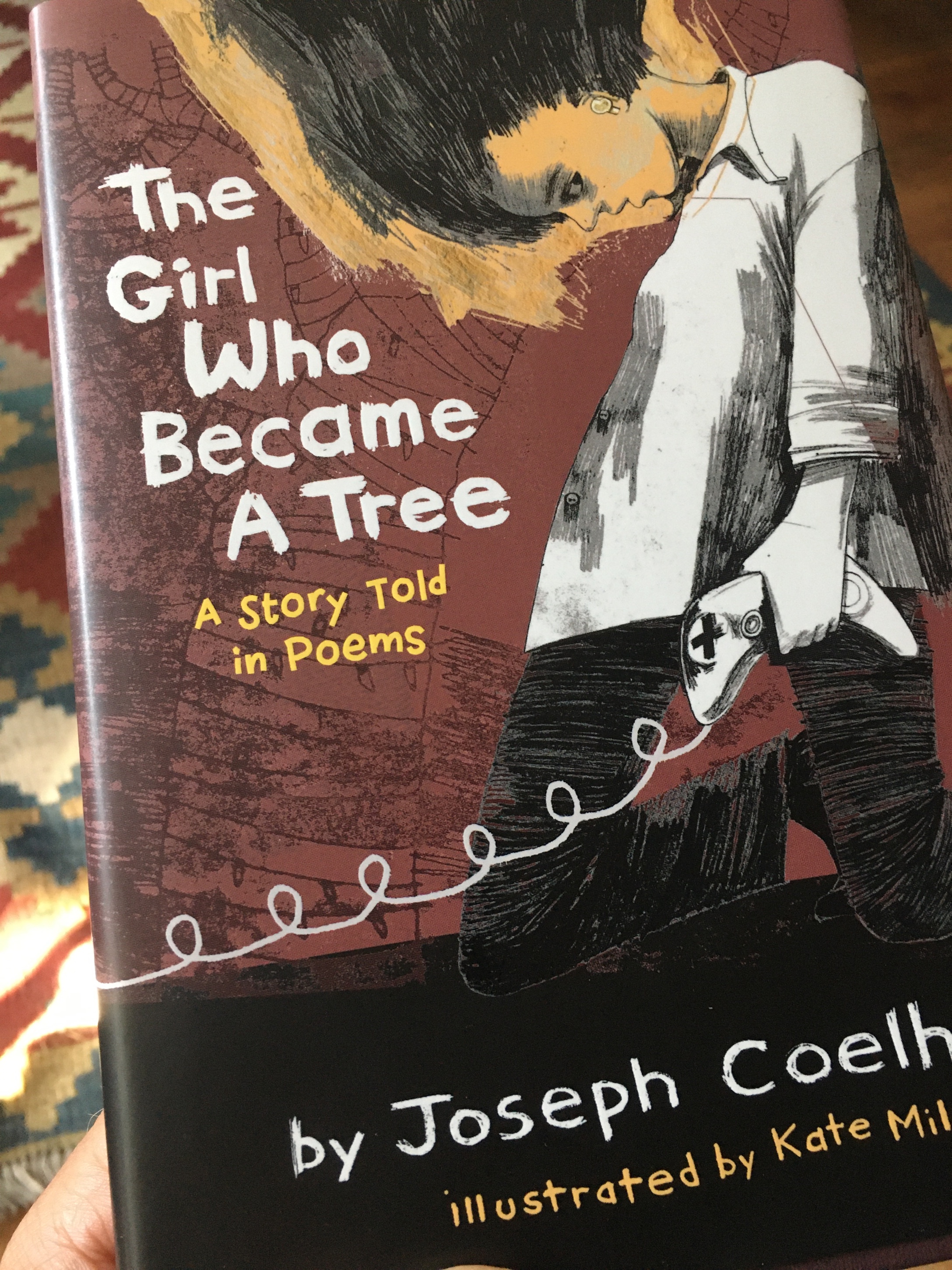
Quotation after quotation after quotation is required, punctuated by image after image. Reading The Girl Who Became a Tree (Joseph Coelho and Kate Milner: Otter Barry Books) requires some response but beyond reproduction of the book, what can sufficiently portray its complex creativeness? Part A Monster Calls, part Mythago Wood, riffing Caliban and over and over the praise of reading, of libraries… I am full of praise for the inventive, tricksy, frightening and (sometimes) comforting aspects of this rich text. There are, of course, other beauties around, and if I explore and praise this book in the way I have some of last year’s writing for adults or the marvellous debut of Dara McAnulty, that’s not to say that this is a text that shines alone: we are at a rich time in the creation of high quality children’s literature, as Mat Tobin’s blog attests (check it out, and look at his interview with Seaerra Miller and his review of her Mason Mooney, or his exploration of the Wanderer– recent posts, before we even look at Sydney Smith). But this is different.

The Girl Who Became a Tree is a story told in poems, disjointed and broken, like a jumble of faces and patterns in a stained-glass window or maybe more aptly a woodland left to its own devices – I’ll come back to this. But the woodland is a jumble, even a threatening one sometimes, just like nature itself is, just like the mess Daphne the protagonist has to find her way out of, lost after her own loss, using a language (A picture in my head I could not draw, A language learnt but nothing understood as Fuller has his Caliban say) of love, of attachment and of loss that she has to relearn.

Images and turns of phrase from Daphne’s flight and way back stay with me. I have to praise the joining of inimical nature and failing manufacture in

…crows and ravens

with ‘out of battery’ eyes…

or the menace of simple lines

Amongst the dead branches

sat a throne

and this interweaving of kenning and metaphor is a magnificent section:

I am rage,

stone-cracker,

soil-despoiler,

copse-corpse maker.

So why is my stomach

frozen leaf mulch?

I am frenzy,

field-bomber,

hill-raker,

mountain-puncher.

So why are my eyes

winter mist?

The situation – of tragic loss, of the misapprehension of technology as cure when it merely dulls, of the power of reading – speaks clearly of Phillip Pullman’s assertion (which I cited here) that stories teach in many ways. Woodland is made to speak: the dulling, menacing presence of Tolkien’s Old Man Willow or of the enclosing pine tree that trapped Shakespeare’s Ariel is powerfully at work here, and the poem that first presents its genius loci is direct and plain:

Tree monster big

with its tree monster claws

tree monster mumbles

tree monster roars.

and the terror with which Daphne reacts is likewise vivid:

The way your stomach

lurches to sickness.

The way your heart

stalks every beat.

This is not a monster to be trifled with. This blog has as its headquote a line from Gawain: Very wild through the wood is the way they must take. The tree-woodwose-monster Hoc is of the same shape-shifting as the Green Knight or the wood itself in Mythago Wood. Daphne is, Gawain-like, all but seduced into comfortable half-truth; almost her desire/to hold tight the past traps her. the temptation is not unlike Diggory’s in Lewis’ The Magician’s Nephew – he is offered Mother well again; she is offered memory so vivid it will bring her father back.

The voice of birthday surprise

When the monstrous Hoc, the devouring spirit from tombs of trees… crumbled towers/for fungi to rent offers Daphne the unthinkable, this is a struggle at the hardest of levels; I felt on first reading that she could so nearly have not made it through. As I have said before – in the context of A Monster Calls – misappropriated, mishandled, a spiritual experience might well be damaging. If she hadn’t made it, she – and we – would be lulled, trapped, tapping endlessly on our ‘phones in search of comfort and connection.

As Daphne confronts her loss, her being crushed by the false promises of technological ensnarements which give an impression of connection, she begins to see a way out, a real, emotional rescue/resolution I won’t share here, as a new springtime comes for her. Without breaking the magical realism that is at the heart of this narrative, it is wholly believable: a redemptive friendship, a saved message; a mother’s support…

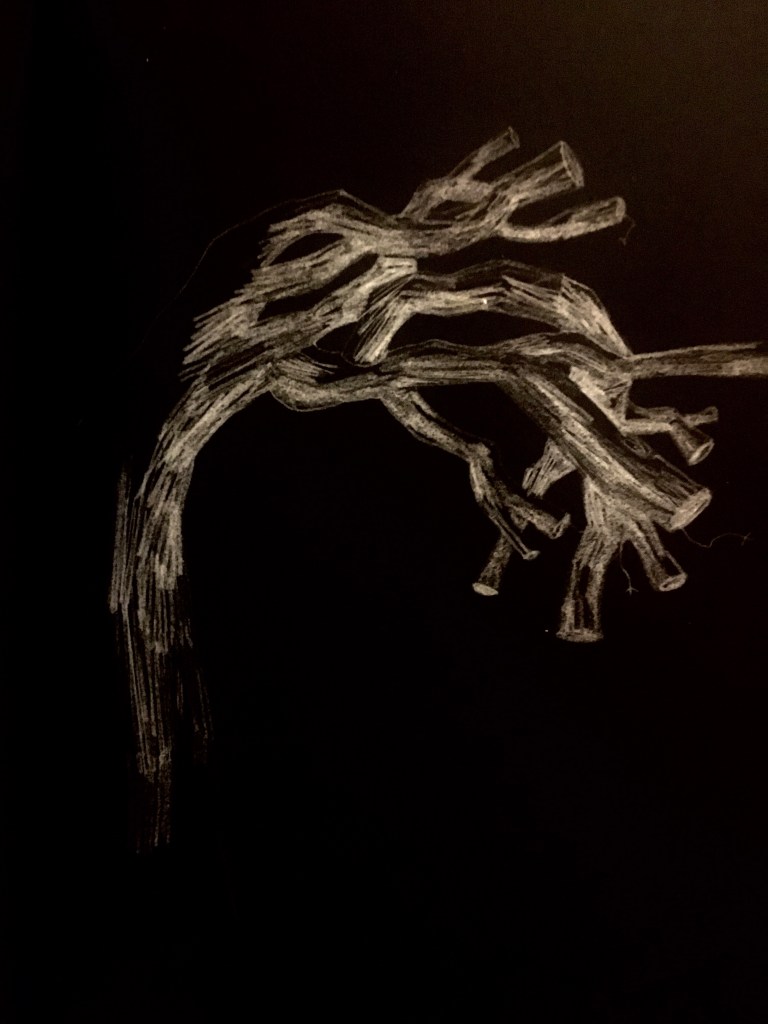
Illuminated by the artwork Kate Milner offers in the text – meditations on wood, and tree shapes, and the detritus of technology – this is a powerful book, but not an easy read. Pictures need careful examination, and the wordplay and the poetry and storyline likewise need careful following: for me it is not a book to read at a couple of sittings, although I wonder whether more rapid reading would have had a different rhythm and that that in turn would make it more accessible to a younger reader. My issue: not the creators’.

By using myth in a more subtle way than simply updating it, author and illustrator have created a story of confronting death and return from all-consuming grief not unlike Aeneas and Odysseus, but with the modern twist of dealing at once with modern communications and a landscape that is entrapping, dangerous, devouring. There is a tradition of the antiqua silva, the selva oscura here in which it is not a pleasant place, but a place of challenge, where the unwary get into trouble – shades of the woods of Red Riding Hood?

In praise of libraries and librarians (with this author and illustrator how could it not be?), a parable warning against the soft and easy answer, a story of growing up which gives the teenager a place in the adult world, hard-won and precious.

You Can’t Have That Wish, My Little Bear

I would like to write a post in praise of Else Holmelund Minarik‘s Little Bear books with their illustrations by Maurice Sendak – but this is not that post. Indeed, I can’t have that wish at this point. What I want to do is speculate on the enduring power of the words in children’s books, and therefore to start with Little Bear, which provided some phrases that still get an airing at various times in our family.

The title for the blog post gives us the first. When Little Bear can’t sleep, his impossible wishes – actually extreme negotiating positions as he angles for a story – are met with Mother Bear saying You can’t have that wish, my Little Bear. In an earlier story in this little collection, Little Bear sees his lunch set out and says it looks like a good lunch for a little bear. Both of these passed into our family’s phrasebank, and we even now have a big black pot, which means we can ask about dinner by saying Is it in the big black pot? and birthday cakes are sometimes greeted by Birthday Soup is good to eat, but not as good as Birthday Cake. There is a wonderful cadence in all these phrases that means they lend themselves to repetition, and nostalgia for times when we were parents of young children keep them alive, no doubt.

Little Bear now has “his” own YouTube channel, with the animated stories in gentle colours, but it’s that gentle, simple and very open-to-interpretation prose in the books that delighted us. But is it just us? I would love to know if other families found it to have such an impact – and if other books have added to family phrasebanks. Did Snufkin listening to laughter, running feet, and the clanging of great bells far out to sea stick in someone’s vocabulary? Or the Elephant and the Bad Baby‘s rumpeta, rumpeta, rumpeta all down the road accompany many shopping trips?

And if so, what made such phrases not only have immediate quotability but longer-term stickability too? Was it the power of an original context? The prosody? The story? And what from more recent books has – or might in the future have – that power?

Running with Scissors

or: The Problem of MicroManaging Study.

At first we thought we would have a time-table, but we have given it up. We have a programme, and the hours are fixed for all big events like dinner, sleep, play and work, but our play and work lost so much force and interest by being snipped into little sections that after some hesitation we gave up the snipping altogether, and allowed ourselves to be interested in things.

Margaret McMillan “The Nursery School,” Chapter 9, pp 83-84

The McMillan project of care and education is exemplified in this book, well worth a read by those who would confine Early Years to a rather expensive version of baby farming, and describes the Nursery School as a place for refuge for children living in awful conditions and whose health suffers from lack of healthy provision – cleanliness, good food, plenty of fresh air all… ordered and fairand the health of the children perfect. They were models for educators, for families, foundation for the children, and a nurture centre where miserable children flourished. There was direct instruction in all sorts of curriculum areas, but Nursery Schools in the early C20th were not hothouses but lighthouses: beacons of good practice. The model of childhood was really one combining the child-in-need-of-rescue with a vision of a child with a right to full nurture. Note, however, that this is not a place of total do-as-you-please: there is identified need, purpose, resource: Art lessons, dance, reading, mathematics….

In the same way, a University as an institution fostering learning has identified need, purpose, resource. I looked at this fairly recently in a goodbye to this year’s Education Studies students by examining our Guiding Principles at Oxford Brookes. The model of the learner here: someone capable of learning by doing; an institution with confidence in its staff and students.

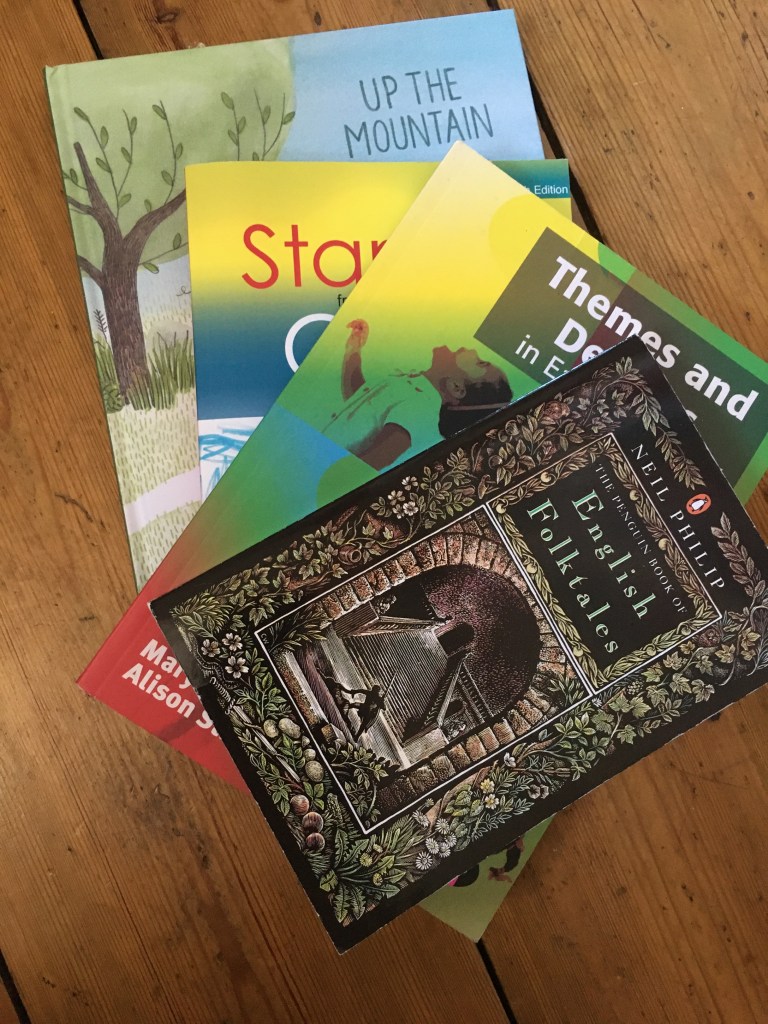
I wonder, however, whether the confusions about lines of accountability leads institutions to show a lack of confidence in its members. What are we accountable for? To whom? Let’s look at this as being accountable for student learning, and for promoting behaviours that aid that learning. Here are some of the books I might suggest my students read, for example, depending on the context. It strikes me that this (purposefully odd) selection underlines the importance of the tutor not as arbiter but guide: to nudge, not judge. You wouldn’t get a degree if you read these – unless that reading were informed by wider reading, discussion, synthesis, evaluation. Quotation alone does not make an essay, although I do recall looking at a portfolio (at another institution) where the student had been told to “put in the quote about Vygotsky to show us you read that chapter.” The dependent thinker.

I’m zipping around here, going from 1919 to the present day, and then back a bit. Cut through the noise of managementspeak, and McGregor’s model from 1966 (here, from The Human Side of Enterprise) of how one might view workers in a team is still of use here. Theory X suggests that it is management that actively drives the project by directing the workers, and

The average man is by nature indolent—he works as little as possible

He lacks ambition, dislikes responsibility, prefers to be led

Douglas McGregor, The Human Side of Enterprise

Micromanaging a student experience starts from here, and it doesn’t take too many clicks to find opinions about lazy students – particularly first years. By nature indolent.

If we start, however, from McGregor’s Theory Y that

…motivation, the potential for development, the capacity for assuming responsibility, the readiness to direct behavior toward organizational goals are all present in people

Douglas McGregor, The Human Side of Enterprise

then learning and teaching become a different set of activities altogether. Riskier, perhaps for all concerned – but actually more worthwhile than the over-planned, micromanaged but beautifully accountable syllabus.

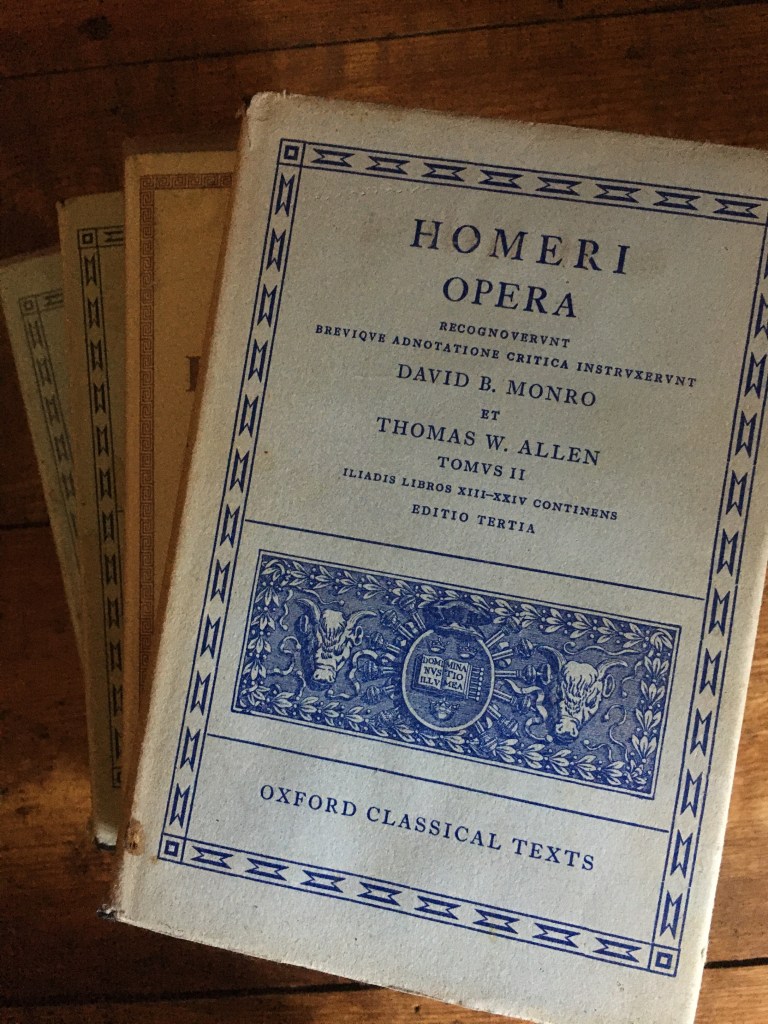
Students in Higher Education are not employees any more than they are customers, of course; the shifting sands of ideology put them closer to one end of the spectrum in some time periods and at others closer to the other end. Thus, it might in some contexts seem desirable to say to a student “This course requires you to set aside some ninety hours for your own reading” but the tone is quite authoritarian: what do we mean by “this course requires”? That also sounds a lot, although over, for example, the Brookes twelve week semester it’s seven and a half hours a week (since I’m referring explicitly to the Brookes system here, it is worth remembering that an undergraduate very often takes four modules at a time, so that is almost a full-time job: with classes to attend, it really is a full-time job!). Did I manage that in the 70s? Yes, sometimes – very often – I did: pastoral crises aside, I was reading Homer (very badly) for a weekly translation class at a rate of three books a week for eight weeks, and I regularly saw very little sleep. If I disliked the pace of work set, too bad.

But this is not a valid argument: the “I was unhappy so you should be too” approach to course design has, it seems to me, at its heart a misdirected desire for revenge. Far better to revenge oneself by turning up at a tutor’s hour reciting The Catalogue of the Ships at three in the morning1. But why do tutors set work – reading specifically – for undergraduates? What do we hope in doing this?

The pictures in this blog are partly there to identify the disciplinary shift I had to learn to manage when I moved from being, in effect, an ex-Classicist (or “lapsed Medievalist,” as I described myself) where text was the lead, to looking at educational practice where ideas and practical application are at the forefront. And yet there has always been in my work with education students, my desire to “get them reading.” Is this the change we seek? To make readers? What does Higher Education aim to do? And in a time where the norms of classes and library time are disrupted, what, at heart, are the aims of education? My first thought is to dive for a classic text:

Applications in Education. There is nothing peculiar about educational aims. They are just like aims in any directed occupation. The educator, like the farmer, has certain things to do, certain resources with which to do, and certain obstacles with which to contend. The conditions with which the farmer deals, whether as obstacles or resources, have their own structure and operation independently of any purpose of his…

It is the same with the educator, whether parent or teacher. It is as absurd for the latter to set up his “own” aims as the proper objects of the growth of the children as it would be for the farmer to set up an ideal of farming irrespective of conditions. Aims mean acceptance of responsibility for the observations, anticipations, and arrangements required in carrying on a function — whether farming or educating. Any aim is of value so far as it assists observation, choice, and planning in carrying on activity from moment to moment and hour to hour; if it gets in the way of the individual’s own common sense (as it will surely do if imposed from without or accepted on authority) it does harm.

John Dewey Democracy in Education, Ch 8 “The Aims in Education”

So why the quirky title? I have used it with University students if I have had to leave the room just as a jokey reminder of the need to stay on task; it also belongs in the death scene in Muppet Treasure Island, where Billy Bones with his last breath warns against running with scissors2. Of course it belongs first of all in the Early Years classroom where, supervised or not, running with scissors is generally frowned upon; there is risk and there is risk.

And there is risk in learning. The independence of using scissors on your own might be an early step in education, but there are others, as outdoor learning sometimes emphasises. “Even” in everyday learning and teaching, as Dewey has it, we have an acceptance of responsibility to cope with in different contexts than our usual ones. We have (Dewey again) to let go of our own aims or at least to question them seriously through reevaluation of our observation, choice, and planning in carrying on activity from moment to moment and hour to hour. The shibboleth is about “going outside the comfort zone” and perhaps the conditions for teaching and learning have been so different of late that we are very far outside that comfort zone – and seek a firm foothold in managing the student experience and recording how we manage it. Do we (Higher Education lecturers, tutors, administrators and managers of the nebulous stuff that is Quality Assurance) ourselves run a risk here: not letting the students make mistakes? Make their own choices? Not letting the students find their own way? “Read this – then this – then this” is an easy way to put together a programme of study, but a difficult habit to break when the time is right. Snipping learning into little sections (to return to Margaret McMillan) and not letting students or ourselves (McMillan) to be interested in things? After all, being interested wasn’t one of the learning outcomes. Was it?

It was and it wasn’t. The trivial round, the common task dominate our thinking. Lecture timetables, assessment deadlines. Dave Aldridge’s article (yes, go and read the original) puts it very clearly:

The descriptive understanding… leaves the materiality of university life untouched: those involved continue to memorise, recall, rehearse, assess, and implicate themselves in those activities associated with the accountability that encroaches on educational experience. Students attend or miss lectures, work part time, stay up late, participate in or shun their university’s union, and form and break relationships. Tutors struggle to find time for their research and the energy to resist institutional bureaucracy.

David Aldridge (2019) “Reading, Engagement and Higher Education.” Higher Education Reserach and Development, 38:1:47 http://bura.brunel.ac.uk/handle/2438/17145

The “materiality” of higher education is currently in a sort of ideological and procedural Limbo that reminds me sharply of CS Lewis miserable opening to The Great Divorce:

Time seemed to have paused on that dismal moment when only a few shops have lit up and it is not yet dark enough for their windows to look cheering. And just as the evening never advanced to night, so my walking had never brought me to the better parts of the town.

and like the characters in The Great Divorce, escape from this is only possible by risking something: the letting-go of worn habits of affection (or lack of it). I would suggest that “getting students to read” is another worn habit, and is part of a bigger picture foisted on Higher Education by a false accountability: students, at least the ones I have had off-the-cuff conversations with, seem to me to want to be asked to join the dance, not to know their tutors can account for every hour of the module’s learning. Again, it is Dave Aldridge who sees this as courtship, the tutor’s task being to see the student’s learning with the attentiveness of the lover.

So this certainly doesn’t mean a chaotic “pick the bones out of that” model of teaching. As Julie Fisher (yes, of one her books is in that first photo) has said Independent learning is not abandoned learning. I want students to read, I will propose work for them that will require them to look at and analyse texts from the role of therapy dog through to John Dewey, not simply so that they will read (as if that on its own will cure some ill-named ignorance, a Very Hungry Caterpillar transformation of Take-It-All-And-You-Will-Emerge-A-Butterfly), but so that the ideas they encounter will encourage them to take a risk – to think for themselves, to apply what they read about to the educational questions of why we do what we do. Systems and accountability will not suffice: we are back at the challenge of Margaret McMillan in her 1919 Nursery School: being allowed to be interested.

And if the everydayness of Higher Education is lost at the moment, we still have that as a challenge for tutor and student alike.

*

1: Actually, don’t even think of it. And certainly do not turn up at my house at any point day or night to discuss the place-language of Robert Macfarlane or to recite Sendak’s Where the Wild Things Are. At least, not without an invite.

2: Although if we meet in the pub and you can sing the Professional Pirate song I will be impressed.