Ulysses

An interesting workshop tomorrow at the Ashmolean gives me pause for thought: what Illustrating Ulysses brings to my mind (apart from Attic vases) is the challenge of looking at the relationship between text and illustration. In the work I’ve being doing this is very much hand-in-hand, and very often precedes publication but this blog brings the practice into (very) adult literature. If, as this writer suggests “some great stories come in daunting packages” what then does the illustrator make of them? What does Bloom look like – or for that matter, any central figure, no matter how detailed the author’s work in describing them?

And of course we might then consider the iconography of children’s literary figures, from Alice (much disputed) or Frodo (trumped by the films? This site asks  a curious question) to Red Riding Hood, who, despite growing into her costume (and her age, curiously!) as Jack Zipes outlines, carries as much baggage with her as any character from more complex texts.

So, since this is a brief pause in the day for me, I just want to finish by asking (myself as much as anyone) where does  a collaborative project of writing and illustrating differ from illustrating a classic?
Closer to nature with Cravendale?

I said earlier this year I’d return to this later, and here I am doing so, at least in some sort of sideways view.

This campaign from ARLA is worth noting, and has attracted national interest – at least, a piece from the BBC. I’m not sure linking nature to recession wholly makes the case; what Arla seem to be seeking to do through their Nature Adventure Club is aiding parents and teachers with the bigger project of getting children outside. It stems from their report (now over a year old) about children not being able to tell a wasp from a bee – again, as I recall, something the BBC looked at on Countryfile. We might argue that facts aren’t key – but the Adventure Club does seem to be more than this.

My tone sounds like I’m suspicious; I’m not. This link gives at least their own take on Arla, and it is really good to see a major dairy producer (they produce Lurpak for example, and this is the link to the company overview) giving a helping hand to healthier lifestyles.  Well done to a big company for supporting a health and education initiative!

Who asks the most questions in your classroom?

An interesting question in itself. I wonder, hearing Julie Fisher talk about interactions in the classroom, whether we have really moved on, in ITE, from talking about “effective questioning” to a module that genuinely is interested in what children have to tell us. That killer phrase from one practitioner in the REPEY report “I need to tell you…” seems to me at the heart of this: the teacher confusing her/his clear professional duty to educate with a desire to control that process to such an extent that no real learning is allowed (or, if we’re honest, even looked for ) that isn’t in the teacher’s grasp. I’ve asked before “Is there a clear link between Sustained Shared Thinking and effective pedagogy?” and I wonder how this might continue to play out as we expect more and higher quality interactions from our newest professionals. God forbid that we should teach Sustained Shared Thinking as a technique when what is (might be) needed is time for teachers to listen and to follow up interests…

And then there’s this: the fiery Michael Rosen suggesting on his blog the kind of things the teaching profession should be saying out loud: “Children are full of feelings and thoughts,” “We ask children to think about difficult ideas…to think beyond themselves…” “We want children to ask questions…” Reading intelligently isn’t taught just by decoding, and thinking deeply is only partly encouraged by debate (Rosen has ideas about this, too); the critical thinking we ask for in trainee teachers comes from the genuine interest of others in your ideas, and starts from teachers and other adults with young children having a real delight in their thoughts.

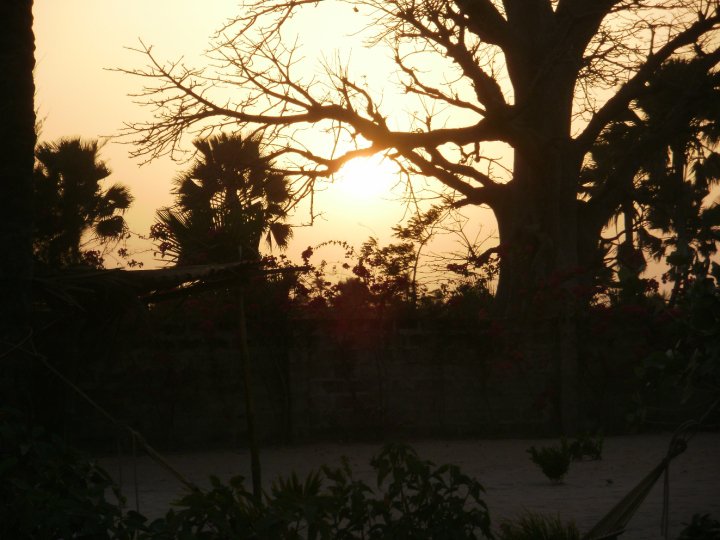
Gambia 2012

This year’s trip starts, in some ways, with last year’s video. Click here for the link – we went for a week of working with Gambia College students/graduates, and EY students from Brookes would be doing the same again this year (others may have a different programme). Watching it instantly makes me (as always happens!) eager to go again. This is a long link, and you may need QuickTime to watch it – but it’s worth a look!

Cost?£800.00, organised via Gambia Extra and Alan and Tony from GE are coming on 20th Feb to talk to anyone interested – details on the posters round Harcourt Hill.

Wellbeing without Art?

When I link to RSA, I usually have something to link that’s a talk, or one of the entertaining RSA animations, like this more recent Divided Brain one. Today, it’s merely this: the connection between art and wellbeing, explored here, and the point made at the end of the blog entry about measurability. While Marlow’s article in the Guardian suggests all sorts of projects that try or have tried to quantify happiness and to promote wellbeing, with this one to my mind being the most straightforward (and the questionnaire rather revealing, in the way of such things) , I can still hear Kathryn Ecclestone echoing John Stuart Mill, on whether asking the question “Are you happy?” adds much to an understanding of ourselves.  Of course this links to the post below on Flow and the TED talk from Mihaly Csikszentmihaly. So, to end, a final link: If you’re happy and you know it is an interesting overview of the notion of the pursuit of happiness.

Playing Outdoors

Some very interesting links here for the New Year, for example this one on play in the Early Years or the more general link to a map (which perhaps could do with a bit of elaboration – I note some gaps round Oxford for example!!).

The Play In Schools position paper is also well worth a read, despite being 6 years from its publication.  Despite? Perhaps because. How much movement has there been? Are we now seeing a return to formalisation in schooling which will cost play dear? Or will it simply mean a clearer line between the two – “Work hard, play hard” as my head teacher used to say – except he was thinking of rugby, which I found more of a trial than Greek.