Two events

to be recorded here, both slightly off message. One is to share the marvellous poem I had on my Office door yesterday for National Poetry Day from the late Seamus Heaney:

In Illo Tempore

The big missal splayed

and dangled silky ribbons

of emerald and purple and watery white.


Intransitively we would assist,

confess, receive. The verbs

assumed us. We adored.


And we lifted our eyes to the nouns.

Altar stone was dawn and monstrance noon,

the word rubric itself a bloodshot sunset.


Now I live by a famous strand

where seabirds cry in the small hours

like incredible souls


and even the range wall of the promenade

that I press down on for conviction

hardly tempts me to credit it.


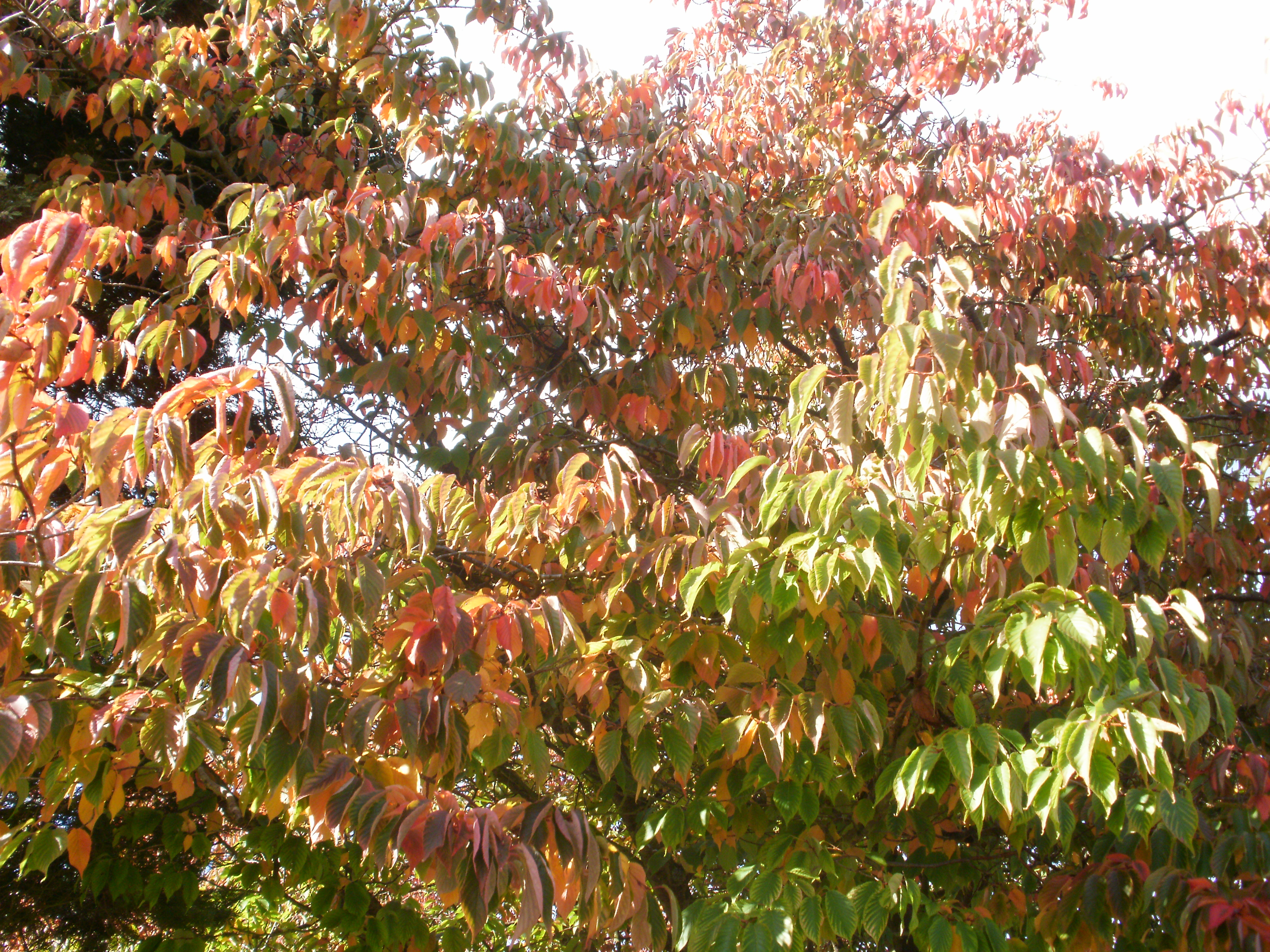
and the other, of less craft but engaging nonetheless, and useful (to some extent) because of the conjuncture of my outdoor learning module and the feast of St Francis, is Donovan’s version of the Canticle of the Sun from Brother Sun, Sister Moonautumn-09003


Well being and the curriculum

The battle recommences. From the noise of battles between EY specialists and the Labour Government at the height of its sense of power in the 90s come similar misunderstandings from the present Government. Liz Truss, whom I have mentioned before,  has again become part of the whirlwind, although a quick trawl of the web this evening finds that her interjections today are not visible, not even on  her own website. Puzzling: if I can find her words later, I’ll link them, them, of course.

As a sideline, it should be noted that BBC reportage is, as so often, skewed, so that it reports on “Starting School.” It’s not about the date of entry, or the age of the child, but of the pedagogy, the approach to teaching and learning, that best supports a child for their learning today and their learning tomorrow.

The Save Childhood Movement echoes (?is a reincarnation of?) the Toxic Childhood movement that gained media attention with Sue Palmer’s book. Its very attractive website (linked here) has some powerful things to say about how “Play is not a frivolous thing,” “Some of the best and deepest learning is slow” and “Healthy neurological development relies on real experiences in the real world” –  http://www.savechildhood.net/summit-key-points.html#sthash.sUcLRySP. Nothing I’d disagree with, and I see the points, too, that they make in their letter to the Telegraph today.

I’m tempted to suggest that the division, however, doesn’t exist where the battle lines have been drawn. It’s not about formal learning being needed earlier for disadvantaged children; it’s also not about well-being and play taking over the whole curriculum. For me, it’s about how people who know – and the list of signatories to the Telegraph letter contains a host of people who do know – deserve to be listened to by policy makers.


Blogs like Twitter

…instead of Moves like Jagger?

This is again to provide links to some ideas people may find useful.

The upsurge in interest – and the rising intake – in undergraduate education programmes here at Brookes naturally gives me a bit to think about, not least about staff deployment. I was, therefore, interested – maybe dismayed – to find this model of the academic as a unit in the workforce described here by Pat Thomson.

I hate newspaper reports that talk about “research shows,” and “today’s research”, so I apologise for this link to the Telegraph on reading for pleasure, but I need some time to find the original report.

And at its worst (or maybe as its norm?) this blog – along with so many other blogs – is just opinions blurted onto the Internet.  The debates about the Big Questions are also being enacted elsewhere. The Great Education Debate is one place. Go and have a look.


Reading for a Degree

If it isn’t yet the time, it will shortly be that time of year when Amazon wish lists shift their focus, when Blackwells and other booksellers either rub their hands in glee or (I suspect, more often these days) look anxiously at the takings: the time when reading lists assume an importance.

Even if the parental start-up package (assuming there is such a thing, to pay for duvet covers and a kettle) stretches to books, where do you start?  The Bible and Shakespeare? A student cookbook (I was going to recommend the Guardian online version, but it is accompanied, in the most breathlessly idiotic sexism I’ve seen for a while, by adverts for tampons, thereby telling us who should cook at University – thanks, beloved Guardian!) or financial survival guide? Well, yes, there’s part of the problem: how do you afford them? How do you know what to get? Or should we (tutors) suggest course books?

Ah. Pause for thought.

Of course, the ever-useful Upgrade service at Brookes provides enlightenment on what reading entails at HE, and links to sites from other Universities (including v good advice on reading from Reading, which I am childish enough to find amusing), but faced  with a bill of £100 or more (maybe lots more!), what is a new HE student to do? And what should we, as tutors, be thinking about when we suggest pre-course reading?

The approach by our Ed Studies team has been slightly different this year: rather than going for study skills books (Stella Cottrell, for example, whose excellent handbook appears to be available from Palgrave as a sample pdf and the linked site is available here) or a pile of books from Year 1 Modules, the team have opted for a reading of an historically important text. Dave Aldridge has suggested Rousseau’s Emile.

Throwing Year 1 students in medias res with a book from eighteenth century France is a bold move, I know, but I come back to my earlier question: when we suggest books to incoming students, maybe not-so-fresh men and women in a post A-level fug, do we do so to make their lives easier on the course? To make our lives easier when they get here? To set the scene for the discipline of degree-level study: reading, as we used to say, for a degree? Or (as Dave is doing here, I think), to give them more of a sense of purpose in their studies?

So what am I trying to get at when I say a “sense of purpose”? I suppose it’s about the Big Questions, again and again. Links to elsewhere in this blog would be tedious; the big questions are what this blog is really about.

Why study education? What is the place of theory in all of this? Where does reading fit in anyway? Where does learning start in institutions? And what about in the family?

I hope I don’t sound too Mr Hector if I end by saying “Emile vous appelle.”

Gruffalo Hunting

Well now, this is an interesting project: Gruffalo hunting is the new Bear Hunt…

Outdoor nation makes some important points about children (and parents) and their thinking about outdoor exploration, suggesting this is an area worthy of some serious discourse analysis.

But starting from Outdoor Nation, we move to the blog In Search of the Gruffalo’s Child. This looks well worth following: personal, enlightening and still managing to link to Gruffalo-related material.

Alice Again

Preparing for the Summer School at which we discussed Alice in 2010, I find my thinking about children’s literature has changed. I will put the powerpoint here at some point after the class, and I don’t think it will be much changed; Alice’s dates, &c are unrevised, and I haven’t much else to say about Victorian education and childhood – but what I am thinking over is the notion of the sly joke, the remark way over the heads of the child audience, flattering or distracting the adult teller and/or the adult reader.

So the first (new – well, to this blog) question is:

How many audiences are there in Alice?

Crudely outlined, I can discern a basic five: children past; children present; adults past; adults present; scholars.  In fact this will fragment and kaleidoscope into all sorts of divisions: children in the past who were original audience (the Liddells – see below); the first children to read the first published editions; children before this present generation; the informal adult audience for the first stories; the adult readers of the first editions (Queen Victoria being one), subsequent adult readers – and this is where it gets even more complicated by a subdivision of adults who had and had not been child readers, and adults reading with and without children…. How to begin to think of ‘reader response’ with such a diverse audience? Perhaps the excellent Rob Pope English Studies Book is a place to start?

He asks, as I do here, about readers (“The Reader… Which Readers?” Pope 1998:247), and rightly raises issues around how we theorise these readers, but behind all the readers we can come up with (and maybe many others I haven’t begun to name) are three girls and one male adult: Revd Duckworth, and Lorina, Alice and Edith Liddell, the original hearers of the stories of Alice, the fellow-travellers in the rowing boat to Godstow, on 4th July 1862). Whatever we make of any subsequent readers, these four – and one in particular – are always with us.

New National Curriculum

“…the most important thing is to make sure that we understand when children arrive in school how well they’re performing so that we can then ensure that those children who are bright are really stretched…”

Just to make a start on the documents and comments, here is the SoS on Daytime TV [sic] and on the BBC website  –  but here’s  the consultation report on the National Curriculum and, as a sideline, the new report on cultural education, from the DfE website . Watch this space.

Ever wishing to present both sides of an argument, here is an interesting site, if only for the ways in which evidence is now used by education policy-makers. Gove versus Reality is clearly a site as polemic as Michael Rosen’s blog -which means that they need to be read as voices in the political debate.  Rosen’s latest (9th July) entry, for example, is entitled Educational League Table Lies and looks at the SoS’s ideas about league tables nationally and internationally. It is lengthy, well-argued, but polemic. It has a short line here which I will end with, since it’s a warning to me as much as to policy makers:

Gassing on about ‘world-class education’ sounds like busy-work: ‘Look what we’re doing to make things better.’ This is a con.


Gwynne

Michael Gove, “the most important person in education,” (according to Nevile Gwynne), likes and promulgates Gwynne’s grammar, and for a while the grammarian himself is available in a brief conversation on BBC Radio 4’s Today programme. This is the link that works for now. http://www.bbc.co.uk/programmes/p01c98k1.

In a very short piece on R4 it isn’t possible to explore Gwynne’s arguments very easily, any more than it was when he appeared on Saturday Live; sweeping statements go unchallenged, and this four or so minutes certainly isn’t a scholarly defence of grammar, still less the teaching of grammar in schools, but as a test of current government thinking has some interesting points to ponder. Was an understanding of grammar acquired “effortlessly” before the age of nine? I wonder whether Gwynne’s defence of corporal punishment on his website suggests otherwise. Here, as part of a class he is running, he suggests looking at the arguments around the subject:

The days of “six of the best” are now over, almost everywhere in every country in the Western world. But… will someone please, after reading the following (a) extract from a newspaper article and (b) letter responding to it, be so kind as to let me know what possible alternative there is to corporal punishment that is sufficient to do the essential job – both for the indicidual and society — that “the cane” had done everywhere throughout the whole of recorded history up to the 1960s and after?

Given the accuracy of my typing, it would be churlish to mock the typo, and in any case the pedant in me likes the fact that there is no apostrophe in 1960s.

Here, Neville Gwynne simply raises the question for others to respond to.

However, I feel torn when reading some of his articles.  I seriously disagree with some of his ideas, and might well question some of his sources or approaches, but  I must admit that when I mark the work of some of my students, from the  generation that grammar forgot, I want to say with him that “A very great deal of our knowledge comes from argument, which is our most important means of checking and making sure that what we believe is true.” Similarly, when he states with obvious passion that “Real philosophy is simply the overall science of “getting it right” in all our activities, from deciding what time to get up in the morning to choosing the right religious or anti-religious position.  We are all philosophers whether we like it or not,” I find myself nodding in (at least partial) agreement.