
Perhaps I should simply amend my blog post(s) on Spirituality and Belonging (such as this most recent or this from not-so-long before) but that would confuse the things I was trying to say. This might stand, in grand language, as an autoethnographic codicil to these ideas. The grand language just isn’t necessary, of course: this is just a couple of thoughts and two links.
Link One: I was struck this morning reading Michael Sadgrove’s reflection on his blog on a missed “last sermon,” as he turns seventy around the date of his anniversary of ordination, where his challenge is worded with typical thoughtfulness:
I’m especially thinking of the ‘heart-work’ that begins when we realise that the most basic question we can ever ask ourselves is, what does life expect of us? Or if you like, what does God ask of us? What is the work of God in the world and what is my part in it? How do I go on responding to God and to life before I die, become the best self I am capable of being? It’s a question that, like the Hound of Heaven, pursues us down the years, though we don’t always face it in our busy working lives.
Michael Sadgrove: A Last Post. http://northernwoolgatherer.blogspot.com/2020/06/a-last-post.html
and then there was this, Link Two. In an extraordinary piece of homiletic poetry, John Farrell preached at Blackfriars this morning, we are invited to see our religion as anchored in history, for we do not belong to an angelic Church where the angels sing their Sanctus; it is made up of people. Here is the link to his full sermon; I can’t do it justice.
Can we see these two as connected?
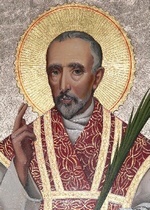
This where it gets personal. Yesterday was the feast day in Westminster of St John Southworth a priest who risked his life in C17th London on two accounts: by flouting laws that forbade his working as a priest in an England hostile to Roman Catholicism; by working among the sick in a London sick with the plague. And yes, I know he looks like Christopher Lee in this picture.
His metaphorical presence in “my” family was an important factor – my grandma was a Southworth – in determining a number of key choices for me, both religious and secular. This is why I chose the title of this blog post (and for once will reference Wikipedia for an exposition of the term). We all make our choices about where we stand, where we belong; this is not something specific to the kind of signed-on-the-dotted-line which makes membership, conformity and belonging more or less synonyms.
But here I come back to Michael Sadgrove’s questions, relevant, it seems to me, both within a Christian framework and in other ways of looking. The “heart-work” he talks about for older people (like him; like me) is a process of lived reflection, involving being more present to the here and now: family, friendships, the pleasures of nature and art, the cycles of times and seasons, the goodness of ordinary things. He also suggests welcoming the perspectives we gain later in life when when we can look back and recognise patterns and connections that have run through our personal histories. And this is where I would add something in. I would suggest it is a peculiarly Catholic insight, were it not that the writer was Dean of Durham, successor to the Priors and Benedictine community: time to set my RC exceptionalism aside. However, I am reminded – partly by John Farrell‘s sermon – of an important part of Belonging: and that is belonging to a culture and its histories.
Plural histories, or a single interlocking and messy history: over my shoulder are not only heroes like John Southworth, but intolerance, anti-Semitism, Avignon, a Rome that picked up the very marginalised people the Empire had killed and used them for its own ends. It is very true to say – as Michael Sadgrove underlines in his quoting Kierkegaard – that ‘Life must be lived forwards but understood backwards.’ I understand where I am by looking back at all these insofar as I can. And this is where his final point is so relevant as we all wade through the morass of cultural inheritance: a challenge to radical compassion, becoming more attentive to ambiguity, darkness and suffering.
 nicktomjoe